Difference between revisions of "Pinanga veitchii"
| (7 intermediate revisions by one user not shown) | |||
| Line 1: | Line 1: | ||
__noeditsection__ | __noeditsection__ | ||
{{Palmbox | {{Palmbox | ||
| − | |image= | + | |image=Pv2786976.jpg |
| − | |image_caption=Photo by | + | |image_caption=Kuala Belalong, Temburong, Brunei Darussalam (Borneo). Photo by Dr. John Dransfield, Royal Botanic Gardens, Kew/Palmweb. |
|genus=Pinanga (pih-NAHN-gah) | |genus=Pinanga (pih-NAHN-gah) | ||
|species=<br>veitchii (vehtch'-ee) | |species=<br>veitchii (vehtch'-ee) | ||
| Line 20: | Line 20: | ||
}} | }} | ||
==Habitat and Distribution== | ==Habitat and Distribution== | ||
| − | Borneo. Tropical moist forest.[[image: | + | Borneo. Tropical moist forest.[[image:Pv2786975.jpg|thumb|left|380px|Brunei Darussalam, Malaysia (Borneo). Young plant. Photo by Dr. John Dransfield, Royal Botanic Gardens, Kew/Palmweb.]] |
==Description== | ==Description== | ||
A dwarf understory palm native to Borneo. This species grows in clumps and develops slender trunks which rarely exceed two meters in height. Most unusual are the leaves of the seedlings and young shoots, which are mottled in a camouflage pattern of purple-brown and pale green. Editing by edric. | A dwarf understory palm native to Borneo. This species grows in clumps and develops slender trunks which rarely exceed two meters in height. Most unusual are the leaves of the seedlings and young shoots, which are mottled in a camouflage pattern of purple-brown and pale green. Editing by edric. | ||
| Line 43: | Line 43: | ||
image:Pinanga_veitchii_specimen.jpg|Queensland, Australia. Photo by Paul Craft | image:Pinanga_veitchii_specimen.jpg|Queensland, Australia. Photo by Paul Craft | ||
image:Pinanga_veitchii_specimen2.jpg|J.D. Andersen Nursery, Hawaii. Photo by Paul Craft | image:Pinanga_veitchii_specimen2.jpg|J.D. Andersen Nursery, Hawaii. Photo by Paul Craft | ||
| + | File:Pinanga_veitchii_leaf.jpg|Queensland, Australia. Photo by Paul Craft | ||
image:PvIMG_4330.jpg|Singapore. Photo by Banchong | image:PvIMG_4330.jpg|Singapore. Photo by Banchong | ||
image:Post-507-0347485001335403765.jpg|Thailand. Photo by Jakkrit | image:Post-507-0347485001335403765.jpg|Thailand. Photo by Jakkrit | ||
image:Post-72-1238865437.jpg|Thailand. Photo by Chalermchart Soorangura | image:Post-72-1238865437.jpg|Thailand. Photo by Chalermchart Soorangura | ||
image:Post-72-1238865585.jpg|Thailand. Photo by Chalermchart Soorangura | image:Post-72-1238865585.jpg|Thailand. Photo by Chalermchart Soorangura | ||
| − | Borneo. Photo by Michael Lo. | + | File:flora18-mossy290608.jpg|Borneo. Photo by Michael Lo. |
| − | Thailand. Photo by Bob. | + | File:pv440595763621.jpg|Thailand. Photo by Bob. |
| + | File:pv7865391120.jpg|Thailand. Photo by Bob. | ||
| + | File:147953.jpg|Image: plantillustrations.org | ||
| + | File:pvbbs.jpg | ||
| + | File:pvDSC00837.jpg|Singapore. Photo by Banchong | ||
| + | File:pv65023911844utopia.jpg|Utopia Palms & Cycads, Queensland, Australia. Photo by Clayton York. | ||
| + | File:755c20.jpg|Hawaii. Photo by Geoff Stein. | ||
| + | File:Pinanga vietchii big(1).jpg|Photo: nanaplants.com | ||
| + | File:Pinanga vietchii.jpg|Photo: nanaplants.com | ||
| + | File:pv199388.jpg|Image: plantillustrations.org | ||
image:P8200115.jpg | image:P8200115.jpg | ||
image:PinVei.jpg|Photo-Rare Palm Seeds.com | image:PinVei.jpg|Photo-Rare Palm Seeds.com | ||
| − | image:62620d.jpg| | + | image:62620d.jpg|Image: plantillustrations.org |
</gallery></center> | </gallery></center> | ||
Latest revision as of 23:54, 6 June 2016
| Pinanga (pih-NAHN-gah) veitchii (vehtch'-ee) | |||||||
|---|---|---|---|---|---|---|---|
 Kuala Belalong, Temburong, Brunei Darussalam (Borneo). Photo by Dr. John Dransfield, Royal Botanic Gardens, Kew/Palmweb. | |||||||
| Scientific Classification | |||||||
| |||||||
| Synonyms | |||||||
|
| |||||||
| Native Continent | |||||||
 | |||||||
| Morphology | |||||||
| |||||||
| Culture | |||||||
|
| |||||||
| Survivability index | |||||||
|
| |||||||
| Common names | |||||||
|
| |||||||
Contents
Habitat and Distribution
Borneo. Tropical moist forest.
Description
A dwarf understory palm native to Borneo. This species grows in clumps and develops slender trunks which rarely exceed two meters in height. Most unusual are the leaves of the seedlings and young shoots, which are mottled in a camouflage pattern of purple-brown and pale green. Editing by edric.
A small, clustering palm to about 1.5 m tall, with thick, leathery, deeply notched, entire leaves. When young (and close to the ground) these leaves are spectacularly mottled in browns and purples, and blend in extraordinarily well with their surroundings (leaf litter). As the plants get taller, this mottling decreases, and tall plants have plain green leaves.
Culture
Cultivation recommendations: A tropical lowland plant requiring high humidity, heavy shading, and a minimum temperature of 20 C for good growth. Prefers rich but well-drained soil with a high humus content. Warm, sheltered and moist. Strictly tropical in its requirements, very slow growing, and renowned as a difficult plant.
Comments and Curiosities
A most amazing, clustering dwarf palm with thin canelike stems and tiny, undivided leaves that are intensively mottled in purplish brown and yellowish green tones in young plants. In older plants, the mottling slowly disappears. Native to the understory of rainforests on Borneo, it is rather slow growing and requires a protected spot under established canopy in the humid tropical garden. (RPS.com)
- IMAGE GALLERY

Brunei Darussalam, Malaysia (Borneo). Young plant. Photo by Dr. John Dransfield, Royal Botanic Gardens, Kew/Palmweb.

Brunei Darussalam, Malaysia (Borneo). Photo by Dr. John Dransfield, Royal Botanic Gardens, Kew/Palmweb.

Kuala Belalong, Temburong, Brunei Darussalam (Borneo). Photo by Dr. John Dransfield, Royal Botanic Gardens, Kew/Palmweb.

borneo-palm-seed.com

Borneo. Photo by Mike Gray

Borneo. Photo by Mike Gray

Borneo. Photo by Mike Gray

Thailand. Photo by Bob

Queensland, Australia. Photo by Paul Craft

J.D. Andersen Nursery, Hawaii. Photo by Paul Craft
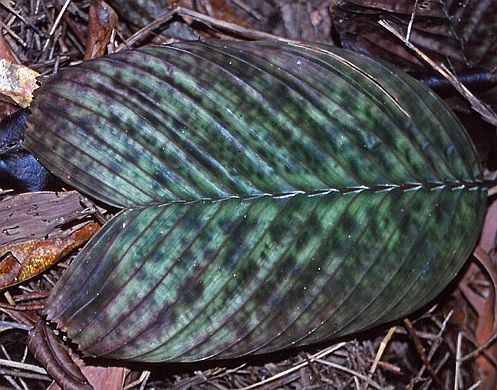
Queensland, Australia. Photo by Paul Craft
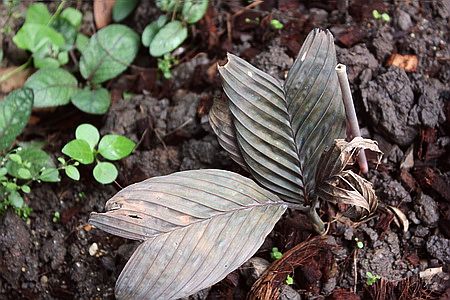
Singapore. Photo by Banchong

Thailand. Photo by Jakkrit

Thailand. Photo by Chalermchart Soorangura

Thailand. Photo by Chalermchart Soorangura

Borneo. Photo by Michael Lo.

Thailand. Photo by Bob.

Thailand. Photo by Bob.

Image: plantillustrations.org
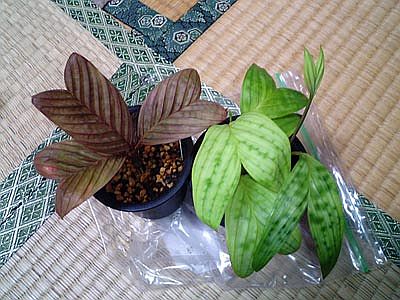
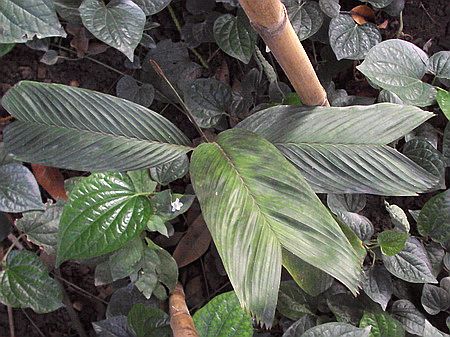
Singapore. Photo by Banchong
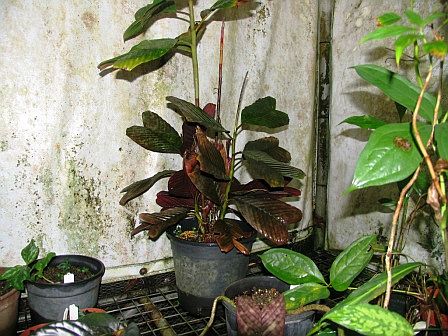
Utopia Palms & Cycads, Queensland, Australia. Photo by Clayton York.

Hawaii. Photo by Geoff Stein.

Photo: nanaplants.com

Photo: nanaplants.com

Image: plantillustrations.org

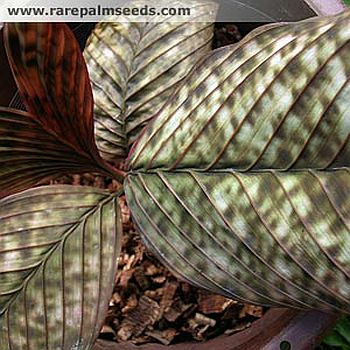
Photo-Rare Palm Seeds.com

Image: plantillustrations.org


.jpg)


External Links
References
Phonetic spelling of Latin names by edric.
Special thanks to Geoff Stein, (Palmbob) for his hundreds of photos.
Special thanks to Palmweb.org, Dr. John Dransfield, Dr. Bill Baker & team, for their volumes of information and photos.
Glossary of Palm Terms; Based on the glossary in Dransfield, J., N.W. Uhl, C.B. Asmussen-Lange, W.J. Baker, M.M. Harley & C.E. Lewis. 2008. Genera Palmarum - Evolution and Classification of the Palms. Royal Botanic Gardens, Kew. All images copyright of the artists and photographers (see images for credits).
Many Special Thanks to Ed Vaile for his long hours of tireless editing and numerous contributions.