Difference between revisions of "Pseudophoenix lediniana"
| (25 intermediate revisions by 2 users not shown) | |||
| Line 1: | Line 1: | ||
__noeditsection__ | __noeditsection__ | ||
| − | |||
| − | |||
{{Palmbox | {{Palmbox | ||
| − | |image= | + | |image=Pseudophoenix_lediniana_specimen.jpg |
| − | |image_caption= | + | |image_caption=Fairchild Tropical Garden, Miami, FL. Photo by Paul Craft. |
| − | |genus=Pseudophoenix | + | |genus=Pseudophoenix (soo-doh-FEH-niks) |
|species=<br>lediniana <br>(leh-dee-nee-AHN-ah) | |species=<br>lediniana <br>(leh-dee-nee-AHN-ah) | ||
|subspecies= | |subspecies= | ||
| Line 21: | Line 19: | ||
|common_names=Palmiste Marron | |common_names=Palmiste Marron | ||
}} | }} | ||
| − | |||
==Habitat and Distribution== | ==Habitat and Distribution== | ||
| − | Haiti. Pseudophoenix lediniana is known only from wet forest along small canyons around Riv. Levange (Dep. de l’Ouest), which is the type locality. (S. Zona. 2002)/Palmweb. | + | Haiti. Pseudophoenix lediniana is known only from wet forest along small canyons [[image:Pseudophoenix_lediniana02.jpg|thumb|left|370px|Fairchild Tropical Garden, Miami, FL. Jeff Searle (Searle Brothers Nursery, FL.) giving scale. Photo by BGL]]around Riv. Levange (Dep. de l’Ouest), which is the type locality. (S. Zona. 2002)/Palmweb. |
==Description== | ==Description== | ||
Stem about 5 m tall, fusiform or ventricose, 25.1–32.5 cm in diameter breast high, gray, with prominent leaf scars when young. Leaves 15–17 in the crown, spreading; leaf about 270–310 cm long; sheath 36.0–58 cm long, green with silvery gray scales near the apex; petiole 25–60 cm long; rachis about 236 cm long, often with brown scales along its margin; leaf segments 140–160 per one side of the rachis; middle leaf segment 49.0–66.5 cm long, 1.6–2.5 cm wide, lanceolate with an acuminate tip, gray-green, glaucous abaxially, glaucous to glossy adaxially, ramenta absent on the abaxial surface of the midvein at the base of the leaf segment. Inflorescence arching to pendulous, branched to 3 orders, about 1.7 m long; peduncle about 95 cm long and 4.0 cm in diam., glabrous; prophyll about 104 cm long, about 8.5 cm wide, bearing dark brown scales along both edges (keels); inner bract not seen; rachillae 13.0–14.7 cm long and 1.5–1.7 mm in diam., directed toward the apex of the inflorescence. Flower pseudopedicel 0.7–2.0 mm long, 1.4–1.7 mm in diam., green to glaucous; calyx a shallow three-lobed cupule, 4.0–5.2 mm in diam., lobe apices rounded, green to glaucous, margins hyaline; petals ovate, 5.5–6.0 mm long, 4.7–4.9 mm wide, green, glaucous abaxially, spreading, with about 12 major veins; filaments about 2.1 mm long, not connate, anthers ovoid, about 4.3 mm long and 2.1 mm wide, yellow; gynoecium (in bisexual flowers) about 3.2 mm long and 2.0 mm in diam.(pistillode in staminate flowers smaller), green. Fruit 17.2–25.1 mm long, 14.8–21.7 mm in diam. (in single-seeded fruits); endocarp 15.2–17.6 mm long, 15.6–17.3 mm in diam., about 0.5 mm thick. Seed 12.3–14.6 mm long, 10.9–14.2 mm in diam. (S. Zona. 2002)/Palmweb. Editing by edric. | Stem about 5 m tall, fusiform or ventricose, 25.1–32.5 cm in diameter breast high, gray, with prominent leaf scars when young. Leaves 15–17 in the crown, spreading; leaf about 270–310 cm long; sheath 36.0–58 cm long, green with silvery gray scales near the apex; petiole 25–60 cm long; rachis about 236 cm long, often with brown scales along its margin; leaf segments 140–160 per one side of the rachis; middle leaf segment 49.0–66.5 cm long, 1.6–2.5 cm wide, lanceolate with an acuminate tip, gray-green, glaucous abaxially, glaucous to glossy adaxially, ramenta absent on the abaxial surface of the midvein at the base of the leaf segment. Inflorescence arching to pendulous, branched to 3 orders, about 1.7 m long; peduncle about 95 cm long and 4.0 cm in diam., glabrous; prophyll about 104 cm long, about 8.5 cm wide, bearing dark brown scales along both edges (keels); inner bract not seen; rachillae 13.0–14.7 cm long and 1.5–1.7 mm in diam., directed toward the apex of the inflorescence. Flower pseudopedicel 0.7–2.0 mm long, 1.4–1.7 mm in diam., green to glaucous; calyx a shallow three-lobed cupule, 4.0–5.2 mm in diam., lobe apices rounded, green to glaucous, margins hyaline; petals ovate, 5.5–6.0 mm long, 4.7–4.9 mm wide, green, glaucous abaxially, spreading, with about 12 major veins; filaments about 2.1 mm long, not connate, anthers ovoid, about 4.3 mm long and 2.1 mm wide, yellow; gynoecium (in bisexual flowers) about 3.2 mm long and 2.0 mm in diam.(pistillode in staminate flowers smaller), green. Fruit 17.2–25.1 mm long, 14.8–21.7 mm in diam. (in single-seeded fruits); endocarp 15.2–17.6 mm long, 15.6–17.3 mm in diam., about 0.5 mm thick. Seed 12.3–14.6 mm long, 10.9–14.2 mm in diam. (S. Zona. 2002)/Palmweb. Editing by edric. | ||
| Line 29: | Line 26: | ||
Pseudophoenix lediniana is similar in many respects to P. vinifera, but the lobed calyx of P. lediniana is markedly distinct from the unlobed calyx of P. vinifera. The stem of P. lediniana is not strongly bottle-shaped, as in P. vinifera, but rather slightly ventricose. (S. Zona. 2002) | Pseudophoenix lediniana is similar in many respects to P. vinifera, but the lobed calyx of P. lediniana is markedly distinct from the unlobed calyx of P. vinifera. The stem of P. lediniana is not strongly bottle-shaped, as in P. vinifera, but rather slightly ventricose. (S. Zona. 2002) | ||
==Culture== | ==Culture== | ||
| − | + | Sunny, moist, but well drained position. Cold Hardiness Zone: 10a. | |
==Comments and Curiosities== | ==Comments and Curiosities== | ||
| + | |||
Conservation: The palm is not valued for wine-making, and the area is under no severe threats by human activities. Nevertheless, the species is highly vulnerable and without protection. (S. Zona. 2002)/Palmweb. | Conservation: The palm is not valued for wine-making, and the area is under no severe threats by human activities. Nevertheless, the species is highly vulnerable and without protection. (S. Zona. 2002)/Palmweb. | ||
| − | Critically Endangered; Found in the south-west peninsula. In 1989 only 30 trees were found in the wild. (ICUN Redlist) | + | Critically Endangered; Found in the south-west peninsula. In 1989 only 30 trees were found in the wild. (ICUN Redlist) |
Uses: Locally; the fruit is fed to livestock. | Uses: Locally; the fruit is fed to livestock. | ||
In cultivation, Pseudophoenix lediniana is said to be the fastest-growing of all Pseudophoenix. It makes a lovely ornamental palm, but it is not yet common outside the collections of botanical gardens and enthusiasts. (S. Zona. 2002)/Palmweb. | In cultivation, Pseudophoenix lediniana is said to be the fastest-growing of all Pseudophoenix. It makes a lovely ornamental palm, but it is not yet common outside the collections of botanical gardens and enthusiasts. (S. Zona. 2002)/Palmweb. | ||
| + | {{read more top}} | ||
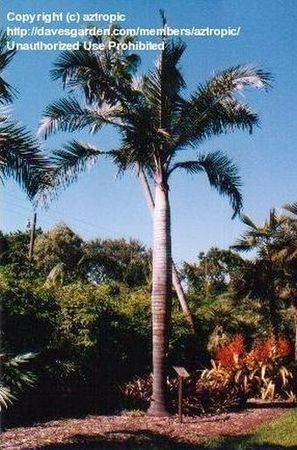
| + | "Pseudophoenix lediniana is probably the largest of the pseudophoenix palms.Overall, it is similar to P.vinifera with an upright habit except as the palm matures,the base of the tree is considerably wider than other P. species. (Scott (aztropic)) | ||
| − | + | Perhaps the most elegant and fast growing of the genus, this Pseudophoenix forms a waxy-white and distinctively ringed, spindle-shaped trunk that supports a crown of gracefully arching, dark green leaves. It is a very rare species, native only to a very small area in southern Haiti, where it grows in dry scrub forest on the steep slopes of a river valley. (RPS.com) | |
| + | {{read more bottom}} | ||
| − | + | <br clear="all"> | |
| + | {{#Widget:AdResban}} | ||
| + | <center><gallery caption="IMAGE GALLERY" perrow="" widths="" heights=""> | ||
| + | image:Pseudophoenix_lediniana.jpg|Fairchild Tropical Botanic Garden, Miami, FL. Photo by Dr. Scott Zona | ||
| + | image:Pseudophoenix_lediniana02.jpg|Fairchild Tropical Garden, Miami, FL. Jeff Searle (Searle Brothers Nursery, FL.) giving scale. Photo by BGL | ||
| + | image:-gallery-members-Pseudophoenix_Fitzpatrick11.jpg|Tropical Research and Education Center. Photo by George Fitzpatrick. | ||
| + | image:Pseu-ledinia_Medium.jpg|A Critically Endangered Species from Haiti which is part of the ex situ conservation collections of the National Botanic Garden of the Dominican Republic. Photo by Dr. Rosa Rodriguez | ||
| + | image:DSCF0566-compressed.jpg|Photo-FTGB | ||
| + | image:5549224974_aba0ae0b33_z.jpg|South Florida. Photo by Kyle Wicomb | ||
| + | File:20151023_184339.jpg.7f271d0a7db516f6dd214bfd4ec154f3.jpg|Key West, FL. Garden of Jim & Judy Glock. Photo by Tim Odonnel. Pseudophoenix sargentii var. navasana left and Pseudophoenix lediniana right. | ||
| + | File:568a399b5aa80_Pseudophoenixlediniana9-15.JPG.e45780b9842aad0268ffca5f29141cf5.JPG|Hawaii. Photo by Al in Kona. | ||
| + | File:56973577341c2_PseudophoenixledinianainflorescenseJan16(1).JPG.1222ead6e2e3585172df189a6ffeda59.JPG|Hawaii. Photo by Al in Kona. | ||
| + | File:569735adc12c5_PseudophoenixledinianainflorescenseJan16(2).JPG.c685378b376522e2b037ea4452918596.JPG|Hawaii. Photo by Al in Kona. | ||
| + | File:post-90-0-97043500-1406183936.jpg|Hawaii. Photo by Al in Kona. | ||
| + | File:post-90-0-97635400-1406184014.jpg|Hawaii. Photo by Al in Kona. | ||
| + | image:Post-90-1203830255.jpg|Papa Bay Estates, South Kona, Hawaii Island. Photo by Al in Kona | ||
| + | image:Post-90-1203830364.jpg|Papa Bay Estates, South Kona, Hawaii Island. Photo by Al in Kona | ||
| + | File:pl13174700-1406205348.jpg | ||
| + | File:Pseudophoenixlendiniana5.jpg | ||
| + | File:20160123_141153.jpg.1f46a9451e5bf527f381fa1be56dc958.jpg|Cutler Bay, South Florida. Photo by Andrew Street. | ||
| + | File:20160123_141141.jpg.6764306b34f4ef4c4590bb1a51800e5c.jpg|Cutler Bay, South Florida. Photo by Andrew Street. | ||
| + | File:Pseudophoenix_lediniana_specimen.jpg|Fairchild Tropical Garden, Miami, FL. Photo by Paul Craft. | ||
| + | File:Pseudophoenix_ledeniana_specimen3.jpg|Fairchild Tropical Garden, Miami, FL. Photo by Paul Craft. | ||
| + | File:Pseudophoenix_lediniana_trunk.jpg|Fairchild Tropical Garden, Miami, FL. Photo by Paul Craft. | ||
| + | File:Pseudophoenix_ledeniana_leaves.jpg|Fairchild Tropical Garden, Miami, FL. Photo by Paul Craft. | ||
| + | File:Pseudophoenix_ledeniana_infructescence.jpg|Fairchild Tropical Garden, Miami, FL. Photo by Paul Craft. | ||
| + | File:1aa170.jpg|Hawaii. Photo by Geoff Stein. | ||
| + | File:0f2fc9.jpg|Hawaii. Photo by Geoff Stein. | ||
| + | File:b63bd1.jpg|Hawaii. Photo by Geoff Stein. | ||
| + | File:2641860.jpg|Hawaii. Photo by Geoff Stein. | ||
| + | File:plDSC_0055H. Robert Wilson.jpg|Hawaii. Photo by H. Robert Wilson. | ||
| + | [[File:Florida-040.jpg | ||
| + | |||
| + | Image:IMG 3277.jpg|Coral Gables, Florida. | ||
| + | image:PseLed.jpg|Photo-Rare Palm Seeds.com | ||
| + | image: | ||
| + | </gallery></center> | ||
==External Links== | ==External Links== | ||
*[http://eunops.org/content/glossary-palm-terms Glossary of Palm Terms] | *[http://eunops.org/content/glossary-palm-terms Glossary of Palm Terms] | ||
| Line 51: | Line 88: | ||
Phonetic spelling of Latin names by edric. | Phonetic spelling of Latin names by edric. | ||
| − | Special thanks to Geoff Stein, (Palmbob) for his hundreds of photos | + | Special thanks to Geoff Stein, (Palmbob) for his hundreds of photos. |
| − | Special thanks to [http://palmweb.org/?q=node/2 Palmweb.org], Dr. John Dransfield, Dr. Bill Baker & team, for their volumes of information and photos | + | Special thanks to [http://palmweb.org/?q=node/2 Palmweb.org], Dr. John Dransfield, Dr. Bill Baker & team, for their volumes of information and photos. |
Glossary of Palm Terms; Based on the glossary in Dransfield, J., N.W. Uhl, C.B. Asmussen-Lange, W.J. Baker, M.M. Harley & C.E. Lewis. 2008. Genera Palmarum - Evolution and Classification of the Palms. Royal Botanic Gardens, Kew. All images copyright of the artists and photographers (see images for credits). | Glossary of Palm Terms; Based on the glossary in Dransfield, J., N.W. Uhl, C.B. Asmussen-Lange, W.J. Baker, M.M. Harley & C.E. Lewis. 2008. Genera Palmarum - Evolution and Classification of the Palms. Royal Botanic Gardens, Kew. All images copyright of the artists and photographers (see images for credits). | ||
| Line 59: | Line 96: | ||
Zona, S. 2002. A Revision of Pseudophoenix. Palms 46(1) 19-38. | Zona, S. 2002. A Revision of Pseudophoenix. Palms 46(1) 19-38. | ||
| − | |||
| − | |||
| − | |||
| − | |||
| − | |||
| − | |||
| − | |||
| − | |||
| − | |||
| − | |||
| − | |||
| − | |||
| − | |||
| − | |||
| − | |||
| − | |||
| − | |||
| − | |||
| − | |||
| − | |||
| − | |||
| − | |||
| − | |||
| − | |||
| − | |||
| − | |||
| − | |||
| − | |||
| − | |||
| − | |||
| − | |||
| − | |||
| − | |||
| − | |||
| − | |||
| − | |||
| − | |||
{{SpeciesListBackLink}} | {{SpeciesListBackLink}} | ||
[[Category:PSEUDOPHOENIX|lediniana]] | [[Category:PSEUDOPHOENIX|lediniana]] | ||
Latest revision as of 22:28, 24 August 2016
| Pseudophoenix (soo-doh-FEH-niks) lediniana (leh-dee-nee-AHN-ah) | |||||||
|---|---|---|---|---|---|---|---|
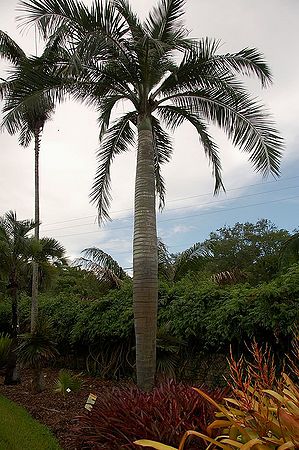
 Fairchild Tropical Garden, Miami, FL. Photo by Paul Craft. | |||||||
| Scientific Classification | |||||||
| |||||||
| Synonyms | |||||||
|
| |||||||
| Native Continent | |||||||
 | |||||||
| Morphology | |||||||
| |||||||
| Culture | |||||||
|
| |||||||
| Survivability index | |||||||
|
| |||||||
| Common names | |||||||
|
| |||||||
Contents
Habitat and Distribution
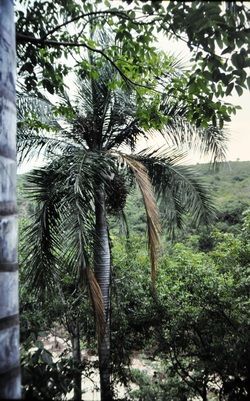
Haiti. Pseudophoenix lediniana is known only from wet forest along small canyons
Description
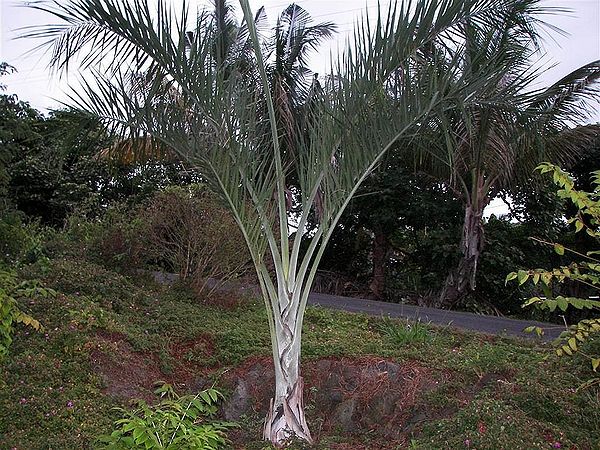
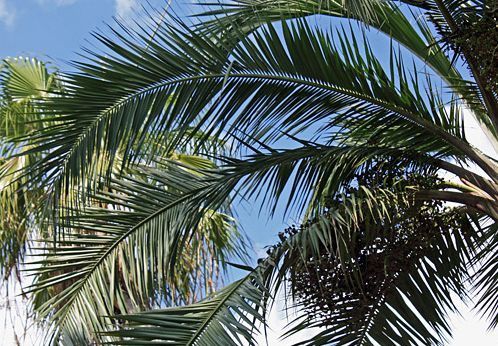
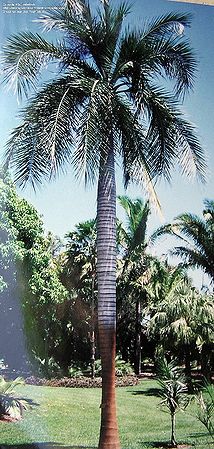
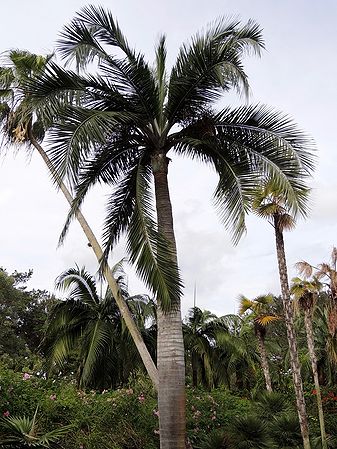
Stem about 5 m tall, fusiform or ventricose, 25.1–32.5 cm in diameter breast high, gray, with prominent leaf scars when young. Leaves 15–17 in the crown, spreading; leaf about 270–310 cm long; sheath 36.0–58 cm long, green with silvery gray scales near the apex; petiole 25–60 cm long; rachis about 236 cm long, often with brown scales along its margin; leaf segments 140–160 per one side of the rachis; middle leaf segment 49.0–66.5 cm long, 1.6–2.5 cm wide, lanceolate with an acuminate tip, gray-green, glaucous abaxially, glaucous to glossy adaxially, ramenta absent on the abaxial surface of the midvein at the base of the leaf segment. Inflorescence arching to pendulous, branched to 3 orders, about 1.7 m long; peduncle about 95 cm long and 4.0 cm in diam., glabrous; prophyll about 104 cm long, about 8.5 cm wide, bearing dark brown scales along both edges (keels); inner bract not seen; rachillae 13.0–14.7 cm long and 1.5–1.7 mm in diam., directed toward the apex of the inflorescence. Flower pseudopedicel 0.7–2.0 mm long, 1.4–1.7 mm in diam., green to glaucous; calyx a shallow three-lobed cupule, 4.0–5.2 mm in diam., lobe apices rounded, green to glaucous, margins hyaline; petals ovate, 5.5–6.0 mm long, 4.7–4.9 mm wide, green, glaucous abaxially, spreading, with about 12 major veins; filaments about 2.1 mm long, not connate, anthers ovoid, about 4.3 mm long and 2.1 mm wide, yellow; gynoecium (in bisexual flowers) about 3.2 mm long and 2.0 mm in diam.(pistillode in staminate flowers smaller), green. Fruit 17.2–25.1 mm long, 14.8–21.7 mm in diam. (in single-seeded fruits); endocarp 15.2–17.6 mm long, 15.6–17.3 mm in diam., about 0.5 mm thick. Seed 12.3–14.6 mm long, 10.9–14.2 mm in diam. (S. Zona. 2002)/Palmweb. Editing by edric.
Pseudophoenix lediniana is similar in many respects to P. vinifera, but the lobed calyx of P. lediniana is markedly distinct from the unlobed calyx of P. vinifera. The stem of P. lediniana is not strongly bottle-shaped, as in P. vinifera, but rather slightly ventricose. (S. Zona. 2002)
Culture
Sunny, moist, but well drained position. Cold Hardiness Zone: 10a.
Comments and Curiosities
Conservation: The palm is not valued for wine-making, and the area is under no severe threats by human activities. Nevertheless, the species is highly vulnerable and without protection. (S. Zona. 2002)/Palmweb.
Critically Endangered; Found in the south-west peninsula. In 1989 only 30 trees were found in the wild. (ICUN Redlist)
Uses: Locally; the fruit is fed to livestock.
In cultivation, Pseudophoenix lediniana is said to be the fastest-growing of all Pseudophoenix. It makes a lovely ornamental palm, but it is not yet common outside the collections of botanical gardens and enthusiasts. (S. Zona. 2002)/Palmweb.
| read more |
|---|
|
"Pseudophoenix lediniana is probably the largest of the pseudophoenix palms.Overall, it is similar to P.vinifera with an upright habit except as the palm matures,the base of the tree is considerably wider than other P. species. (Scott (aztropic)) Perhaps the most elegant and fast growing of the genus, this Pseudophoenix forms a waxy-white and distinctively ringed, spindle-shaped trunk that supports a crown of gracefully arching, dark green leaves. It is a very rare species, native only to a very small area in southern Haiti, where it grows in dry scrub forest on the steep slopes of a river valley. (RPS.com) |
- IMAGE GALLERY

Fairchild Tropical Botanic Garden, Miami, FL. Photo by Dr. Scott Zona
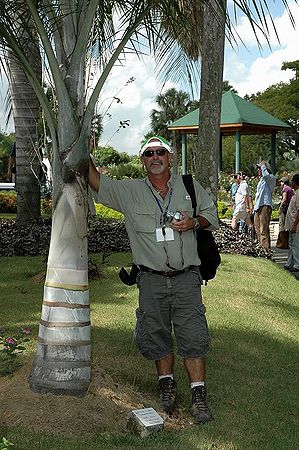
Fairchild Tropical Garden, Miami, FL. Jeff Searle (Searle Brothers Nursery, FL.) giving scale. Photo by BGL
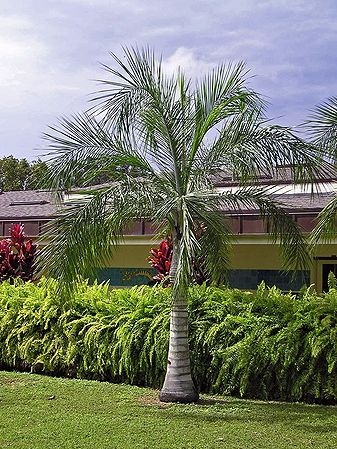
Tropical Research and Education Center. Photo by George Fitzpatrick.
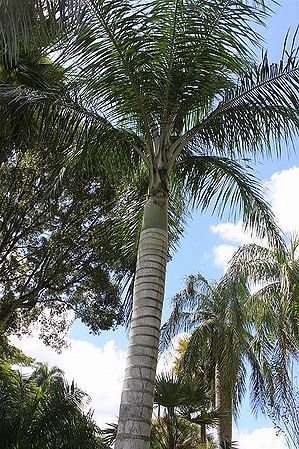
A Critically Endangered Species from Haiti which is part of the ex situ conservation collections of the National Botanic Garden of the Dominican Republic. Photo by Dr. Rosa Rodriguez
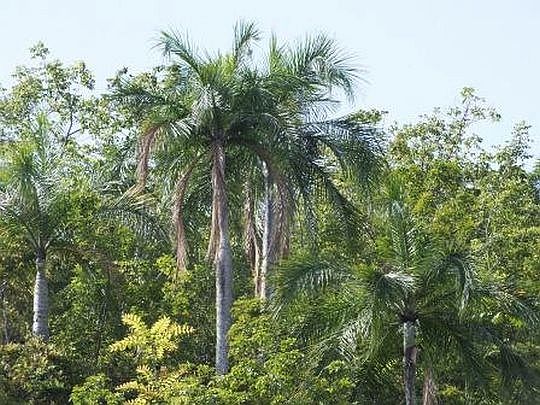
Photo-FTGB

South Florida. Photo by Kyle Wicomb

Key West, FL. Garden of Jim & Judy Glock. Photo by Tim Odonnel. Pseudophoenix sargentii var. navasana left and Pseudophoenix lediniana right.
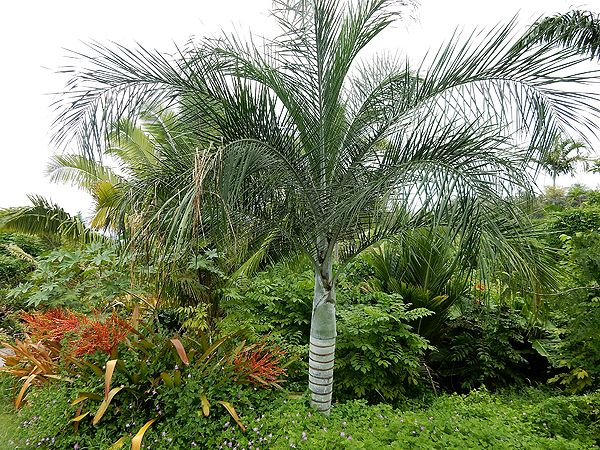
Hawaii. Photo by Al in Kona.
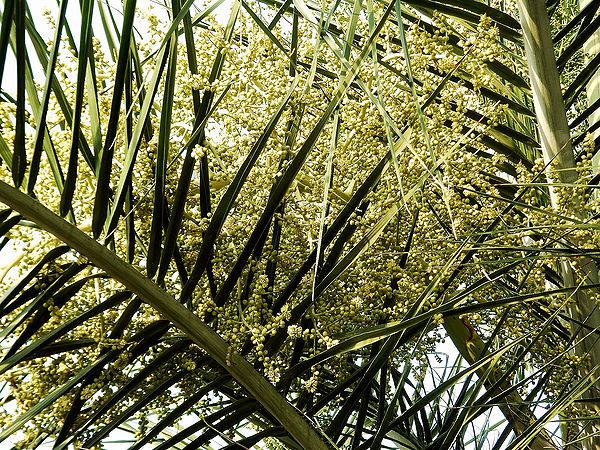
Hawaii. Photo by Al in Kona.

Hawaii. Photo by Al in Kona.
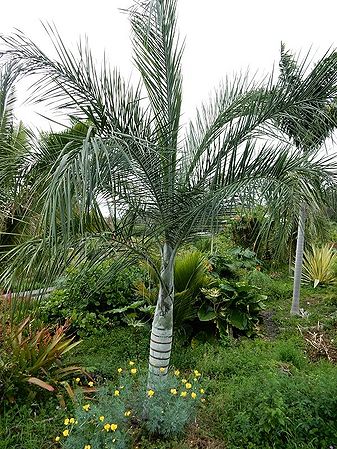
Hawaii. Photo by Al in Kona.
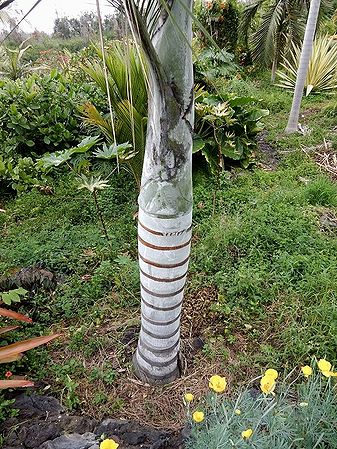
Hawaii. Photo by Al in Kona.

Papa Bay Estates, South Kona, Hawaii Island. Photo by Al in Kona
Papa Bay Estates, South Kona, Hawaii Island. Photo by Al in Kona


Cutler Bay, South Florida. Photo by Andrew Street.

Cutler Bay, South Florida. Photo by Andrew Street.

Fairchild Tropical Garden, Miami, FL. Photo by Paul Craft.

Fairchild Tropical Garden, Miami, FL. Photo by Paul Craft.

Fairchild Tropical Garden, Miami, FL. Photo by Paul Craft.
Fairchild Tropical Garden, Miami, FL. Photo by Paul Craft.

Fairchild Tropical Garden, Miami, FL. Photo by Paul Craft.
Hawaii. Photo by Geoff Stein.
Hawaii. Photo by Geoff Stein.
Hawaii. Photo by Geoff Stein.
Hawaii. Photo by Geoff Stein.
Hawaii. Photo by H. Robert Wilson.
Coral Gables, Florida.
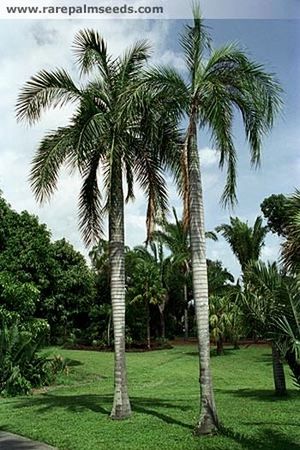
Photo-Rare Palm Seeds.com


.JPG.1222ead6e2e3585172df189a6ffeda59.JPG)
.JPG.c685378b376522e2b037ea4452918596.JPG)


External Links
- Glossary of Palm Terms
- MODERN BOTANICAL LATIN
- "Just To Be Clear"
- A Revision Of Pseudophoenix By Dr. Scott Zona
- e-taxonomy.eu
References
Phonetic spelling of Latin names by edric.
Special thanks to Geoff Stein, (Palmbob) for his hundreds of photos.
Special thanks to Palmweb.org, Dr. John Dransfield, Dr. Bill Baker & team, for their volumes of information and photos.
Glossary of Palm Terms; Based on the glossary in Dransfield, J., N.W. Uhl, C.B. Asmussen-Lange, W.J. Baker, M.M. Harley & C.E. Lewis. 2008. Genera Palmarum - Evolution and Classification of the Palms. Royal Botanic Gardens, Kew. All images copyright of the artists and photographers (see images for credits).
Zona, S. 2002. A Revision of Pseudophoenix. Palms 46(1) 19-38.
Many Special Thanks to Ed Vaile for his long hours of tireless editing and numerous contributions.