Difference between revisions of "Laccospadix australasica"
| (32 intermediate revisions by one user not shown) | |||
| Line 1: | Line 1: | ||
__noeditsection__ | __noeditsection__ | ||
{{Palmbox | {{Palmbox | ||
| − | |image= | + | |image=LaDSC_1822.jpg |
|image_caption=Gold Coast Hinterland, Queensland. Photo by Daryl O'Connor | |image_caption=Gold Coast Hinterland, Queensland. Photo by Daryl O'Connor | ||
|genus=Laccospadix (lak-koh-SPAH-dix) | |genus=Laccospadix (lak-koh-SPAH-dix) | ||
| Line 20: | Line 20: | ||
}} | }} | ||
==Habitat and Distribution== | ==Habitat and Distribution== | ||
| − | + | ''Laccospadix australasica'' is native to Australia. Found in [[File:6439_20101207T041926_0.jpg|thumb|left|400px|Photo by Peter Richardson.]]shaded humid Rain Forest. | |
| − | [[ | + | |
==Description== | ==Description== | ||
''Laccospadix australasica'' is a moderate size palm that can be clustering or solitary, and can exhibit a vibrant red new leaf, or the typical green. It slightly resembles a Howea, and has even been rumored to eventually be combined into this genus. | ''Laccospadix australasica'' is a moderate size palm that can be clustering or solitary, and can exhibit a vibrant red new leaf, or the typical green. It slightly resembles a Howea, and has even been rumored to eventually be combined into this genus. | ||
| Line 27: | Line 26: | ||
Atherton Palm is an attractive palm that can be seen as a solitary palm or a clumping palm with multiple trunks. It can grow to about seven metres in height with trunk up to 10 cm in diameter in solitary specimens, but clumping plants are lower with smaller trunks. The fronds are pinnate , and new fronds are often reddish brown in colour. It produces long flower spikes that hang downwards from the crown of fronds. The fruit are small red and oval, growing along the length of the spike after flowering. Atherton Palm makes an ornamental garden palm in a shady position. Editing by edric. | Atherton Palm is an attractive palm that can be seen as a solitary palm or a clumping palm with multiple trunks. It can grow to about seven metres in height with trunk up to 10 cm in diameter in solitary specimens, but clumping plants are lower with smaller trunks. The fronds are pinnate , and new fronds are often reddish brown in colour. It produces long flower spikes that hang downwards from the crown of fronds. The fruit are small red and oval, growing along the length of the spike after flowering. Atherton Palm makes an ornamental garden palm in a shady position. Editing by edric. | ||
==Culture== | ==Culture== | ||
| − | It's cultural needs are also similar to Howeas, so are a relatively easy grow for the milder coastal locations of the subtropics and some temperate climates. | + | It's cultural needs are also similar to Howeas, so are a relatively easy grow for the milder coastal locations of the subtropics and some temperate climates. The plant is quite cold tolerant and one report suggests will withstand short periods of sub zero temperatures as low as -4 degrees celcius. Cold Hardiness Zone: 9b |
<center> | <center> | ||
[[{{PFC}}http://www.palmpedia.net/palmsforcal/index.php5/Laccospadix_australasica]] | [[{{PFC}}http://www.palmpedia.net/palmsforcal/index.php5/Laccospadix_australasica]] | ||
| Line 35: | Line 34: | ||
Although not a rare palm in its native habitat--montane rainforests in northeastern Queensland, Australia between 800 and 1600 m (2600 and 5200 ft.)-- the Atherton Palm is rarely seen in cultivation outside Australia. This is particularly surprising as it adapts easily to a range of climates and as it is a highly attractive, smallish palm that will find room in just about any garden. It also adapts well to cultivation in the house. It has a slender, solitary or sometimes clustering stem that carries a small, upright crown of finely pinnate, dark green leaves. The flower stalk is unbranched and carries many small, bright red fruits. Laccospadix does not look unlike a small Howea, and indeed the two are closely related. (RPS.com) | Although not a rare palm in its native habitat--montane rainforests in northeastern Queensland, Australia between 800 and 1600 m (2600 and 5200 ft.)-- the Atherton Palm is rarely seen in cultivation outside Australia. This is particularly surprising as it adapts easily to a range of climates and as it is a highly attractive, smallish palm that will find room in just about any garden. It also adapts well to cultivation in the house. It has a slender, solitary or sometimes clustering stem that carries a small, upright crown of finely pinnate, dark green leaves. The flower stalk is unbranched and carries many small, bright red fruits. Laccospadix does not look unlike a small Howea, and indeed the two are closely related. (RPS.com) | ||
| + | |||
| + | This palm grows to approx. 8 m but normally only 2-4 m in the understorey of rainforest and comes from the Mt Lewis and Atherton Tableland region west of Cairns. Laccospadix australasicus is comparatively slow growing and increasingly rare.It occurs as a single trunked form or as a multiple trunked form and both variations can be found growing together from about 800 m altitude. Collecting seed and plantlets of this species is illegal. | ||
<br clear="all"> | <br clear="all"> | ||
| Line 50: | Line 51: | ||
image:Laccospadix_australasica6.jpg|Hawaiian Tropical Botanical Garden. | image:Laccospadix_australasica6.jpg|Hawaiian Tropical Botanical Garden. | ||
image:LaDSC_6950.jpg|Gold Coast Hinterland, Queensland. Photo by Daryl O'Connor | image:LaDSC_6950.jpg|Gold Coast Hinterland, Queensland. Photo by Daryl O'Connor | ||
| + | File:post-42-092105300 1286013181.jpg|Gold Coast Hinterland, Queensland. Photo by Daryl O'Connor | ||
image:La220.jpg|Mt. Lewis, Queensland, Australia. Photo by Dr. John Dransfield, Royal Botanic Gardens, Kew/Palmweb. | image:La220.jpg|Mt. Lewis, Queensland, Australia. Photo by Dr. John Dransfield, Royal Botanic Gardens, Kew/Palmweb. | ||
image:La215.jpg|Mt. Lewis, Queensland, Australia. Photo by Dr. John Dransfield, Royal Botanic Gardens, Kew/Palmweb. | image:La215.jpg|Mt. Lewis, Queensland, Australia. Photo by Dr. John Dransfield, Royal Botanic Gardens, Kew/Palmweb. | ||
| Line 58: | Line 60: | ||
image:La2526.jpg|Mt Coot-tha Botanic Garden, Queensland, Australia. Photo by Dr. William J. Baker, Royal Botanic Gardens, Kew/Palmweb. | image:La2526.jpg|Mt Coot-tha Botanic Garden, Queensland, Australia. Photo by Dr. William J. Baker, Royal Botanic Gardens, Kew/Palmweb. | ||
image:La2527.jpg|Mount Lewis National Park, Shire of Mareeba and Douglas Shire of Far North Queensland. | image:La2527.jpg|Mount Lewis National Park, Shire of Mareeba and Douglas Shire of Far North Queensland. | ||
| − | image:La2528.jpg | + | image:La2528.jpg|Mt Coot-tha Botanic Garden, Queensland, Australia. Photo by Dr. William J. Baker, Royal Botanic Gardens, Kew/Palmweb. |
| + | File:5302357727_7934714e23_b.jpg|Mt. Lewis, Queensland, Australia. Photo by xerantheum. | ||
| + | File:5302357455_7c30200bc4_b.jpg|Mt. Lewis, Queensland, Australia. Photo by xerantheum. | ||
image:2251632597_eb38c03ac4_o.jpg|The unbranched spikes of red fruit of this species are very similar to those of other genera in the subtribe Linospadicinae, including Howea, Linospadix and Calyptrocalyx. Mareeba, northern Queensland, Australia. Photo by tanetahi | image:2251632597_eb38c03ac4_o.jpg|The unbranched spikes of red fruit of this species are very similar to those of other genera in the subtribe Linospadicinae, including Howea, Linospadix and Calyptrocalyx. Mareeba, northern Queensland, Australia. Photo by tanetahi | ||
File:post-7381-0-23478900-1436665635.jpg|Brisbane Botanic Gardens, Mount Coot-tha, Brisbane, Australia. Photo by Paul Latzias. | File:post-7381-0-23478900-1436665635.jpg|Brisbane Botanic Gardens, Mount Coot-tha, Brisbane, Australia. Photo by Paul Latzias. | ||
File:Laccospadix-australasica-kerikeri.jpg|Kerikeri, New Zealand. Photo by Kahuroa. | File:Laccospadix-australasica-kerikeri.jpg|Kerikeri, New Zealand. Photo by Kahuroa. | ||
| − | File:Laccospadix_australasica_on_Mt._Lewis.jpg|Mount Lewis National Park, Shire of Mareeba and Douglas Shire of Far North Queensland, ' | + | File:Laccospadix_australasica_on_Mt._Lewis.jpg|Mount Lewis National Park, Shire of Mareeba and Douglas Shire of Far North Queensland, 'Robust' form. Photo by tanetahi. |
File:2351396119_3e725a703b_o.jpg|Mount Lewis National Park, Shire of Mareeba and Douglas Shire of Far North Queensland, Photo by tanetahi. | File:2351396119_3e725a703b_o.jpg|Mount Lewis National Park, Shire of Mareeba and Douglas Shire of Far North Queensland, Photo by tanetahi. | ||
File:Laccospadix_australasica_in_the_Herberton_Range.jpg|Herberton Range, Queensland, Photo by tanetahi. | File:Laccospadix_australasica_in_the_Herberton_Range.jpg|Herberton Range, Queensland, Photo by tanetahi. | ||
File:Laccospadix_australasica_Herberton_Range.jpg|Herberton Range, Queensland, Photo by tanetahi. | File:Laccospadix_australasica_Herberton_Range.jpg|Herberton Range, Queensland, Photo by tanetahi. | ||
File:950460.jpg|Ho'omaluhia Botanical Gardens, Kāne'ohe, Oahu, Hawaii. Photo by Geoff Stein. | File:950460.jpg|Ho'omaluhia Botanical Gardens, Kāne'ohe, Oahu, Hawaii. Photo by Geoff Stein. | ||
| + | File:d11fd0.jpg|Hawaii. Photo by Geoff Stein. | ||
| + | File:6edc07.jpg|Hawaii. 'Robust' form. Photo by Geoff Stein. | ||
| + | File:8db3b7.jpg|Lyon Arboretum, University of Hawaii-Manoa, Honolulu, Oahu, Hawaii. Photo by Geoff Stein. | ||
| + | File:c37775.jpg|Ventura, California. 'Robust' form, clustering var. Photo by Geoff Stein. | ||
| + | File:2ece86.jpg|Orange County, California. 'Robust' form, clustering var. Photo by Geoff Stein. | ||
| + | File:56df89.jpg|Lyon Arboretum, University of Hawaii-Manoa, Honolulu, Oahu, Hawaii. Photo by Geoff Stein. | ||
| + | File:67276a.jpg|Balboa Park, San Diego, California. Photo by Geoff Stein. | ||
| + | File:4734ce.jpg|Hawaii. Photo by Geoff Stein. | ||
| + | File:29a902.jpg|Pana'ewa Rainforest Zoo and Gardens, Hilo, Hawaii. Photo by Geoff Stein. | ||
| + | File:92f545.jpg|Hawaii. Photo by Geoff Stein. | ||
| + | File:1d6064.jpg|Hawaii. Photo by Geoff Stein. | ||
| + | File:6439_20101205T023034_0.jpg|Photo by Peter Richardson. | ||
| + | File:6439_20101207T041926_0.jpg|Photo by Peter Richardson. | ||
| + | File:6439_20101205T022859_0.jpg|Photo by Peter Richardson. | ||
| + | File:6439_20101205T022822_0.jpg|Photo by Peter Richardson. | ||
| + | File:6439_20101205T022752_0.jpg|Photo by Peter Richardson. | ||
| + | File:6439_20101205T022545_0.jpg|Photo by Peter Richardson. | ||
| + | File:6439_20101205T020913_0.jpg|Photo by Peter Richardson. | ||
| + | File:6439_20101205T012441_0.jpg|Photo by Peter Richardson. | ||
| + | File:6439_20101205T010219_0.jpg|Photo by Peter Richardson. | ||
| + | File:6439_20101205T005523_0.jpg|Photo by Peter Richardson. | ||
| + | File:6439_20101205T005504_0.jpg|Photo by Peter Richardson. | ||
| + | File:6439_20101205T001548_0.jpg|Photo by Peter Richardson. | ||
| + | File:6439_20101206T175312_0.jpg|Photo by Peter Richardson. | ||
| + | File:Laccospadix_australasica1.jpg|AUSTRALIA: Queensland: Herberton, northern Queensland, February, 1964. Photo by L. H. Bailey Hortorium. | ||
| + | File:Laccospadix_australasica21.jpg|AUSTRALIA: Queensland: northern Queensland, March, 1977. Photo by L. H. Bailey Hortorium. | ||
| + | File:Laccospadix_australasica3.jpg|AUSTRALIA: Queensland: Herberton Range, December, 1977. Photo by L. H. Bailey Hortorium. | ||
| + | |||
| + | File:laimg_0450.jpg|H.P. Leu Gardens, Orlando, FL. Photo by Leu Gardens Botanist Eric S. | ||
| + | File:laccospadix_australasica_0014_new_leaf.jpg|Photo-Jungle music Palms & Cycads.com | ||
| + | File:Laccospadix_australasica02.jpg|Australia. Photo by Mike Gray. | ||
| + | File:post-907-069346200 1303708806.jpg|Maclean, Northern N.S.W, Australia. Photo by Matt Clarke. | ||
| + | File:post-907-008650800 1303709219.jpg|Maclean, Northern N.S.W, Australia. Photo by Matt Clarke. | ||
| + | File:post-31-095243000 1338476813.jpg|San Francisco, California. Photo by Darold Petty. | ||
| + | File:Laccospadix_australasica2.jpg|Hawaii Tropical Botanical Garden. | ||
| + | |||
| + | File:CFGn977.jpg | ||
| + | File:3022150952_06b9f3c490_b.jpg|Sydney, New South Wales, Australia. | ||
| + | File:2112461422_5cdb11f3d8_b.jpg|Sydney, New South Wales, Australia. | ||
File:Laccospadix australasica 001.jpg | File:Laccospadix australasica 001.jpg | ||
File:Laccospadix australasica 0027.jpg | File:Laccospadix australasica 0027.jpg | ||
| Line 92: | Line 135: | ||
Glossary of Palm Terms; Based on the glossary in Dransfield, J., N.W. Uhl, C.B. Asmussen-Lange, W.J. Baker, M.M. Harley & C.E. Lewis. 2008. Genera Palmarum - Evolution and Classification of the Palms. Royal Botanic Gardens, Kew. All images copyright of the artists and photographers (see images for credits). | Glossary of Palm Terms; Based on the glossary in Dransfield, J., N.W. Uhl, C.B. Asmussen-Lange, W.J. Baker, M.M. Harley & C.E. Lewis. 2008. Genera Palmarum - Evolution and Classification of the Palms. Royal Botanic Gardens, Kew. All images copyright of the artists and photographers (see images for credits). | ||
| + | |||
{{SpeciesListBackLink}} | {{SpeciesListBackLink}} | ||
[[Category:LACCOSPADIX|australasica]] | [[Category:LACCOSPADIX|australasica]] | ||
Latest revision as of 09:24, 27 November 2016
| Laccospadix (lak-koh-SPAH-dix) australasica (aws-trah-lah-ZIH-kah) | |||||||
|---|---|---|---|---|---|---|---|
 Gold Coast Hinterland, Queensland. Photo by Daryl O'Connor | |||||||
| Scientific Classification | |||||||
| |||||||
| Synonyms | |||||||
|
| |||||||
| Native Continent | |||||||
 | |||||||
| Morphology | |||||||
| |||||||
| Culture | |||||||
|
| |||||||
| Survivability index | |||||||
|
| |||||||
| Common names | |||||||
|
| |||||||
Contents
Habitat and Distribution
Laccospadix australasica is native to Australia. Found in
Description
Laccospadix australasica is a moderate size palm that can be clustering or solitary, and can exhibit a vibrant red new leaf, or the typical green. It slightly resembles a Howea, and has even been rumored to eventually be combined into this genus.
Atherton Palm is an attractive palm that can be seen as a solitary palm or a clumping palm with multiple trunks. It can grow to about seven metres in height with trunk up to 10 cm in diameter in solitary specimens, but clumping plants are lower with smaller trunks. The fronds are pinnate , and new fronds are often reddish brown in colour. It produces long flower spikes that hang downwards from the crown of fronds. The fruit are small red and oval, growing along the length of the spike after flowering. Atherton Palm makes an ornamental garden palm in a shady position. Editing by edric.
Culture
It's cultural needs are also similar to Howeas, so are a relatively easy grow for the milder coastal locations of the subtropics and some temperate climates. The plant is quite cold tolerant and one report suggests will withstand short periods of sub zero temperatures as low as -4 degrees celcius. Cold Hardiness Zone: 9b

Comments and Curiosities
This is a monotypic genus.
Although not a rare palm in its native habitat--montane rainforests in northeastern Queensland, Australia between 800 and 1600 m (2600 and 5200 ft.)-- the Atherton Palm is rarely seen in cultivation outside Australia. This is particularly surprising as it adapts easily to a range of climates and as it is a highly attractive, smallish palm that will find room in just about any garden. It also adapts well to cultivation in the house. It has a slender, solitary or sometimes clustering stem that carries a small, upright crown of finely pinnate, dark green leaves. The flower stalk is unbranched and carries many small, bright red fruits. Laccospadix does not look unlike a small Howea, and indeed the two are closely related. (RPS.com)
This palm grows to approx. 8 m but normally only 2-4 m in the understorey of rainforest and comes from the Mt Lewis and Atherton Tableland region west of Cairns. Laccospadix australasicus is comparatively slow growing and increasingly rare.It occurs as a single trunked form or as a multiple trunked form and both variations can be found growing together from about 800 m altitude. Collecting seed and plantlets of this species is illegal.
- IMAGE GALLERY


California.

California.

SoCal.

California.

Close up.

showing new red leaf opening, Dean Ouer's garden, Leucadia CA.

Gold Coast Hinterland, Queensland. Photo by Daryl O'Connor

Gold Coast Hinterland, Queensland. Photo by Daryl O'Connor

Hawaiian Tropical Botanical Garden.

Gold Coast Hinterland, Queensland. Photo by Daryl O'Connor

Gold Coast Hinterland, Queensland. Photo by Daryl O'Connor

Mt. Lewis, Queensland, Australia. Photo by Dr. John Dransfield, Royal Botanic Gardens, Kew/Palmweb.

Mt. Lewis, Queensland, Australia. Photo by Dr. John Dransfield, Royal Botanic Gardens, Kew/Palmweb.

Mt. Lewis, Queensland, Australia. Photo by Dr. John Dransfield, Royal Botanic Gardens, Kew/Palmweb.

Mt. Lewis, Queensland, Australia. Photo by Dr. John Dransfield, Royal Botanic Gardens, Kew/Palmweb.

Mt. Lewis, Queensland, Australia. Photo by Dr. John Dransfield, Royal Botanic Gardens, Kew/Palmweb.

Mt. Lewis, Queensland, Australia. Photo by Dr. John Dransfield, Royal Botanic Gardens, Kew/Palmweb.

Mt Coot-tha Botanic Garden, Queensland, Australia. Photo by Dr. William J. Baker, Royal Botanic Gardens, Kew/Palmweb.

Mount Lewis National Park, Shire of Mareeba and Douglas Shire of Far North Queensland.

Mt Coot-tha Botanic Garden, Queensland, Australia. Photo by Dr. William J. Baker, Royal Botanic Gardens, Kew/Palmweb.

Mt. Lewis, Queensland, Australia. Photo by xerantheum.

Mt. Lewis, Queensland, Australia. Photo by xerantheum.

The unbranched spikes of red fruit of this species are very similar to those of other genera in the subtribe Linospadicinae, including Howea, Linospadix and Calyptrocalyx. Mareeba, northern Queensland, Australia. Photo by tanetahi

Brisbane Botanic Gardens, Mount Coot-tha, Brisbane, Australia. Photo by Paul Latzias.

Kerikeri, New Zealand. Photo by Kahuroa.

Mount Lewis National Park, Shire of Mareeba and Douglas Shire of Far North Queensland, 'Robust' form. Photo by tanetahi.

Mount Lewis National Park, Shire of Mareeba and Douglas Shire of Far North Queensland, Photo by tanetahi.

Herberton Range, Queensland, Photo by tanetahi.

Herberton Range, Queensland, Photo by tanetahi.

Ho'omaluhia Botanical Gardens, Kāne'ohe, Oahu, Hawaii. Photo by Geoff Stein.

Hawaii. Photo by Geoff Stein.

Hawaii. 'Robust' form. Photo by Geoff Stein.

Lyon Arboretum, University of Hawaii-Manoa, Honolulu, Oahu, Hawaii. Photo by Geoff Stein.

Ventura, California. 'Robust' form, clustering var. Photo by Geoff Stein.

Orange County, California. 'Robust' form, clustering var. Photo by Geoff Stein.

Lyon Arboretum, University of Hawaii-Manoa, Honolulu, Oahu, Hawaii. Photo by Geoff Stein.

Balboa Park, San Diego, California. Photo by Geoff Stein.

Hawaii. Photo by Geoff Stein.

Pana'ewa Rainforest Zoo and Gardens, Hilo, Hawaii. Photo by Geoff Stein.

Hawaii. Photo by Geoff Stein.

Hawaii. Photo by Geoff Stein.

Photo by Peter Richardson.

Photo by Peter Richardson.

Photo by Peter Richardson.

Photo by Peter Richardson.

Photo by Peter Richardson.

Photo by Peter Richardson.

Photo by Peter Richardson.

Photo by Peter Richardson.

Photo by Peter Richardson.

Photo by Peter Richardson.

Photo by Peter Richardson.

Photo by Peter Richardson.

Photo by Peter Richardson.

AUSTRALIA: Queensland: Herberton, northern Queensland, February, 1964. Photo by L. H. Bailey Hortorium.

AUSTRALIA: Queensland: northern Queensland, March, 1977. Photo by L. H. Bailey Hortorium.

AUSTRALIA: Queensland: Herberton Range, December, 1977. Photo by L. H. Bailey Hortorium.

H.P. Leu Gardens, Orlando, FL. Photo by Leu Gardens Botanist Eric S.

Photo-Jungle music Palms & Cycads.com

Australia. Photo by Mike Gray.

Maclean, Northern N.S.W, Australia. Photo by Matt Clarke.

Maclean, Northern N.S.W, Australia. Photo by Matt Clarke.

San Francisco, California. Photo by Darold Petty.

Hawaii Tropical Botanical Garden.


Sydney, New South Wales, Australia.

Sydney, New South Wales, Australia.


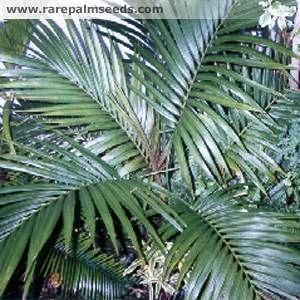
Rare Palm Seeds.com

Rare Palm Seeds.com


External Links
- Glossary of Palm Terms
- MODERN BOTANICAL LATIN
- "Just To Be Clear"
- Click on Arecaceae, for list of photos
- http://keys.trin.org.au/key-server/data/0e0f0504-0103-430d-8004-060d07080d04/media/Html/taxon/Laccospadix_australasicus.htm
- Australian Palms, By John Leslie Dowe
- https://www.youtube.com/watch?v=aE6Qd7yoI8c
References
Phonetic spelling of Latin names by edric.
Special thanks to Geoff Stein, (Palmbob) for his hundreds of photos.
Special thanks to Palmweb.org, Dr. John Dransfield, Dr. Bill Baker & team, for their volumes of information and photos.
Glossary of Palm Terms; Based on the glossary in Dransfield, J., N.W. Uhl, C.B. Asmussen-Lange, W.J. Baker, M.M. Harley & C.E. Lewis. 2008. Genera Palmarum - Evolution and Classification of the Palms. Royal Botanic Gardens, Kew. All images copyright of the artists and photographers (see images for credits).
Many Special Thanks to Ed Vaile for his long hours of tireless editing and numerous contributions.