Difference between revisions of "Roystonea oleracea"
Dypsisdean (Talk | contribs) |
|||
| (43 intermediate revisions by 2 users not shown) | |||
| Line 1: | Line 1: | ||
__noeditsection__ | __noeditsection__ | ||
| − | |||
{{Palmbox | {{Palmbox | ||
| − | |image=Roystonea oleracea in fruit mall | + | |image=Roystonea oleracea in fruit mall hilo.jpg |
|image_caption=Fruiting. | |image_caption=Fruiting. | ||
| − | |genus=Roystonea (roy- | + | |genus=Roystonea (roy-ston-EH-ah) |
|species=<br>oleracea (oh-leh-rah-SEE-uh) | |species=<br>oleracea (oh-leh-rah-SEE-uh) | ||
|subspecies= | |subspecies= | ||
| Line 21: | Line 20: | ||
}} | }} | ||
==Habitat and Distribution== | ==Habitat and Distribution== | ||
| − | ''Roystonea oleracea'' is found in Colombia, Guyana, Leeward Is., Mauritius, La Réunion, Trinidad-Tobago, Venezuela, Windward Is. Lesser Antilles, Barbados, Trinidad and Tobago, northern Venezuela, and northeastern Colombia. Naturalized in Guyana. Surinam, and French Guiana. | + | ''Roystonea oleracea'' is found in Colombia, Guyana, Leeward Is., Mauritius, La Réunion, [[File:4658512902_1e6d1d85a3_o.jpg|thumb|left|450px|Jardim Botãnico rio de Janeiro. Photo by mauroguanandi]]Trinidad-Tobago, Venezuela, Windward Is. Lesser Antilles, Barbados, Trinidad and Tobago, northern Venezuela, and northeastern Colombia. Naturalized in Guyana. Surinam, and French Guiana. A plant of the lowland tropics, it is also grown in the subtropics. Plants are best suited to areas of the tropics with high rainfall. Lowland areas, often in patches of rainforest, in swampy places often in brackish water. Also found in gallery forests in savannah areas that are liable to seasonal inundation, at elevations up to 1,600 metres |
| − | + | ||
==Description== | ==Description== | ||
Imposing, very stately, up to 30 m tall (100 ft), with light gray, erect, cylindrical trunk up to 22 m (70 ft); leaves in crown at top of stem, 3-5 m long (10-16 ft) with leaflets of about 1 m (3.25 ft) in two horizontal ranks; leafstalks, of about 1.5 m (5 ft), broaden to surround and sheath stem; flowers born in large-stalked panicles revealed when the leaf-sheaths beneath them drop off; abundant blue-violet fruit are small, obovoid, and without stalks; R. oleraceae not to be confused with R. regia; latter very similar with its dark red, but round fruit, and differs from R. oleraceae in having more fruit bunches concurrently; additionally, R. regia tends in younger trees to a more obvious swelling or thickening of the trunk at or near the middle, and so was used by the indigenous Indians for canoe building, hence one of its common names, Boat Palm; also, R. oleraceae has ascending leaves giving the crown a somewhat flat appearance, whereas R. regia has lower-drooping, more feathery leaves, in an almost globose crown. (Dr. Robert A. DeFilipps.) | Imposing, very stately, up to 30 m tall (100 ft), with light gray, erect, cylindrical trunk up to 22 m (70 ft); leaves in crown at top of stem, 3-5 m long (10-16 ft) with leaflets of about 1 m (3.25 ft) in two horizontal ranks; leafstalks, of about 1.5 m (5 ft), broaden to surround and sheath stem; flowers born in large-stalked panicles revealed when the leaf-sheaths beneath them drop off; abundant blue-violet fruit are small, obovoid, and without stalks; R. oleraceae not to be confused with R. regia; latter very similar with its dark red, but round fruit, and differs from R. oleraceae in having more fruit bunches concurrently; additionally, R. regia tends in younger trees to a more obvious swelling or thickening of the trunk at or near the middle, and so was used by the indigenous Indians for canoe building, hence one of its common names, Boat Palm; also, R. oleraceae has ascending leaves giving the crown a somewhat flat appearance, whereas R. regia has lower-drooping, more feathery leaves, in an almost globose crown. (Dr. Robert A. DeFilipps.) | ||
| − | Trunk gray, to 40 m tall , 46-66 cm in diam. Leaves 20-22 in the crown, lowest leaves held at or above horizontal; crowns haft about 2 m long; petiole 60-100 cm long, rachis 4-4.6 m long; middle segments 65-94 cm longand 3-4.9 cm wide. Inflorescence about 1.4 m long and 0.7 m wide; prophyll 46.5-53 cm long and 8.8-16 cm wide; peduncular bract about 1.5 m long, widest above 23 the middle, apex caudate; rachillae 16-30 cm long and 1.5-2.8 mm in diam. Staminate flowers white; sepals triangular, 1.4-1.7 mm long and 1.6-2.6 mm wide; petals elliptical to ovate, 3-4.8 mm long and 1.4-2.7 mm wide; stamens 6-8, 4.4-8.8 mm long; filaments awl-shaped, 3-6.9 mm long; anthers 3.5-4.7 mm long, apices recurved; pistillode minute. Pistillate flowers white, 2.5-4.5 per cm; sepals reniform, 1.5-1.8 mm long and 3.3-4.3 mm wide; petals ovate, 2.6-3.4 mm long; staminode 6-lobed, 1.8-2.5 mm long, free for 0.9-1.2 mm; gynoecium 1.8-2.9 mm long and 1.6-2.5 mm in diam. Fruit ellipsoid, gibbous, 12.6-17.6 mm long, 8.2-10.8 mm dorsiventral thickness, and 7.6-10.4 mm wide; epicarp purplish black, stigmatic scar plain; endocarp ellipsoid, 9.8-13.7 mm long, 6.8-7.7 mm dorsiventral thickness, and 6.8-7.7 mm wide; seed ellipsoid, 7.5-10.5 mm long, 4.6-6.1 mm dorsiventral thickness, and 5.1-6.8 mm wide; raphe circular. Eophyll linear-elliptical, short- or exstipitate, weakly costate. (Zona S.)/Palmweb. | + | Caribbean Royal palm is a tall, evergreen, single-stemmed palm tree able to grow from 18 - 40 metres tall. The unbranched stem can be 46 - 66cm in diameter; it is topped by a crown of 16 - 22 leaves. The apical bud is sometimes eaten as a vegetable, even though this leads to the death of the tree. The plant is widely grown as an ornamental and street tree in tropical areas. |
| + | |||
| + | Trunk gray, to 40 m tall , 46-66 cm in diam. Leaves 20-22 in the crown, lowest leaves held at or above horizontal; crowns haft about 2 m long; petiole 60-100 cm long, rachis 4-4.6 m long; middle segments 65-94 cm longand 3-4.9 cm wide. Inflorescence about 1.4 m long and 0.7 m wide; prophyll 46.5-53 cm long and 8.8-16 cm wide; peduncular bract about 1.5 m long, widest above 23 the middle, apex caudate; rachillae 16-30 cm long and 1.5-2.8 mm in diam. Staminate flowers white; sepals triangular, 1.4-1.7 mm long and 1.6-2.6 mm wide; petals elliptical to ovate, 3-4.8 mm long and 1.4-2.7 mm wide; stamens 6-8, 4.4-8.8 mm long; filaments awl-shaped, 3-6.9 mm long; anthers 3.5-4.7 mm long, apices recurved; pistillode minute. Pistillate flowers white, 2.5-4.5 per cm; sepals reniform, 1.5-1.8 mm long and 3.3-4.3 mm wide; petals ovate, 2.6-3.4 mm long; staminode 6-lobed, 1.8-2.5 mm long, free for 0.9-1.2 mm; gynoecium 1.8-2.9 mm long and 1.6-2.5 mm in diam. Fruit ellipsoid, gibbous, 12.6-17.6 mm long, 8.2-10.8 mm dorsiventral thickness, and 7.6-10.4 mm wide; epicarp purplish black, stigmatic scar plain; endocarp ellipsoid, 9.8-13.7 mm long, 6.8-7.7 mm dorsiventral thickness, and 6.8-7.7 mm wide; seed ellipsoid, 7.5-10.5 mm long, 4.6-6.1 mm dorsiventral thickness, and 5.1-6.8 mm wide; raphe circular. Eophyll linear-elliptical, short- or exstipitate, weakly costate. (Zona S.)/Palmweb. Editing by edric. | ||
Contrary to reports in the literature (Bailey, 1935, 1949; McCurrach, 1960; Tomlinson, 1961), the leaf segments of R. oleracea are not arrayed in a single plane or "series." The segments are arrayed in two planes on either side of the rachis. The leaves of the crown typically do not hang much below the horizontal, unlike other species in which the leaves droop and obscure the crownshaft. This characteristic allows one to identify palms of this species from a distance. Roystonea oleracea is also note worthy for its unopened peduncular bract which is strongly clavate with an acuminate tip. Groups of rachillae are undulate, forming wavy curves with amplitudes of 4 cm or more. (Zona S.)/Palmweb. | Contrary to reports in the literature (Bailey, 1935, 1949; McCurrach, 1960; Tomlinson, 1961), the leaf segments of R. oleracea are not arrayed in a single plane or "series." The segments are arrayed in two planes on either side of the rachis. The leaves of the crown typically do not hang much below the horizontal, unlike other species in which the leaves droop and obscure the crownshaft. This characteristic allows one to identify palms of this species from a distance. Roystonea oleracea is also note worthy for its unopened peduncular bract which is strongly clavate with an acuminate tip. Groups of rachillae are undulate, forming wavy curves with amplitudes of 4 cm or more. (Zona S.)/Palmweb. | ||
| Line 35: | Line 35: | ||
</center> | </center> | ||
==Comments and Curiosities== | ==Comments and Curiosities== | ||
| + | Uses: The apical growth bud is cooked and eaten like a cabbage, and has a delicate flavour, An edible starch is obtained from the pith of the stem (this kills the tree). The hard wood has been used to make musical instruments. | ||
| + | |||
"regia and oleracea are easy to tell apart. The ollies are bigger, fatter and faster in every way. They literally grow twice as fast as regias, at least. In the winter, if it's cold enough, the ollies yellow up as soon as the temps fall below about 55F at night." (DoomsDave) | "regia and oleracea are easy to tell apart. The ollies are bigger, fatter and faster in every way. They literally grow twice as fast as regias, at least. In the winter, if it's cold enough, the ollies yellow up as soon as the temps fall below about 55F at night." (DoomsDave) | ||
| Line 43: | Line 45: | ||
This mainly Caribbean genus numbers about 10 species, and R. oleracea is certainly the best and most attractive of them all. With its white marble column-like trunk, superb green crown shaft, and graceful spreading crown of feather shaped leaves, a fully-grown tree is an awe-inspiring sight, and amazing to think that this huge tree grows from such a small seed. It will grow in a range of climates from tropical to warm temperate; in cooler climates it makes a fine conservatory plant. Rich soil and plenty of water are required for optimum growth.The small round seeds germinate readily and seedling growth is very fast. (RPS.com) | This mainly Caribbean genus numbers about 10 species, and R. oleracea is certainly the best and most attractive of them all. With its white marble column-like trunk, superb green crown shaft, and graceful spreading crown of feather shaped leaves, a fully-grown tree is an awe-inspiring sight, and amazing to think that this huge tree grows from such a small seed. It will grow in a range of climates from tropical to warm temperate; in cooler climates it makes a fine conservatory plant. Rich soil and plenty of water are required for optimum growth.The small round seeds germinate readily and seedling growth is very fast. (RPS.com) | ||
| − | "This is a magnificent, massive palm, reaching up to | + | "This is a magnificent, massive palm, reaching up to 30 m tall! The trunk looks like a concrete pillar, and it´s so tall that the large pinate leaves gives only little shade. |
'''Diagnostic features:''' Majestic, upright, pinnate palm with whitish, swollen stem; leaflets with prominent secondary ribs on either side of the midrib. Lower leaves more or less horizontally, not drooping. | '''Diagnostic features:''' Majestic, upright, pinnate palm with whitish, swollen stem; leaflets with prominent secondary ribs on either side of the midrib. Lower leaves more or less horizontally, not drooping. | ||
| Line 54: | Line 56: | ||
<br style="clear:both;"/> | <br style="clear:both;"/> | ||
<center><gallery caption="IMAGE GALLERY" perrow="" widths="" heights=""> | <center><gallery caption="IMAGE GALLERY" perrow="" widths="" heights=""> | ||
| − | Image:Roystonea oleracea near | + | Image:Roystonea oleracea near hotel.jpg|Hawaii. |
| − | Image:Roystonea oleracea in fruit mall | + | Image:Roystonea oleracea in fruit mall hilo.jpg|Fruiting. |
| − | Image:Roystonea | + | Image:Roystonea comparison.jpg|R.olerace/R.regia comparison; R. oleracea on the left, R. regia at right. |
image:GBPIX_photo_150917.jpg|New Caledonia, photo by Ben | image:GBPIX_photo_150917.jpg|New Caledonia, photo by Ben | ||
image:GBPIX_photo_150919.jpg|New Caledonia, photo by Ben | image:GBPIX_photo_150919.jpg|New Caledonia, photo by Ben | ||
| Line 63: | Line 65: | ||
image:GBPIX_photo_188826.jpg|New Caledonia, photo by Ben | image:GBPIX_photo_188826.jpg|New Caledonia, photo by Ben | ||
image:GBPIX_photo_188827.jpg|New Caledonia, photo by Ben | image:GBPIX_photo_188827.jpg|New Caledonia, photo by Ben | ||
| − | |||
image:Roystonea-oleracea61.jpg|Hawaiian Tropical Botanical Garden | image:Roystonea-oleracea61.jpg|Hawaiian Tropical Botanical Garden | ||
image:033_1November2011.jpg|November 2011. Jeff in Costa Rica foe scale. Photo by Jeff in Costa Rica | image:033_1November2011.jpg|November 2011. Jeff in Costa Rica foe scale. Photo by Jeff in Costa Rica | ||
| Line 72: | Line 73: | ||
image:Roystonea_oleracea_(Scott_Zona)_001.jpg|Sitio Burle Marx, outside Rio de Janeiro, Brazil. Home of the famous artist and landscape designer Roberto Burle Marx. Photo by Dr. Scott Zona. | image:Roystonea_oleracea_(Scott_Zona)_001.jpg|Sitio Burle Marx, outside Rio de Janeiro, Brazil. Home of the famous artist and landscape designer Roberto Burle Marx. Photo by Dr. Scott Zona. | ||
image:28a653.jpg|Thailand. Photo by Geoff Stein. | image:28a653.jpg|Thailand. Photo by Geoff Stein. | ||
| − | image:7279e7.jpg|"A very tall individual, it is perharps around 150 years old, and must be over than 30 meters tall. Rio de Janeiro." Photo by Monocromatico. | + | image:7279e7.jpg|"A very tall individual, it is perharps around 150 years old, and must be over than 30 meters tall. Rio de Janeiro." Photo by Monocromatico |
| + | File:8517b0.jpg|"Rio de Janeiro, the magnificent Imperial Palms Alley, in the Botanical Garden." Photo by Monocromatico | ||
| + | File:288d7c.jpg|"An old palm with a damaged trunk, re-enforced with cement. Rio de Janeiro Botanical Garden, early spring." Photo by Monocromatico | ||
| + | |||
| + | File:e7919c.jpg|Hawaii. Photo by Geoff Stein. | ||
image:bf83e8.jpg|Hawaii. Photo by Geoff Stein. | image:bf83e8.jpg|Hawaii. Photo by Geoff Stein. | ||
| − | |||
image:961b31.jpg|Hawaii. Photo by Geoff Stein. | image:961b31.jpg|Hawaii. Photo by Geoff Stein. | ||
image:415613.jpg|Hawaii. Photo by Geoff Stein. | image:415613.jpg|Hawaii. Photo by Geoff Stein. | ||
| + | image:8c1f4f.jpg|Lyon Arboretum, University of Hawaii-Manoa, Honolulu, Oahu, Hawaii. Photo by Geoff Stein. | ||
image:717000.jpg|Lyon Arboretum, University of Hawaii-Manoa, Honolulu, Oahu, Hawaii. Photo by Geoff Stein. | image:717000.jpg|Lyon Arboretum, University of Hawaii-Manoa, Honolulu, Oahu, Hawaii. Photo by Geoff Stein. | ||
| + | image:Post-22-0-14935500-1393402329.jpg|Harold L. Lyon Arboretum, a 200-acre arboretum in Mānoa Valley, Honolulu, Oahu, Hawaii. "Kim giving scale." Photo by BGL | ||
| + | image:Post-22-0-78907400-1393402334.jpg|Harold L. Lyon Arboretum, a 200-acre arboretum in Mānoa Valley, Honolulu, Oahu, Hawaii. Photo by BGL | ||
| + | image:Post-22-0-01455200-1393402341.jpg|Harold L. Lyon Arboretum, a 200-acre arboretum in Mānoa Valley, Honolulu, Oahu, Hawaii. Photo by BGL | ||
image:226a98.jpg|Hawaii. Photo by Geoff Stein. | image:226a98.jpg|Hawaii. Photo by Geoff Stein. | ||
image:3b30fe.jpg|Singapore. Photo by Geoff Stein. | image:3b30fe.jpg|Singapore. Photo by Geoff Stein. | ||
| Line 84: | Line 92: | ||
image:4277a8.jpg|Rio de Janeiro Botanical Garden. Photo by Gustichock. | image:4277a8.jpg|Rio de Janeiro Botanical Garden. Photo by Gustichock. | ||
image:15984a.jpg|Rio de Janeiro Botanical Garden. Photo by Gustichock. | image:15984a.jpg|Rio de Janeiro Botanical Garden. Photo by Gustichock. | ||
| − | |||
| − | |||
image:2c3e0a.jpg|Hawaii. Photo by Geoff Stein. | image:2c3e0a.jpg|Hawaii. Photo by Geoff Stein. | ||
image:529791.jpg|Carl Smith Estate, the Big Island, Hawaii. Photo by Geoff Stein. | image:529791.jpg|Carl Smith Estate, the Big Island, Hawaii. Photo by Geoff Stein. | ||
| + | File:Roystonea_oleracea_specimen2.jpg|Montgomery Botanical Center, Coal Gables, FL. Photo by Paul Craft. | ||
| + | File:Roystonea_oleracea_specimen_old.jpg|Rio de Janeiro Botanical Garden, Brazil. Photo by Paul Craft. | ||
| + | File:Roystonea_oleracea_walkway2.jpg|Rio de Janeiro Botanical Garden, Brazil. Photo by Paul Craft. | ||
| + | File:Roystonea_oleracea_walkway.jpg|Rio de Janeiro Botanical Garden, Brazil. Photo by Paul Craft. | ||
| + | File:Roystonea_oleracea_inflorescence.jpg|Rio de Janeiro Botanical Garden, Brazil. Photo by Paul Craft. | ||
| + | File:Roystonea_oleracea_leaf.jpg|Rio de Janeiro Botanical Garden, Brazil. Photo by Paul Craft. | ||
| + | File:Roystonea_oleracea_spathes.jpg|Rio de Janeiro Botanical Garden, Brazil. Photo by Paul Craft. | ||
| + | File:Roystonea_oleracea_leafcrown.jpg|Hawaii. Photo by Paul Craft. | ||
| + | File:Roystonea_oleracea_infructescence.jpg|Rio de Janeiro Botanical Garden, Brazil. Photo by Paul Craft. | ||
| + | File:Roystonea_oleracea_specimen.jpg|Rio de Janeiro Botanical Garden, Brazil. Photo by Paul Craft. | ||
| + | File:5017536099_e2658e0ba9_o.jpg|Jardins botaniques de Peradeniya, Kandy, Sri Lanka. Photo by Christian Defferrard. | ||
| + | |||
| + | |||
image:P_1957A_2001110354958.jpg|Photo-lucidcentral.org | image:P_1957A_2001110354958.jpg|Photo-lucidcentral.org | ||
image:Roy_oler_crown_94878A_2005F.jpg|Photo-lucidcentral.org | image:Roy_oler_crown_94878A_2005F.jpg|Photo-lucidcentral.org | ||
image:Roy_olera_leaflt_pja.jpg|Photo-lucidcentral.org | image:Roy_olera_leaflt_pja.jpg|Photo-lucidcentral.org | ||
| − | image:roPC130097.jpg|Photo by Jeff Anderson | + | image:roPC130097.jpg|Photo by Jeff Anderson. |
| + | File:post-6735-0-13857200-1431406052.jpg|Sri Lanka. Morning Garden. Photo by Philippe. | ||
File:post-5709-0-72215700-1417750811.jpg|Mt. Warning Caldera, Nth. NSW, Australia. Roystonea oleracea var. venezuelana. Photo by Pete. | File:post-5709-0-72215700-1417750811.jpg|Mt. Warning Caldera, Nth. NSW, Australia. Roystonea oleracea var. venezuelana. Photo by Pete. | ||
File:post-5709-0-57483700-1417750885.jpg|Mt. Warning Caldera, Nth. NSW, Australia. Roystonea oleracea var. venezuelana. Photo by Pete. | File:post-5709-0-57483700-1417750885.jpg|Mt. Warning Caldera, Nth. NSW, Australia. Roystonea oleracea var. venezuelana. Photo by Pete. | ||
File:post-5709-0-45347200-1417750932.jpg|Mt. Warning Caldera, Nth. NSW, Australia. Roystonea oleracea var. venezuelana. Photo by Pete. | File:post-5709-0-45347200-1417750932.jpg|Mt. Warning Caldera, Nth. NSW, Australia. Roystonea oleracea var. venezuelana. Photo by Pete. | ||
File:post-5709-0-83702700-1417751491.jpg|Mt. Warning Caldera, Nth. NSW, Australia. Roystonea oleracea var. venezuelana. Photo by Pete. | File:post-5709-0-83702700-1417751491.jpg|Mt. Warning Caldera, Nth. NSW, Australia. Roystonea oleracea var. venezuelana. Photo by Pete. | ||
| + | |||
| + | File:4658512902_1e6d1d85a3_o.jpg|Jardim Botãnico rio de Janeiro. Photo by mauroguanandi | ||
| + | File:4658516760_b421a79a7b_o.jpg|Jardim Botãnico rio de Janeiro. Photo by mauroguanandi | ||
| + | File:4658519596_a5380d0d0d_o.jpg|Jardim Botãnico rio de Janeiro. Photo by mauroguanandi | ||
| + | File:4657898765_98da7ee0ae_o.jpg|Jardim Botãnico rio de Janeiro. Photo by mauroguanandi | ||
| + | File:4658522340_ac699a9840_o.jpg|Jardim Botãnico rio de Janeiro. Photo by mauroguanandi | ||
| + | File:4658083951_9d746c33a4_o.jpg|Jardim Botãnico rio de Janeiro. Photo by mauroguanandi | ||
| + | File:4657889503_5223b8d1de_o.jpg|Jardim Botãnico rio de Janeiro. Photo by mauroguanandi | ||
| + | File:4657888181_7a265fb0c9_o.jpg|Jardim Botãnico rio de Janeiro. Photo by mauroguanandi | ||
| + | File:4657886763_059c97aa20_o.jpg|Jardim Botãnico rio de Janeiro. Photo by mauroguanandi | ||
| + | File:20543954.jpg|Praça Brasil. Photo by Nando Cunha. | ||
File:19289463072_44aa476412_c.jpg|Wild palms on the island of Grenada - Photo by Kyle Wicomb. | File:19289463072_44aa476412_c.jpg|Wild palms on the island of Grenada - Photo by Kyle Wicomb. | ||
File:18674881853_5623451844_c.jpg|Wild palms on the island of Grenada - Photo by Kyle Wicomb. | File:18674881853_5623451844_c.jpg|Wild palms on the island of Grenada - Photo by Kyle Wicomb. | ||
| − | |||
| − | |||
image:roystonea-oleracea11.jpg|Photo-Rare Palm Seeds.com | image:roystonea-oleracea11.jpg|Photo-Rare Palm Seeds.com | ||
image:roystonea-oleracea-2.jpg|Photo-Rare Palm Seeds.com | image:roystonea-oleracea-2.jpg|Photo-Rare Palm Seeds.com | ||
image:RoyOle.jpg|Photo-Rare Palm Seeds.com | image:RoyOle.jpg|Photo-Rare Palm Seeds.com | ||
| − | + | File:roystonea-oleracea.jpg|Photo-Rare Palm Seeds.com | |
| + | |||
| + | File:ro98007612334.JPG|Image Text: photomazza.com | ||
| + | File:ro8923001266.JPG|Image Text: idtools.org | ||
| + | File:ro98712345662.JPG|Image Text: Patti Anderson, Florida Department of Agriculture and Consumer Services. | ||
| + | File:5491186(1).jpg | ||
| + | File:5491187(1).jpg | ||
| + | File:5491188(1).jpg | ||
| + | File:ro66892438560.JPG|Image Text: Patti Anderson, Florida Department of Agriculture and Consumer Services. | ||
| + | File:ro90452144896743.JPG|Image Text: floridata.com | ||
| + | File:ro99781231463.JPG|Image Text: floridata.com | ||
| + | File:ro67106923455.JPG|Image Text: floridata.com | ||
</gallery></center> | </gallery></center> | ||
==External Links== | ==External Links== | ||
| Line 110: | Line 150: | ||
*[http://www.jlhudsonseeds.net/Pronunciation.htm "Just To Be Clear"] | *[http://www.jlhudsonseeds.net/Pronunciation.htm "Just To Be Clear"] | ||
*http://www.flickriver.com/photos/mauroguanandi/tags/palmae/ | *http://www.flickriver.com/photos/mauroguanandi/tags/palmae/ | ||
| + | *http://www.photomazza.com/?Roystonea-oleracea | ||
==References== | ==References== | ||
Phonetic spelling of Latin names by edric. | Phonetic spelling of Latin names by edric. | ||
| Line 120: | Line 161: | ||
Zona S.Roystonea.(Arecaceae: Arecoideae). | Zona S.Roystonea.(Arecaceae: Arecoideae). | ||
| + | |||
{{SpeciesListBackLink}} | {{SpeciesListBackLink}} | ||
[[Category:ROYSTONEA|oleracea]] | [[Category:ROYSTONEA|oleracea]] | ||
Latest revision as of 00:13, 12 April 2017
| Roystonea (roy-ston-EH-ah) oleracea (oh-leh-rah-SEE-uh) | |||||||
|---|---|---|---|---|---|---|---|
 Fruiting. | |||||||
| Scientific Classification | |||||||
| |||||||
| Synonyms | |||||||
|
| |||||||
| Native Continent | |||||||
 | |||||||
| Morphology | |||||||
| |||||||
| Culture | |||||||
|
| |||||||
| Survivability index | |||||||
|
| |||||||
| Common names | |||||||
|
| |||||||
Contents
Habitat and Distribution
Roystonea oleracea is found in Colombia, Guyana, Leeward Is., Mauritius, La Réunion,
Description
Imposing, very stately, up to 30 m tall (100 ft), with light gray, erect, cylindrical trunk up to 22 m (70 ft); leaves in crown at top of stem, 3-5 m long (10-16 ft) with leaflets of about 1 m (3.25 ft) in two horizontal ranks; leafstalks, of about 1.5 m (5 ft), broaden to surround and sheath stem; flowers born in large-stalked panicles revealed when the leaf-sheaths beneath them drop off; abundant blue-violet fruit are small, obovoid, and without stalks; R. oleraceae not to be confused with R. regia; latter very similar with its dark red, but round fruit, and differs from R. oleraceae in having more fruit bunches concurrently; additionally, R. regia tends in younger trees to a more obvious swelling or thickening of the trunk at or near the middle, and so was used by the indigenous Indians for canoe building, hence one of its common names, Boat Palm; also, R. oleraceae has ascending leaves giving the crown a somewhat flat appearance, whereas R. regia has lower-drooping, more feathery leaves, in an almost globose crown. (Dr. Robert A. DeFilipps.)
Caribbean Royal palm is a tall, evergreen, single-stemmed palm tree able to grow from 18 - 40 metres tall. The unbranched stem can be 46 - 66cm in diameter; it is topped by a crown of 16 - 22 leaves. The apical bud is sometimes eaten as a vegetable, even though this leads to the death of the tree. The plant is widely grown as an ornamental and street tree in tropical areas.
Trunk gray, to 40 m tall , 46-66 cm in diam. Leaves 20-22 in the crown, lowest leaves held at or above horizontal; crowns haft about 2 m long; petiole 60-100 cm long, rachis 4-4.6 m long; middle segments 65-94 cm longand 3-4.9 cm wide. Inflorescence about 1.4 m long and 0.7 m wide; prophyll 46.5-53 cm long and 8.8-16 cm wide; peduncular bract about 1.5 m long, widest above 23 the middle, apex caudate; rachillae 16-30 cm long and 1.5-2.8 mm in diam. Staminate flowers white; sepals triangular, 1.4-1.7 mm long and 1.6-2.6 mm wide; petals elliptical to ovate, 3-4.8 mm long and 1.4-2.7 mm wide; stamens 6-8, 4.4-8.8 mm long; filaments awl-shaped, 3-6.9 mm long; anthers 3.5-4.7 mm long, apices recurved; pistillode minute. Pistillate flowers white, 2.5-4.5 per cm; sepals reniform, 1.5-1.8 mm long and 3.3-4.3 mm wide; petals ovate, 2.6-3.4 mm long; staminode 6-lobed, 1.8-2.5 mm long, free for 0.9-1.2 mm; gynoecium 1.8-2.9 mm long and 1.6-2.5 mm in diam. Fruit ellipsoid, gibbous, 12.6-17.6 mm long, 8.2-10.8 mm dorsiventral thickness, and 7.6-10.4 mm wide; epicarp purplish black, stigmatic scar plain; endocarp ellipsoid, 9.8-13.7 mm long, 6.8-7.7 mm dorsiventral thickness, and 6.8-7.7 mm wide; seed ellipsoid, 7.5-10.5 mm long, 4.6-6.1 mm dorsiventral thickness, and 5.1-6.8 mm wide; raphe circular. Eophyll linear-elliptical, short- or exstipitate, weakly costate. (Zona S.)/Palmweb. Editing by edric.
Contrary to reports in the literature (Bailey, 1935, 1949; McCurrach, 1960; Tomlinson, 1961), the leaf segments of R. oleracea are not arrayed in a single plane or "series." The segments are arrayed in two planes on either side of the rachis. The leaves of the crown typically do not hang much below the horizontal, unlike other species in which the leaves droop and obscure the crownshaft. This characteristic allows one to identify palms of this species from a distance. Roystonea oleracea is also note worthy for its unopened peduncular bract which is strongly clavate with an acuminate tip. Groups of rachillae are undulate, forming wavy curves with amplitudes of 4 cm or more. (Zona S.)/Palmweb.
Culture
Much the same as with other Royals, but not as cold hardy as R. regia. Cold Hardiness Zone: 10b

Comments and Curiosities
Uses: The apical growth bud is cooked and eaten like a cabbage, and has a delicate flavour, An edible starch is obtained from the pith of the stem (this kills the tree). The hard wood has been used to make musical instruments.
"regia and oleracea are easy to tell apart. The ollies are bigger, fatter and faster in every way. They literally grow twice as fast as regias, at least. In the winter, if it's cold enough, the ollies yellow up as soon as the temps fall below about 55F at night." (DoomsDave)
"When they are younger, R.oleracea have broader leaflets than R.regia. The petioles also have a lot of red colouration. These are my observations from local plants here...maybe this variation doesn't occur in other areas with different stock." (Daryl O'Connor)
"I know what I would look for if I were discerning--Regia has a plumose leaf. Oleracea has a bipinate leaf. If the leaflets are growing from more than one plane." (Andrew)
| read more |
|---|
|
This mainly Caribbean genus numbers about 10 species, and R. oleracea is certainly the best and most attractive of them all. With its white marble column-like trunk, superb green crown shaft, and graceful spreading crown of feather shaped leaves, a fully-grown tree is an awe-inspiring sight, and amazing to think that this huge tree grows from such a small seed. It will grow in a range of climates from tropical to warm temperate; in cooler climates it makes a fine conservatory plant. Rich soil and plenty of water are required for optimum growth.The small round seeds germinate readily and seedling growth is very fast. (RPS.com) "This is a magnificent, massive palm, reaching up to 30 m tall! The trunk looks like a concrete pillar, and it´s so tall that the large pinate leaves gives only little shade. Diagnostic features: Majestic, upright, pinnate palm with whitish, swollen stem; leaflets with prominent secondary ribs on either side of the midrib. Lower leaves more or less horizontally, not drooping. It was first introduced in Brazil by the king of Portugal, John VI, in 1808, and this same palm lived until 1976 (I think), when it got hit by lightning. Back in the imperial times, the afriucan slaves used to steal the seeds from the first palm at night and sell them to buy their freedom. That way, most of the Imperial Palms today in Brazil might be descendants from that first one. "It´s an impressive tree that will behave well in small beds, great for landscaping projects and urban arborization in general (only demanding some care about the huge leaves that may fall one time or another). It likes fertile, well drained soil, moderate to high temperatures, regular watering, and full sun. Despite its size, it is extremely resistant to winds (won´t resist tropical storms, hurricanes, and such, or course. Might be hard to keep alive in Miami, for example)" (Monocromatico from Rio de Janeiro, Brazil. Zone 11) "This is one of the most beautiful and tallest of all the royals, but not one we can easily grow here in So Cal... too tropical. Some in perfect microclimates are able to grow it, but I have yet to see any mature palms of this species here. It is easily distingued from the other Royals in that all the leaves are held way above the crownshaft, while the more commonly grown Royals here in the states (eg. Roystenea regia) have leaves that hang down below the crownshaft. There are a number of these in Miami, but not too many tall ones. It's not the wind that knocks them down, though, but the lightning." (Geoff Stein) |
- IMAGE GALLERY

Hawaii.

Fruiting.

R.olerace/R.regia comparison; R. oleracea on the left, R. regia at right.

New Caledonia, photo by Ben

New Caledonia, photo by Ben

New Caledonia, photo by Ben

New Caledonia, photo by Ben

New Caledonia, photo by Ben

New Caledonia, photo by Ben

Hawaiian Tropical Botanical Garden

November 2011. Jeff in Costa Rica foe scale. Photo by Jeff in Costa Rica

November 2011. Costa Rica. Photo by Jeff in Costa Rica

November 2012. Jeff in Costa Rica foe scale. Photo by Jeff in Costa Rica

Cooran, northern end of the Sunshine Coast region, southeast Queensland, Australia. Garden of John and Jeanne Price. Photo by Daryl O'Connor

A palm tree avenue (landscape allée) of Roystonea oleracea palms. Along the main garden walkway at Rio de Janeiro Botanical Garden. Photo by Zimbres.

Sitio Burle Marx, outside Rio de Janeiro, Brazil. Home of the famous artist and landscape designer Roberto Burle Marx. Photo by Dr. Scott Zona.

Thailand. Photo by Geoff Stein.

"A very tall individual, it is perharps around 150 years old, and must be over than 30 meters tall. Rio de Janeiro." Photo by Monocromatico

"Rio de Janeiro, the magnificent Imperial Palms Alley, in the Botanical Garden." Photo by Monocromatico

"An old palm with a damaged trunk, re-enforced with cement. Rio de Janeiro Botanical Garden, early spring." Photo by Monocromatico

Hawaii. Photo by Geoff Stein.

Hawaii. Photo by Geoff Stein.

Hawaii. Photo by Geoff Stein.

Hawaii. Photo by Geoff Stein.

Lyon Arboretum, University of Hawaii-Manoa, Honolulu, Oahu, Hawaii. Photo by Geoff Stein.

Lyon Arboretum, University of Hawaii-Manoa, Honolulu, Oahu, Hawaii. Photo by Geoff Stein.

Harold L. Lyon Arboretum, a 200-acre arboretum in Mānoa Valley, Honolulu, Oahu, Hawaii. "Kim giving scale." Photo by BGL

Harold L. Lyon Arboretum, a 200-acre arboretum in Mānoa Valley, Honolulu, Oahu, Hawaii. Photo by BGL

Harold L. Lyon Arboretum, a 200-acre arboretum in Mānoa Valley, Honolulu, Oahu, Hawaii. Photo by BGL

Hawaii. Photo by Geoff Stein.

Singapore. Photo by Geoff Stein.

Mauritius Island. Photo by timrann.

Rio de Janeiro Botanical Garden. Photo by Gustichock.

Rio de Janeiro Botanical Garden. Photo by Gustichock.

Rio de Janeiro Botanical Garden. Photo by Gustichock.

Hawaii. Photo by Geoff Stein.

Carl Smith Estate, the Big Island, Hawaii. Photo by Geoff Stein.

Montgomery Botanical Center, Coal Gables, FL. Photo by Paul Craft.

Rio de Janeiro Botanical Garden, Brazil. Photo by Paul Craft.

Rio de Janeiro Botanical Garden, Brazil. Photo by Paul Craft.

Rio de Janeiro Botanical Garden, Brazil. Photo by Paul Craft.

Rio de Janeiro Botanical Garden, Brazil. Photo by Paul Craft.

Rio de Janeiro Botanical Garden, Brazil. Photo by Paul Craft.

Rio de Janeiro Botanical Garden, Brazil. Photo by Paul Craft.

Hawaii. Photo by Paul Craft.

Rio de Janeiro Botanical Garden, Brazil. Photo by Paul Craft.

Rio de Janeiro Botanical Garden, Brazil. Photo by Paul Craft.

Jardins botaniques de Peradeniya, Kandy, Sri Lanka. Photo by Christian Defferrard.

Photo-lucidcentral.org

Photo-lucidcentral.org

Photo-lucidcentral.org

Photo by Jeff Anderson.

Sri Lanka. Morning Garden. Photo by Philippe.

Mt. Warning Caldera, Nth. NSW, Australia. Roystonea oleracea var. venezuelana. Photo by Pete.

Mt. Warning Caldera, Nth. NSW, Australia. Roystonea oleracea var. venezuelana. Photo by Pete.

Mt. Warning Caldera, Nth. NSW, Australia. Roystonea oleracea var. venezuelana. Photo by Pete.

Mt. Warning Caldera, Nth. NSW, Australia. Roystonea oleracea var. venezuelana. Photo by Pete.

Jardim Botãnico rio de Janeiro. Photo by mauroguanandi

Jardim Botãnico rio de Janeiro. Photo by mauroguanandi

Jardim Botãnico rio de Janeiro. Photo by mauroguanandi

Jardim Botãnico rio de Janeiro. Photo by mauroguanandi

Jardim Botãnico rio de Janeiro. Photo by mauroguanandi

Jardim Botãnico rio de Janeiro. Photo by mauroguanandi

Jardim Botãnico rio de Janeiro. Photo by mauroguanandi

Jardim Botãnico rio de Janeiro. Photo by mauroguanandi

Jardim Botãnico rio de Janeiro. Photo by mauroguanandi

Praça Brasil. Photo by Nando Cunha.

Wild palms on the island of Grenada - Photo by Kyle Wicomb.

Wild palms on the island of Grenada - Photo by Kyle Wicomb.

Photo-Rare Palm Seeds.com

Photo-Rare Palm Seeds.com
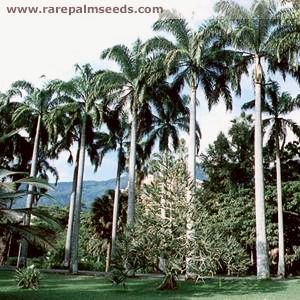
Photo-Rare Palm Seeds.com

Photo-Rare Palm Seeds.com

Image Text: photomazza.com

Image Text: idtools.org

Image Text: Patti Anderson, Florida Department of Agriculture and Consumer Services.


Image Text: Patti Anderson, Florida Department of Agriculture and Consumer Services.

Image Text: floridata.com
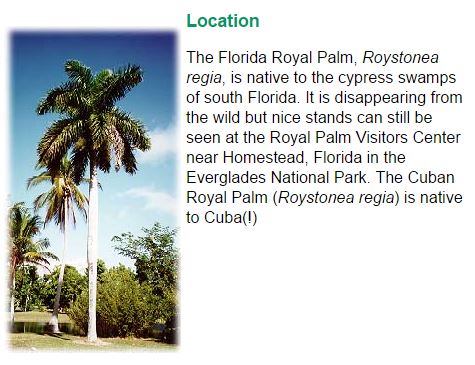
Image Text: floridata.com

Image Text: floridata.com


_001.jpg)


.jpg)
.jpg)
.jpg)


External Links
- Glossary of Palm Terms
- MODERN BOTANICAL LATIN
- "Just To Be Clear"
- http://www.flickriver.com/photos/mauroguanandi/tags/palmae/
- http://www.photomazza.com/?Roystonea-oleracea
References
Phonetic spelling of Latin names by edric.
Special thanks to Geoff Stein, (Palmbob) for his hundreds of photos.
Special thanks to Palmweb.org, Dr. John Dransfield, Dr. Bill Baker & team, for their volumes of information and photos.
Glossary of Palm Terms; Based on the glossary in Dransfield, J., N.W. Uhl, C.B. Asmussen-Lange, W.J. Baker, M.M. Harley & C.E. Lewis. 2008. Genera Palmarum - Evolution and Classification of the Palms. Royal Botanic Gardens, Kew. All images copyright of the artists and photographers (see images for credits).
Zona S.Roystonea.(Arecaceae: Arecoideae).
Many Special Thanks to Ed Vaile for his long hours of tireless editing and numerous contributions.