Difference between revisions of "Corypha umbraculifera"
| (39 intermediate revisions by one user not shown) | |||
| Line 1: | Line 1: | ||
__noeditsection__ | __noeditsection__ | ||
| − | |||
| − | |||
{{Palmbox | {{Palmbox | ||
| − | |image= | + | |image=post-42-1257162570.jpg |
| − | |image_caption= | + | |image_caption=Townsville Palmetum, Queensland, Australia. Photo by Daryl O'Connor. |
| − | |genus= | + | |genus=Corypha (kohr-EE-fah) |
| − | |species= | + | |species=<br>umbraculifera <br>(uhm-brah-koo-lih-FEHR-ah) |
|subspecies= | |subspecies= | ||
|cultivar= | |cultivar= | ||
| Line 12: | Line 10: | ||
|continent=asia | |continent=asia | ||
|habit=Solitary | |habit=Solitary | ||
| − | |leaf_type= | + | |leaf_type=Costapalmate |
|height= | |height= | ||
|trunk_diameter= | |trunk_diameter= | ||
| Line 21: | Line 19: | ||
|common_names=Talipot, Talipotpalme, Grote waaier palm, San xing xing li ye ye zi, Palmier talipot, Talipote. | |common_names=Talipot, Talipotpalme, Grote waaier palm, San xing xing li ye ye zi, Palmier talipot, Talipote. | ||
}} | }} | ||
| − | |||
==Habitat and Distribution== | ==Habitat and Distribution== | ||
| − | + | ''Corypha umbraculifera'' is endemic to India, distribution to Myanmar, Sri Lanka, Thailand, [[Image:IMG_2207.jpg|thumb|left|400px|Kris Achar, standing next to a Corypha umbraculifera, (Talipot palm), Lal Bagh Garden, Banglore, India.]]and China. Originally from India; brought to Suriname (South America) by the East-Indian Co. immigrants. | |
==Description== | ==Description== | ||
| − | It is one of the largest palms in the world; individual specimens have reached heights of up to 34 m. or 100 feet, with a trunk of up to 1.3 m. or 3.5 feet in diameter. A fan palm with large costapalmate leaves up to 7 m. or 21 feet in across, an armed with small 2 cm. thorns, the petiole up to 4 m long, and up to 130 leaflets. The talipot palm bears the largest inflorescence of any plant, 6-8 m. long, consisting of up to several million small flowers, borne on a branched stalk that forms at the top of the trunk, monocarpic, (the inflorescence is terminal, dies after flowering), flowering only once, when it is 30 to 80 years old. It takes about a year for the fruit to mature, producing thousands of round, dark green fruit 3-4 cm. diameter, each containing a single seed, it take about a year for the fruit to ripen. Then the tree dies after bearing fruit. | + | It is one of the largest palms in the world; individual specimens have reached heights of up to 34 m. or 100 feet, with a trunk of up to 1.3 m. or 3.5 feet in diameter. A fan palm with large costapalmate leaves up to 7 m. or 21 feet in across, an armed with small 2 cm. thorns, the petiole up to 4 m long, and up to 130 leaflets. The talipot palm bears the largest inflorescence of any plant, 6-8 m. long, consisting of up to several million small flowers, borne on a branched stalk that forms at the top of the trunk, monocarpic, (the inflorescence is terminal, dies after flowering), flowering only once, when it is 30 to 80 years old. It takes about a year for the fruit to mature, producing thousands of round, dark green fruit 3-4 cm. diameter, each containing a single seed, it take about a year for the fruit to ripen. Then the tree dies after bearing fruit. Editing by edric. |
==Culture== | ==Culture== | ||
Sunny, moist, but well drained position water sparingly. Drought tolerant. Neutral pH soil. Needs considerable space. Very slow growing. Hardiness: USDA zone 10A - 11. Will not tolerate dry climate, including Southern California. | Sunny, moist, but well drained position water sparingly. Drought tolerant. Neutral pH soil. Needs considerable space. Very slow growing. Hardiness: USDA zone 10A - 11. Will not tolerate dry climate, including Southern California. | ||
==Comments and Curiosities== | ==Comments and Curiosities== | ||
| − | The sap | + | This is a [[monocarpic]] genus. |
| − | + | ||
| − | + | The sap is tapped to make a wine. Leaves used for thatching. In the Malabar Coast, the palm leaves were used to make traditional umbrellas for agricultural workers and students in rural areas until a few decades ago. The tree is known as kudapana in Malayalam Language, which means "umbrella" palm tree. No longer exits in habitat, due to urbanization. | |
| − | + | ||
| − | + | One of its huge leaves can shelter 10 men from the rain. | |
| − | + | ||
| − | + | ||
| − | + | ||
| − | + | ||
| − | <center><gallery caption="IMAGE GALLERY" perrow=" | + | <br style="clear:both;"/> |
| − | Image:Corypha umbraculifera | + | {{#Widget:AdResban}} |
| − | Image:Corypha umbraculifera | + | <center><gallery caption="IMAGE GALLERY" perrow="" widths="" heights=""> |
| − | Image:Corypha umbraculifera | + | Image:Corypha umbraculifera petioles Fosters.jpg|Petioles, Foster's. |
| − | Image:Corypha umbraculifera petioles Ho.jpg|Petioles, | + | image:Post-22-0-00924600-1393401515.jpg|Foster Botanical Gardens in downtown Honolulu, Oahu, Hawaii. "Kim giving scale." Photo by BGL, edric. |
| − | Image:Corypha umbrfaculifera leaves.jpg|Leaves | + | image:Post-22-0-53435400-1393401520.jpg|Foster Botanical Gardens in downtown Honolulu, Oahu, Hawaii. "Kim giving scale." Photo by BGL, edric. |
| − | Image:Corypha umbraculifera SBG.jpg|Singapore | + | image:Post-22-0-77198500-1393402195.jpg|Harold L. Lyon Arboretum, a 200-acre arboretum in Mānoa Valley, Honolulu, Oahu, Hawaii. Photo by BGL, edric. |
| − | Image:Corypha umbraculifera trunk.jpg|Trunk Detail | + | Image:Corypha umbraculifera 1 Fosters.jpg|Foster's Gardens, Hawaii. |
| − | Image:Corypha umbraculifera.jpg|Big Island, Hawaii | + | Image:Corypha umbraculifera Ho.jpg|Hoʻomaluhia Botanical Garden, Kāne'ohe, Oahu, Hawaii. |
| − | Image:IMG_2207.jpg|Kris Achar, standing next to a Corypha umbraculifera, (Talipot palm), Lal Bagh Garden, Banglore, India | + | Image:Corypha umbraculifera petioles Ho.jpg|Petioles, Hoʻomaluhia Botanical Garden, Kāne'ohe, Oahu, Hawaii. |
| − | Image: | + | Image:Corypha umbrfaculifera leaves.jpg|Leaves. |
| − | image: | + | Image:Corypha umbraculifera SBG.jpg|Singapore. |
| + | Image:Corypha umbraculifera trunk.jpg|Trunk Detail. | ||
| + | Image:Corypha umbraculifera.jpg|Big Island, Hawaii. | ||
| + | Image:IMG_2207.jpg|Kris Achar, standing next to a Corypha umbraculifera, (Talipot palm), Lal Bagh Garden, Banglore, India. | ||
| + | Image:DSC00121z.jpg|Source, USDA TARS, Mayagüez. Courtesy, Dr. Wilford Schmidt, UPRM. | ||
| + | image:A59686z.jpg|Rio de Janeiro Botanical Garden. | ||
image:2f02fa.jpg | image:2f02fa.jpg | ||
| − | image: | + | image:3bf8aekrisacharz.jpg|Photo by Kris Achar. |
| − | image:4e034akricachar.jpg|Photo by Kris Achar | + | image:4e034akricachar.jpg|Photo by Kris Achar. |
| − | image: | + | image:05c353krisacharz.jpg|Photo by Kris Achar. |
| − | image: | + | image:07ca1az.jpg |
| − | image:8ab7f7krisachar.jpg|Photo by Kris Achar | + | image:8ab7f7krisachar.jpg|Photo by Kris Achar. |
| − | image: | + | image:9fd48az.jpg |
| − | image:29f15fkrisachar.jpg|Photo by Kris Achar | + | image:29f15fkrisachar.jpg|Photo by Kris Achar. |
| − | image:43ac81krisachar.jpg|Photo by Kris Achar | + | image:43ac81krisachar.jpg|Photo by Kris Achar. |
image:45edd8.jpg | image:45edd8.jpg | ||
| − | image: | + | image:49bf3dkrisz.jpg|Photo by Kris Achar. |
| − | image:60a5f4krisachar.jpg|Photo by Kris Achar | + | image:60a5f4krisachar.jpg|Photo by Kris Achar. |
| − | image:88fbd1kris.jpg|Photo by Kris Achar | + | image:88fbd1kris.jpg|Photo by Kris Achar. |
| − | image:150cc9krisachar.jpg|Photo by Kris Achar | + | image:150cc9krisachar.jpg|Photo by Kris Achar. |
| − | image: | + | image:309ac3krisz.jpg|Photo by Kris Achar. |
| − | image:752fdfkris.jpg|Photo by Kris Achar | + | image:752fdfkris.jpg|Photo by Kris Achar. |
| − | image:986a7akris.jpg|Photo by Kris Achar | + | image:986a7akris.jpg|Photo by Kris Achar. |
| − | image:19345ekrisachar.jpg|Photo by Kris Achar | + | image:19345ekrisachar.jpg|Photo by Kris Achar. |
| − | image: | + | image:453992z.jpg |
| − | image: | + | image:B5ade7krisacharz.jpg|Photo by Kris Achar. |
| − | image:B8b831krisachar.jpg|Photo by Kris Achar | + | image:B8b831krisachar.jpg|Photo by Kris Achar. |
| − | image: | + | image:C5b30dkrisacharz.jpg|Photo by Kris Achar. |
| − | image: | + | image:C9c03dz.jpg |
| − | image:cd2669krisachar.jpg|Photo by Kris Achar | + | image:cd2669krisachar.jpg|Photo by Kris Achar. |
| − | image: | + | image:Ce83e5krisz.jpg|Photo by Kris Achar. |
| − | image: | + | image:Cfdf49z.jpg |
image:Corypha_umbraculifera_1913.jpg | image:Corypha_umbraculifera_1913.jpg | ||
| − | image: | + | image:Corypha_umbraculifera_in_Lyon_Arboretumz.jpg |
| − | image: | + | image:Corypha_umbraculifera1z.jpg |
| − | image: | + | image:Corypha_umbraculifera2z.jpg |
| − | image: | + | image:Corypha_umbraculiferajodyhaynesz.jpg|Photo by Jody Haynes. |
| − | image: | + | image:D85e94krisz.jpg|Photo by Kris Achar. |
| − | image: | + | image:Dc46cfkrisacharz.jpg|Photo by Kris Achar. |
| − | image: | + | image:Dc322fkrisacharz.jpg|Photo by Kris Achar. |
| − | image:De9107krisachar.jpg|Photo by Kris Achar | + | image:De9107krisachar.jpg|Photo by Kris Achar. |
| − | image: | + | image:E6f308krisacharz.jpg|Photo by Kris Achar. |
| − | image:Ebf382krisachar.jpg|Photo by Kris Achar | + | image:Ebf382krisachar.jpg|Photo by Kris Achar. |
| − | image: | + | image:Ed2973krisacharz.jpg|Photo by Kris Achar. |
| − | image:Fc5e16krisachar.jpg|Photo by Kris Achar | + | image:Fc5e16krisachar.jpg|Photo by Kris Achar. |
image:Fleuraison_talipot.JPG | image:Fleuraison_talipot.JPG | ||
image:Flowering_Talipot_Palm_01.jpg | image:Flowering_Talipot_Palm_01.jpg | ||
| Line 96: | Line 94: | ||
image:Flowering_Talipot_Palm_05.jpg | image:Flowering_Talipot_Palm_05.jpg | ||
image:Flowering_Talipot_Palm_06.jpg | image:Flowering_Talipot_Palm_06.jpg | ||
| − | image: | + | image:Zumbraculiferaz.jpg|Singapore Botanic Gardens. Photo by Mike Gray. |
| − | image:Zumbraculifera02.jpg | + | image:Zumbraculifera02.jpg|Photo by Kyle Wicomb. |
| − | image: | + | image:Corypha_umbraculifera11z.jpg|CUBA: Soledad |
image:Corypha_umbraculifera_222.jpg|INDIA: Kevala | image:Corypha_umbraculifera_222.jpg|INDIA: Kevala | ||
| − | image: | + | image:Corypha_umbraculifera33z.jpg|TRINIDAD: Port-of-Spain |
| − | image: | + | image:Corypha_umbraculifera44z.jpg|CEYLON |
image:Corypha_umbraculifera55.jpg|SRI LANKA: Peradenlya | image:Corypha_umbraculifera55.jpg|SRI LANKA: Peradenlya | ||
| − | image: | + | image:Corypha_umbraculifera_craftz.jpg|Foster Botanic Garden, Honolulu, Hawaii. Photo by Paul Craft. |
| − | image: | + | image:Corypha_umbraculifera_craft2z.jpg|Aterro do flamingo, Rio de Janeiro, Brazil. Photo by Paul Craft. |
| − | image:-gallery-members-Corypha_Fitzpatrick6.jpg|Roseau, Commonwealth of Dominica. Photo by George Fitzpatrick | + | image:-gallery-members-Corypha_Fitzpatrick6.jpg|Roseau, Commonwealth of Dominica. Photo by George Fitzpatrick. |
| − | image:RDG2010-03-27_09-42-36.jpg|Miami FL. Photo by Ryan D. Gallivan, | + | image:RDG2010-03-27_09-42-36.jpg|Miami FL. Photo by Ryan D. Gallivan of Searle Brothers Nursery, Florida. |
| − | image: | + | image:CoryphaUmbraculifera88z.png |
| − | image: | + | image:3f583a2f-958f-40f2-9f87-dc2e8a77ed37z.jpg|Caracas Botanic Garden, Venezuela. Photo by Dr. John Dransfield, Royal Botanic Gardens, Kew/Palmweb. |
| + | image:Fc846995-a935-4a73-860d-8758d97a7c91z.jpg|Sri Lanka. Photo by Dr. John Dransfield, Royal Botanic Gardens, Kew/Palmweb. | ||
| + | image:04e8a7df-056b-4dc8-b855-873ef9ba9f66z.jpg|Caracas Botanic Garden, Venezuela. Photo by Dr. John Dransfield, Royal Botanic Gardens, Kew/Palmweb. | ||
| + | image:F02f7a54-925b-4154-9836-099f8fcab853z.jpg|India. Photo by Dr. S.S. Hooper/Palmweb. | ||
| + | image:9e069906-2224-451a-9dc7-4862f1269884z.jpg|Kebun Raya Bogor, Java, Indonesia. Photo by Dr. William J. Baker, Royal Botanic Gardens, Kew/Palmweb. | ||
| + | image:Bae3811a-7051-4274-89f1-d7725cf701e2z.jpg|Kebun Raya Bogor, Java, Indonesia. Photo by Dr. William J. Baker, Royal Botanic Gardens, Kew/Palmweb. | ||
| + | image:28769737-6166-4fcc-8b7c-84b0f64e4b9bz.jpg|Kebun Raya Bogor, Java, Indonesia. Photo by Dr. William J. Baker, Royal Botanic Gardens, Kew/Palmweb. | ||
| + | image:398394b3-bc1a-4fd7-b59c-4a482a6c470fz.jpg|Kebun Raya Bogor, Java, Indonesia. Photo by Dr. William J. Baker, Royal Botanic Gardens, Kew/Palmweb. | ||
| + | image:21955c8c-f732-4e46-be59-fc7c74e82ac5.jpg|Montgomery Botanical Centre, Florida. Photo by Dr. William J. Baker, Royal Botanic Gardens, Kew/Palmweb. | ||
| + | image:59418a22-17b5-4d08-a1d2-567922c94ab2.jpg|Montgomery Botanical Centre, Florida. Photo by Dr. William J. Baker, Royal Botanic Gardens, Kew/Palmweb. | ||
| + | image:Corypha-umbraculifera76.jpg|Hawaiian Tropical Botanical Garden. | ||
| + | image:CuMHGz.jpg|Queensland, Australia. Photo by George Sparkman. | ||
| + | File:post-42-1257162570.jpg|Townsville Palmetum, Queensland, Australia. Photo by Datrl O'Connor. | ||
| + | image:Dd0010.jpg|Cienfuegos Botanical Garden, Cuba. Photo by Jason Schoneman. | ||
| + | image:CuDSC_0001.jpg|Searle Brothers Nursery, FL. Jeff Searle giving scale. Photo by Ryan D. Galivan. | ||
| + | image:CuDSC_0003.jpg|Searle Brothers Nursery, FL. Jeff Searle giving scale. Photo by Ryan D. Galivan. | ||
| + | image:CuDSC_1007.jpg|Searle Brothers Nursery, FL. Jeff Searle giving scale. Photo by Ryan D. Galivan. | ||
| + | image:CuDSC_0006.jpg|Searle Brothers Nursery, FL. Jeff Searle, and tour group giving scale. Photo by Ryan D. Galivan. | ||
| + | File:cuIMG_6203.JPG.caaf9ee93313f40511de2fd0931d0ddc.JPG|Searle Brothers Nursery, FL. Photo by Keith. | ||
| + | File:cuIMG_6400.JPG.6caac3c7a48f2d11692c9c1959970ea1.JPG|waykoolplantz garden. Photo by Keith. | ||
| + | File:post-7381-0-45932200-1408422911.jpg|Babinda, Queensland, Australia. Mark Daish Botanical Garden & Babinda Palm Supply. Ben Smith giving scale. Photo by Paul Latzias. | ||
| + | File:post-7381-0-09172600-1408423042.jpg|Babinda, Queensland, Australia. Mark Daish Botanical Garden & Babinda Palm Supply. Photo by Paul Latzias. | ||
| + | |||
| + | |||
| + | |||
| + | |||
</gallery></center> | </gallery></center> | ||
| + | ==External Links== | ||
| + | *[http://eunops.org/content/glossary-palm-terms Glossary of Palm Terms] | ||
| + | *[http://www.calflora.net/botanicalnames/pronunciation.html MODERN BOTANICAL LATIN] | ||
| + | *[http://www.jlhudsonseeds.net/Pronunciation.htm "Just To Be Clear"] | ||
| + | *http://www.youtube.com/watch?v=DydHeyGV7rQ | ||
| + | *http://www.biotik.org/india/species/c/coryumbr/coryumbr_en.html | ||
| + | *http://www.palmbeachpalmcycadsociety.com/palms/documents/CoryphaUmbraculifera.pdf | ||
| + | ==References== | ||
| + | Phonetic spelling of Latin names by edric. | ||
| + | |||
| + | Special thanks to Geoff Stein, (Palmbob) for his hundreds of photos. | ||
| + | |||
| + | Special thanks to [http://palmweb.org/?q=node/2 Palmweb.org], Dr. John Dransfield, Dr. Bill Baker & team, for their volumes of information and photos. | ||
| + | |||
| + | Glossary of Palm Terms; Based on the glossary in Dransfield, J., N.W. Uhl, C.B. Asmussen-Lange, W.J. Baker, M.M. Harley & C.E. Lewis. 2008. Genera Palmarum - Evolution and Classification of the Palms. Royal Botanic Gardens, Kew. All images copyright of the artists and photographers (see images for credits). | ||
| + | |||
{{SpeciesListBackLink}} | {{SpeciesListBackLink}} | ||
[[Category:CORYPHA|umbraculifera]] | [[Category:CORYPHA|umbraculifera]] | ||
Latest revision as of 15:51, 24 September 2017
| Corypha (kohr-EE-fah) umbraculifera (uhm-brah-koo-lih-FEHR-ah) | |||||||
|---|---|---|---|---|---|---|---|
 Townsville Palmetum, Queensland, Australia. Photo by Daryl O'Connor. | |||||||
| Scientific Classification | |||||||
| |||||||
| Synonyms | |||||||
|
| |||||||
| Native Continent | |||||||
 | |||||||
| Morphology | |||||||
| |||||||
| Culture | |||||||
|
| |||||||
| Survivability index | |||||||
|
| |||||||
| Common names | |||||||
|
| |||||||
Contents
Habitat and Distribution
Corypha umbraculifera is endemic to India, distribution to Myanmar, Sri Lanka, Thailand,
Description
It is one of the largest palms in the world; individual specimens have reached heights of up to 34 m. or 100 feet, with a trunk of up to 1.3 m. or 3.5 feet in diameter. A fan palm with large costapalmate leaves up to 7 m. or 21 feet in across, an armed with small 2 cm. thorns, the petiole up to 4 m long, and up to 130 leaflets. The talipot palm bears the largest inflorescence of any plant, 6-8 m. long, consisting of up to several million small flowers, borne on a branched stalk that forms at the top of the trunk, monocarpic, (the inflorescence is terminal, dies after flowering), flowering only once, when it is 30 to 80 years old. It takes about a year for the fruit to mature, producing thousands of round, dark green fruit 3-4 cm. diameter, each containing a single seed, it take about a year for the fruit to ripen. Then the tree dies after bearing fruit. Editing by edric.
Culture
Sunny, moist, but well drained position water sparingly. Drought tolerant. Neutral pH soil. Needs considerable space. Very slow growing. Hardiness: USDA zone 10A - 11. Will not tolerate dry climate, including Southern California.
Comments and Curiosities
This is a monocarpic genus.
The sap is tapped to make a wine. Leaves used for thatching. In the Malabar Coast, the palm leaves were used to make traditional umbrellas for agricultural workers and students in rural areas until a few decades ago. The tree is known as kudapana in Malayalam Language, which means "umbrella" palm tree. No longer exits in habitat, due to urbanization.
One of its huge leaves can shelter 10 men from the rain.
- IMAGE GALLERY

Petioles, Foster's.

Foster Botanical Gardens in downtown Honolulu, Oahu, Hawaii. "Kim giving scale." Photo by BGL, edric.

Foster Botanical Gardens in downtown Honolulu, Oahu, Hawaii. "Kim giving scale." Photo by BGL, edric.

Harold L. Lyon Arboretum, a 200-acre arboretum in Mānoa Valley, Honolulu, Oahu, Hawaii. Photo by BGL, edric.

Foster's Gardens, Hawaii.

Hoʻomaluhia Botanical Garden, Kāne'ohe, Oahu, Hawaii.

Petioles, Hoʻomaluhia Botanical Garden, Kāne'ohe, Oahu, Hawaii.

Leaves.

Singapore.

Trunk Detail.

Big Island, Hawaii.

Kris Achar, standing next to a Corypha umbraculifera, (Talipot palm), Lal Bagh Garden, Banglore, India.

Source, USDA TARS, Mayagüez. Courtesy, Dr. Wilford Schmidt, UPRM.

Rio de Janeiro Botanical Garden.


Photo by Kris Achar.

Photo by Kris Achar.

Photo by Kris Achar.


Photo by Kris Achar.


Photo by Kris Achar.

Photo by Kris Achar.


Photo by Kris Achar.

Photo by Kris Achar.

Photo by Kris Achar.

Photo by Kris Achar.

Photo by Kris Achar.

Photo by Kris Achar.

Photo by Kris Achar.

Photo by Kris Achar.


Photo by Kris Achar.

Photo by Kris Achar.

Photo by Kris Achar.


Photo by Kris Achar.

Photo by Kris Achar.


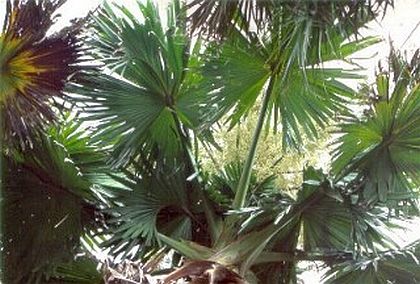

Photo by Jody Haynes.

Photo by Kris Achar.

Photo by Kris Achar.

Photo by Kris Achar.

Photo by Kris Achar.

Photo by Kris Achar.

Photo by Kris Achar.

Photo by Kris Achar.

Photo by Kris Achar.


Singapore Botanic Gardens. Photo by Mike Gray.

Photo by Kyle Wicomb.

CUBA: Soledad

INDIA: Kevala

TRINIDAD: Port-of-Spain

CEYLON

SRI LANKA: Peradenlya

Foster Botanic Garden, Honolulu, Hawaii. Photo by Paul Craft.

Aterro do flamingo, Rio de Janeiro, Brazil. Photo by Paul Craft.

Roseau, Commonwealth of Dominica. Photo by George Fitzpatrick.

Miami FL. Photo by Ryan D. Gallivan of Searle Brothers Nursery, Florida.


Caracas Botanic Garden, Venezuela. Photo by Dr. John Dransfield, Royal Botanic Gardens, Kew/Palmweb.

Sri Lanka. Photo by Dr. John Dransfield, Royal Botanic Gardens, Kew/Palmweb.

Caracas Botanic Garden, Venezuela. Photo by Dr. John Dransfield, Royal Botanic Gardens, Kew/Palmweb.

India. Photo by Dr. S.S. Hooper/Palmweb.

Kebun Raya Bogor, Java, Indonesia. Photo by Dr. William J. Baker, Royal Botanic Gardens, Kew/Palmweb.

Kebun Raya Bogor, Java, Indonesia. Photo by Dr. William J. Baker, Royal Botanic Gardens, Kew/Palmweb.

Kebun Raya Bogor, Java, Indonesia. Photo by Dr. William J. Baker, Royal Botanic Gardens, Kew/Palmweb.

Kebun Raya Bogor, Java, Indonesia. Photo by Dr. William J. Baker, Royal Botanic Gardens, Kew/Palmweb.

Montgomery Botanical Centre, Florida. Photo by Dr. William J. Baker, Royal Botanic Gardens, Kew/Palmweb.

Montgomery Botanical Centre, Florida. Photo by Dr. William J. Baker, Royal Botanic Gardens, Kew/Palmweb.

Hawaiian Tropical Botanical Garden.

Queensland, Australia. Photo by George Sparkman.

Townsville Palmetum, Queensland, Australia. Photo by Datrl O'Connor.

Cienfuegos Botanical Garden, Cuba. Photo by Jason Schoneman.

Searle Brothers Nursery, FL. Jeff Searle giving scale. Photo by Ryan D. Galivan.

Searle Brothers Nursery, FL. Jeff Searle giving scale. Photo by Ryan D. Galivan.

Searle Brothers Nursery, FL. Jeff Searle giving scale. Photo by Ryan D. Galivan.

Searle Brothers Nursery, FL. Jeff Searle, and tour group giving scale. Photo by Ryan D. Galivan.

Searle Brothers Nursery, FL. Photo by Keith.

waykoolplantz garden. Photo by Keith.

Babinda, Queensland, Australia. Mark Daish Botanical Garden & Babinda Palm Supply. Ben Smith giving scale. Photo by Paul Latzias.

Babinda, Queensland, Australia. Mark Daish Botanical Garden & Babinda Palm Supply. Photo by Paul Latzias.


External Links
- Glossary of Palm Terms
- MODERN BOTANICAL LATIN
- "Just To Be Clear"
- http://www.youtube.com/watch?v=DydHeyGV7rQ
- http://www.biotik.org/india/species/c/coryumbr/coryumbr_en.html
- http://www.palmbeachpalmcycadsociety.com/palms/documents/CoryphaUmbraculifera.pdf
References
Phonetic spelling of Latin names by edric.
Special thanks to Geoff Stein, (Palmbob) for his hundreds of photos.
Special thanks to Palmweb.org, Dr. John Dransfield, Dr. Bill Baker & team, for their volumes of information and photos.
Glossary of Palm Terms; Based on the glossary in Dransfield, J., N.W. Uhl, C.B. Asmussen-Lange, W.J. Baker, M.M. Harley & C.E. Lewis. 2008. Genera Palmarum - Evolution and Classification of the Palms. Royal Botanic Gardens, Kew. All images copyright of the artists and photographers (see images for credits).
Many Special Thanks to Ed Vaile for his long hours of tireless editing and numerous contributions.