Difference between revisions of "Coccothrinax macroglossa"
| (18 intermediate revisions by 2 users not shown) | |||
| Line 1: | Line 1: | ||
__noeditsection__ | __noeditsection__ | ||
{{Palmbox | {{Palmbox | ||
| − | |image= | + | |image=36872355156_71cd80d2bc_o.jpg |
| − | |image_caption= | + | |image_caption=Playa Pilar, (Cabo Guillermo) Cuba. January, 2017. Photo by Dr. David Martin. With Duanny Suárez. |
| − | |genus= | + | |genus=Coccothrinax (koh-koh-TRIH-naks) |
| − | |species=macroglossa | + | |species=macroglossa (mak-roh-GLOHS-ah) |
|subspecies= | |subspecies= | ||
|cultivar= | |cultivar= | ||
| − | |synonyms= | + | |synonyms=Coccothrinax sp. 'Azul' |
|continent=america | |continent=america | ||
|habit=Solitary | |habit=Solitary | ||
| − | |leaf_type= | + | |leaf_type=Costapalmate |
|height= | |height= | ||
|trunk_diameter= | |trunk_diameter= | ||
| Line 19: | Line 19: | ||
}} | }} | ||
==Habitat and Distribution== | ==Habitat and Distribution== | ||
| − | + | Cuba. Widespread in eastern Cuba in open [[File:36872360656_9e5b2dd394_o.jpg|thumb|left|500px|Playa Pilar, (Cabo Guillermo) Cuba. January, 2017. Photo by Dr. David Martin. With Duanny Suárez.]]locations. | |
| − | [[ | + | |
==Description== | ==Description== | ||
| − | + | The species has somewhat glaucous green leaves. There is a variety referred to as sp. "azul" with blue leaves that is often considered to be a form of C. macroglossa. (Michael Merritt) Editing by edric. | |
==Culture== | ==Culture== | ||
==Comments and Curiosities== | ==Comments and Curiosities== | ||
| − | + | One of the most exciting novelties from Cubas extraordinary flora, a few populations of Coccothrinax macroglossa in Camagüey exhibit a most magnificent leaf color, a dense, shiny white silver below and a steely blue, waxy silver above. It easily rivals the color of the great silver Bismarckia, and makes the palm one of the few with a silver/blue leaf that will grow well in the tropics. It can also manage warm temperate conditions as long as it is not exposed to more than an occasional light freeze. It is quite resistant to drought and well drained soil is essential. A sunny spot is recommended. Like most Coccothrinax it is slow growing at first but speeds up considerably once a trunk is formed. With a maximum of about 6 m (20 ft.) tall, its size of course is ultimately so much more manageable than that of Bismarckia. In Riffle and Craft's Encyclopedia of Cultivated Palms, this species is described and pictured as Coccothrinax "azul". (RPS.com) | |
<br style="clear:both;"/> | <br style="clear:both;"/> | ||
| − | <center><gallery caption="IMAGE GALLERY" perrow=" | + | {{#Widget:AdResban}} |
| − | Photo by Dr. , | + | <center><gallery caption="IMAGE GALLERY" perrow="" widths="" heights=""> |
| + | File:post-279-0-21879900-1405471601.jpg|Photo by Michael Merritt. | ||
| + | File:post-279-0-54606300-1405471603.jpg|Photo by Michael Merritt. | ||
| + | File:CMacroglossaGMann.jpg|Coccothrinax macroglossa, Serpentine savannah, Camaguey. Photo by Gareth Mann. | ||
| + | File:Cmacroglossa2GMann.jpg|Coccothrinax macroglossa, Serpentine savannah, Camaguey. Photo by Gareth Mann. | ||
| + | File:CMacroglossa3GMann.jpg|Coccothrinax macroglossa growing alongside Copernicia shaferi and Coccothrinax psuedorigida, Serpentine savannah, Camaguey. Photo by Gareth Mann. | ||
| + | File:Cmacroglossa4gmann.jpg|Coccothrinax macroglossa growing alongside Copernicia shaferi and Coccothrinax psuedorigida, Serpentine savannah, Camaguey. Photo by Gareth Mann. | ||
| + | image:Coccothrinax_azul_craftz.jpg|Cuba. Photo by Paul Craft. | ||
| + | image:Coccothrinax_azulreducedpabloz.jpg|Cuba. Photo by Pablo. | ||
| + | image:Scan-1mikeharrisz.jpg|Cuba. Photo by Mike Harris. | ||
| + | image:Coccothrinax_species_azul_5g_(4)z.jpg | ||
| + | File:post-5491-0-35653500-1426782755.jpg|Cutler Bay, South Florida. Photo by Andrew. | ||
| + | File:post-5491-0-59905200-1426782677.jpg|Cutler Bay, South Florida. Photo by Andrew. | ||
| + | File:post-23-024429600 1337127647.jpg|Searle Brothers Nursery, Florida. Photo by Jeff Searle. | ||
| + | File:post-23-002807700 1337127625.jpg|Searle Brothers Nursery, Florida. Photo by Jeff Searle. | ||
| + | File:post-23-064090500 1337127593.jpg|Searle Brothers Nursery, Florida. Photo by Jeff Searle. | ||
| + | File:post-23-077084700 1337127672.jpg|Searle Brothers Nursery, Florida. Photo by Jeff Searle. | ||
| + | File:36889901692_202c209698_o.jpg|Playa Pilar, (Cabo Guillermo) Cuba. January, 2017. Photo by Dr. David Martin. With Duanny Suárez. | ||
| + | File:36872355156_71cd80d2bc_o.jpg|Playa Pilar, (Cabo Guillermo) Cuba. January, 2017. Photo by Dr. David Martin. With Duanny Suárez. | ||
| + | File:36872357626_09364f2547_o.jpg|Playa Pilar, (Cabo Guillermo) Cuba. January, 2017. Photo by Dr. David Martin. With Duanny Suárez. | ||
| + | File:36872360656_9e5b2dd394_o.jpg|Playa Pilar, (Cabo Guillermo) Cuba. January, 2017. Photo by Dr. David Martin. With Duanny Suárez. | ||
| + | File:37060424735_164601ce37_o.jpg|Playa Pilar, (Cabo Guillermo) Cuba. January, 2017. Photo by Dr. David Martin. With Duanny Suárez. | ||
| + | File:36919362221_16e25c6e1c_o.jpg|Playa Pilar, (Cabo Guillermo) Cuba. January, 2017. Photo by Dr. David Martin. With Duanny Suárez. | ||
| + | File:36919359291_bc8cbe343d_o.jpg|Playa Pilar, (Cabo Guillermo) Cuba. January, 2017. Photo by Dr. David Martin. With Duanny Suárez. | ||
| + | File:36663870270_da1c7835ee_o.jpg|Playa Pilar, (Cabo Guillermo) Cuba. January, 2017. Photo by Dr. David Martin. With Duanny Suárez. | ||
| + | File:CocAzu.jpg|Photo: Rare Palm Seeds.com | ||
| + | File:CocAzu3.jpg|Photo: Rare Palm Seeds.com | ||
| + | File:CocAzu2.jpg|Photo: Rare Palm Seeds.com | ||
| + | File:cm04781531866.JPG|Imagetext: southfloridapalmsociety.org | ||
| + | File:cm9082354674288.JPG|Imagetext: southfloridapalmsociety.org | ||
| + | File:cm658823155.JPG|Imagetext: southfloridapalmsociety.org | ||
| + | |||
| + | File:573f3475d2101_Coccothrinaxazul2016-05-01.jpeg.56d10ebac5f748affe2425a18bb6818a.jpeg|Notations by Research Work Editor Pal Meir. Photo by Pal Meir. | ||
</gallery></center> | </gallery></center> | ||
==External Links== | ==External Links== | ||
| Line 44: | Line 75: | ||
Glossary of Palm Terms; Based on the glossary in Dransfield, J., N.W. Uhl, C.B. Asmussen-Lange, W.J. Baker, M.M. Harley & C.E. Lewis. 2008. Genera Palmarum - Evolution and Classification of the Palms. Royal Botanic Gardens, Kew. All images copyright of the artists and photographers (see images for credits). | Glossary of Palm Terms; Based on the glossary in Dransfield, J., N.W. Uhl, C.B. Asmussen-Lange, W.J. Baker, M.M. Harley & C.E. Lewis. 2008. Genera Palmarum - Evolution and Classification of the Palms. Royal Botanic Gardens, Kew. All images copyright of the artists and photographers (see images for credits). | ||
| + | |||
{{SpeciesListBackLink}} | {{SpeciesListBackLink}} | ||
| + | [[Category:Palms of Cuba]] | ||
[[Category:COCCOTHRINAX|macroglossa]] | [[Category:COCCOTHRINAX|macroglossa]] | ||
Latest revision as of 01:00, 6 November 2017
| Coccothrinax (koh-koh-TRIH-naks) macroglossa (mak-roh-GLOHS-ah) | |||||||
|---|---|---|---|---|---|---|---|
 Playa Pilar, (Cabo Guillermo) Cuba. January, 2017. Photo by Dr. David Martin. With Duanny Suárez. | |||||||
| Scientific Classification | |||||||
| |||||||
| Synonyms | |||||||
|
| |||||||
| Native Continent | |||||||
 | |||||||
| Morphology | |||||||
| |||||||
| Culture | |||||||
|
| |||||||
| Survivability index | |||||||
|
| |||||||
| Common names | |||||||
|
| |||||||
Contents
Habitat and Distribution
Cuba. Widespread in eastern Cuba in open
Description
The species has somewhat glaucous green leaves. There is a variety referred to as sp. "azul" with blue leaves that is often considered to be a form of C. macroglossa. (Michael Merritt) Editing by edric.
Culture
Comments and Curiosities
One of the most exciting novelties from Cubas extraordinary flora, a few populations of Coccothrinax macroglossa in Camagüey exhibit a most magnificent leaf color, a dense, shiny white silver below and a steely blue, waxy silver above. It easily rivals the color of the great silver Bismarckia, and makes the palm one of the few with a silver/blue leaf that will grow well in the tropics. It can also manage warm temperate conditions as long as it is not exposed to more than an occasional light freeze. It is quite resistant to drought and well drained soil is essential. A sunny spot is recommended. Like most Coccothrinax it is slow growing at first but speeds up considerably once a trunk is formed. With a maximum of about 6 m (20 ft.) tall, its size of course is ultimately so much more manageable than that of Bismarckia. In Riffle and Craft's Encyclopedia of Cultivated Palms, this species is described and pictured as Coccothrinax "azul". (RPS.com)
- IMAGE GALLERY

Photo by Michael Merritt.

Photo by Michael Merritt.

Coccothrinax macroglossa, Serpentine savannah, Camaguey. Photo by Gareth Mann.

Coccothrinax macroglossa, Serpentine savannah, Camaguey. Photo by Gareth Mann.

Coccothrinax macroglossa growing alongside Copernicia shaferi and Coccothrinax psuedorigida, Serpentine savannah, Camaguey. Photo by Gareth Mann.

Coccothrinax macroglossa growing alongside Copernicia shaferi and Coccothrinax psuedorigida, Serpentine savannah, Camaguey. Photo by Gareth Mann.

Cuba. Photo by Paul Craft.

Cuba. Photo by Pablo.

Cuba. Photo by Mike Harris.


Cutler Bay, South Florida. Photo by Andrew.

Cutler Bay, South Florida. Photo by Andrew.

Searle Brothers Nursery, Florida. Photo by Jeff Searle.

Searle Brothers Nursery, Florida. Photo by Jeff Searle.

Searle Brothers Nursery, Florida. Photo by Jeff Searle.

Searle Brothers Nursery, Florida. Photo by Jeff Searle.

Playa Pilar, (Cabo Guillermo) Cuba. January, 2017. Photo by Dr. David Martin. With Duanny Suárez.

Playa Pilar, (Cabo Guillermo) Cuba. January, 2017. Photo by Dr. David Martin. With Duanny Suárez.

Playa Pilar, (Cabo Guillermo) Cuba. January, 2017. Photo by Dr. David Martin. With Duanny Suárez.

Playa Pilar, (Cabo Guillermo) Cuba. January, 2017. Photo by Dr. David Martin. With Duanny Suárez.

Playa Pilar, (Cabo Guillermo) Cuba. January, 2017. Photo by Dr. David Martin. With Duanny Suárez.

Playa Pilar, (Cabo Guillermo) Cuba. January, 2017. Photo by Dr. David Martin. With Duanny Suárez.

Playa Pilar, (Cabo Guillermo) Cuba. January, 2017. Photo by Dr. David Martin. With Duanny Suárez.

Playa Pilar, (Cabo Guillermo) Cuba. January, 2017. Photo by Dr. David Martin. With Duanny Suárez.

Photo: Rare Palm Seeds.com
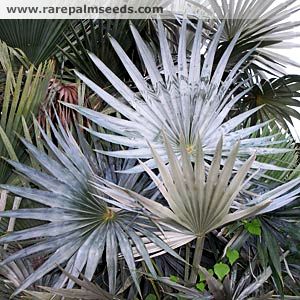
Photo: Rare Palm Seeds.com

Photo: Rare Palm Seeds.com

Imagetext: southfloridapalmsociety.org

Imagetext: southfloridapalmsociety.org

Imagetext: southfloridapalmsociety.org

Notations by Research Work Editor Pal Meir. Photo by Pal Meir.


z.jpg)


External Links
References
Phonetic spelling of Latin names by edric.
Special thanks to Geoff Stein, (Palmbob) for his hundreds of photos.
Special thanks to Palmweb.org, Dr. John Dransfield, Dr. Bill Baker & team, for their volumes of information and photos.
Glossary of Palm Terms; Based on the glossary in Dransfield, J., N.W. Uhl, C.B. Asmussen-Lange, W.J. Baker, M.M. Harley & C.E. Lewis. 2008. Genera Palmarum - Evolution and Classification of the Palms. Royal Botanic Gardens, Kew. All images copyright of the artists and photographers (see images for credits).
Many Special Thanks to Ed Vaile for his long hours of tireless editing and numerous contributions.