Difference between revisions of "Medemia argun"
| (3 intermediate revisions by one user not shown) | |||
| Line 27: | Line 27: | ||
Medemia argun, as with all desert palms, can only grow in oases where ground water occurs. | Medemia argun, as with all desert palms, can only grow in oases where ground water occurs. | ||
==Description== | ==Description== | ||
| − | The argun palm is a dramatic single-stemmed | + | The argun palm is a dramatic single-stemmed palm, with fan-shaped leaves that are glaucous blue (blueish-green with a whitish bloom) and have bright yellow petioles (leaf stalks). It is dioecious, meaning that individuals are either male or female. It produces inflorescences (flower-bearing parts) with numerous catkin-like branches. The female bears plum-shaped fruits which are purple-black when ripe. The fruit flesh is very thin and surrounds a large seed. The fruits fall from the tree and lie baking in the intense desert sun. Medemia argu Though desert mammals appear to eat the flesh, the main dispersal agent could be water during flash floods following very infrequent rains. (Kew) Editing by edric. |
| − | + | {{read more top}} | |
Germinating seeds root very deeply indeed, presumably as an adaptation to finding ground water as quickly as possible. | Germinating seeds root very deeply indeed, presumably as an adaptation to finding ground water as quickly as possible. | ||
| − | Medemia closely resembles its sister genus Hyphaene. It is an arborescent palm of tribe Borasseae (subtribe Hyphaeninae) with tough, blue-green fan leaves and a skirt of dry leaves persisting below the crown. Unlike Hyphaene, its stem is unbranched, it lacks a hastula at the top of the petiole, its petioles are yellow and are not as heavily armed as those of Hyphaene, and the fruit is purple-brown, plum-shaped and contains a seed with ruminate endosperm. (virtualherbarium.org) | + | Medemia closely resembles its sister genus Hyphaene. It is an arborescent palm of tribe Borasseae (subtribe Hyphaeninae) with tough, blue-green fan leaves and a skirt of dry leaves persisting below the crown. Unlike Hyphaene, its stem is unbranched, it lacks a hastula at the top of the petiole, its petioles are yellow and are not as heavily armed as those of Hyphaene, and the fruit is purple-brown, plum-shaped and contains a seed with ruminate endosperm. (virtualherbarium.org){{read more bottom}} |
==Culture== | ==Culture== | ||
| − | Medemia argun has been cultivated by palm specialists as a result of seed introductions from Sudan. It needs a deep root run to germinate and establish successfully. | + | {{read more top}} |
| − | + | Medemia argun has been cultivated by palm specialists as a result of seed introductions from Sudan. It needs a deep root run to germinate and establish successfully. This palm is grown at Kew in the Jodrell Glasshouse (one of the behind-the-scenes glasshouses). Here the nursery collection of palms is grown, as well as plants that are being used for study in the Jodrell laboratories. The palm is grown in a pot in a dry sunny position (under glass). The ideal temperature range is 18 to 21˚C. The compost used is a mix containing 10% 9mm loam, 45% coir and 45% Sylvafibre with Osmocote and kieserite. To this mix some perlite, Seramis, grit and sand are added. The aim is to grow the palm in an open, free-draining mix. A liquid feed is provided twice weekly. Apart from this liquid the pot is only watered when the substrate in the pot looks dry. | |
| − | This palm is grown at Kew in the Jodrell Glasshouse (one of the behind-the-scenes glasshouses). Here the nursery collection of palms is grown, as well as plants that are being used for study in the Jodrell laboratories. | + | |
| − | + | ||
| − | The palm is grown in a pot in a dry sunny position (under glass). The ideal temperature range is 18 to 21˚C. The compost used is a mix containing 10% 9mm loam, 45% coir and 45% Sylvafibre with Osmocote and kieserite. To this mix some perlite, Seramis, grit and sand are added. The aim is to grow the palm in an open, free-draining mix. A liquid feed is provided twice weekly. Apart from this liquid the pot is only watered when the substrate in the pot looks dry. | + | |
| − | + | It is subject to occasional pest infestations of mealy bugs and soft scale insects when grown under glass. Medemia argun is a palm adapted to one of the harshest environments on the planet. Rain may not fall for years, and summer temperatures can exceed 40°C. Nevertheless, Medemia can survive only in places where it can reach ground water. On germination, the seed produces a very long root up to 3 m in length in search of water. Numerous seeds pile up under the crowns of mature females, baking in the sun and yet apparently remaining viable. It has been suggested that the palm is dispersed by flood waters following rains. (virtualherbarium.org) | |
| − | Medemia argun is a palm adapted to one of the harshest environments on the planet. Rain may not fall for years, and summer temperatures can exceed 40°C. Nevertheless, Medemia can survive only in places where it can reach ground water. On germination, the seed produces a very long root up to 3 m in length in search of water. Numerous seeds pile up under the crowns of mature females, baking in the sun and yet apparently remaining viable. It has been suggested that the palm is dispersed by flood waters following rains. (virtualherbarium.org) | + | {{read more bottom}} |
<center> | <center> | ||
[[{{PFC}}http://www.palmpedia.net/palmsforcal/index.php5/Medemia_argun]] | [[{{PFC}}http://www.palmpedia.net/palmsforcal/index.php5/Medemia_argun]] | ||
</center> | </center> | ||
==Comments and Curiosities== | ==Comments and Curiosities== | ||
| + | {{read more top}} | ||
This is a [[monotypic]] genus. | This is a [[monotypic]] genus. | ||
| Line 56: | Line 54: | ||
"I agree whole heatedly with Len. I suspect it has something to do with Florida soil. In Brownsville, we have slightly basic (around pH 7.8) soil. We do have cool moistish winters and receive less rain than Florida but reasonable (30 or so inches per year) Myself and friend Dr. Romeo Montalvo have the only ones that we know of around here. His is 12 or so years from seed and mine is about 6 or 7 years. Both receive decent light but are irrigated regularly in addition to the rain. They have proven to be very hardy and quite fast growing. Our Livistona carinensis, Hyphaene's and Nannorhops also seem to do very well despite not being in a desert." (Oliver in Brownsville) | "I agree whole heatedly with Len. I suspect it has something to do with Florida soil. In Brownsville, we have slightly basic (around pH 7.8) soil. We do have cool moistish winters and receive less rain than Florida but reasonable (30 or so inches per year) Myself and friend Dr. Romeo Montalvo have the only ones that we know of around here. His is 12 or so years from seed and mine is about 6 or 7 years. Both receive decent light but are irrigated regularly in addition to the rain. They have proven to be very hardy and quite fast growing. Our Livistona carinensis, Hyphaene's and Nannorhops also seem to do very well despite not being in a desert." (Oliver in Brownsville) | ||
| − | Until recently little was known about this mysterious, and thought-to-be-extinct, fan palm, making it the subject of much speculation. However, on a recent expedition to the Sudan we revealed that Medemia, though still very rare, survives happily to this day in several small populations in the Nubian Desert. Medemia is native only to the Sudan, where it grows in the barren floodplains of seasonal rivers (wadis). The climate is generally very dry, hot during summer and mild in winter. Allied to the Doum palm, Hyphaene, and Bismarckia, it is a beautiful and stately, solitary fan palm to about 15m (50ft) tall with a straight, ringed, brown trunk that supports a large, spherical crown of very stiff, strongly costapalmate leaves. The light blueish-green colour of the leaves contrasts strikingly with its bright yellow petioles. The attractive fruits are a shiny purplish black in colour and the size of plums. When dry, they emit a pleasant malty smell and are edible. In ancient Egypt, the fruits of Medemia argun were imported from the Sudan, and have been found in Egyptian tombs, indicating their importance. Perhaps most important for growers today is the fact that Medemia has never been in cultivation anywhere in the world before our expedition. Medemia will grow under the same conditions and in the same regions as its closest relatives, Hyphaene and Bismarckia, i.e. in nearly all subtropical and tropical and some warm temperate areas. The Nubian Desert Palm is extremely drought tolerant and will thrive under hot and dry conditions where its growth rate is fairly fast. For an account of this rare and exiting palm, and its rediscovery see “Principes” Vol. 40, No. 2 or the S-Californian “Palm Journal” No. 149. (RPS.com) | + | Until recently little was known about this mysterious, and thought-to-be-extinct, fan palm, making it the subject of much speculation. However, on a recent expedition to the Sudan we revealed that Medemia, though still very rare, survives happily to this day in several small populations in the Nubian Desert. Medemia is native only to the Sudan, where it grows in the barren floodplains of seasonal rivers (wadis). The climate is generally very dry, hot during summer and mild in winter. Allied to the Doum palm, Hyphaene, and Bismarckia, it is a beautiful and stately, solitary fan palm to about 15m (50ft) tall with a straight, ringed, brown trunk that supports a large, spherical crown of very stiff, strongly costapalmate leaves. The light blueish-green colour of the leaves contrasts strikingly with its bright yellow petioles. The attractive fruits are a shiny purplish black in colour and the size of plums. When dry, they emit a pleasant malty smell and are edible. In ancient Egypt, the fruits of Medemia argun were imported from the Sudan, and have been found in Egyptian tombs, indicating their importance. Perhaps most important for growers today is the fact that Medemia has never been in cultivation anywhere in the world before our expedition. Medemia will grow under the same conditions and in the same regions as its closest relatives, Hyphaene and Bismarckia, i.e. in nearly all subtropical and tropical and some warm temperate areas. The Nubian Desert Palm is extremely drought tolerant and will thrive under hot and dry conditions where its growth rate is fairly fast. For an account of this rare and exiting palm, and its rediscovery see “Principes” Vol. 40, No. 2 or the S-Californian “Palm Journal” No. 149. (RPS.com){{read more bottom}} |
<br style="clear:both;"/> | <br style="clear:both;"/> | ||
| Line 120: | Line 118: | ||
File:MedArg2.jpg|Photo: Rare Palm Seeds.com | File:MedArg2.jpg|Photo: Rare Palm Seeds.com | ||
File:MedArg3.jpg|Photo: Rare Palm Seeds.com | File:MedArg3.jpg|Photo: Rare Palm Seeds.com | ||
| − | + | File:57fe43ea6a461_MedemiaGerminationIMG_7314.jpg.ce7285b0836d4a950aabd4255aaac6aa.jpg|Notations by Research Work Editor Pal Meir. Photo by Pal Meir. | |
image:Ma5223.jpg | image:Ma5223.jpg | ||
Latest revision as of 22:01, 8 November 2017
| Medemia (meh-deh-MEE-ah) argun (AHR-guhn) | |||||||
|---|---|---|---|---|---|---|---|
 Nakhila Oasis, Egypt. Photo by Haitham Ibrahim | |||||||
| Scientific Classification | |||||||
| |||||||
| Synonyms | |||||||
|
| |||||||
| Native Continent | |||||||
 | |||||||
| Morphology | |||||||
| |||||||
| Culture | |||||||
|
| |||||||
| Survivability index | |||||||
|
| |||||||
| Common names | |||||||
|
| |||||||
Contents
Habitat and Distribution
Egypt, and Sudan. Medemia argun occurs as scattered individuals and populations in the Nubian
Medemia argun is restricted to a few localities in the Nubian Desert oases of southern Egypt and northern Sudan. This region is so arid that consecutive years pass without any rain falling.
Medemia argun, as with all desert palms, can only grow in oases where ground water occurs.
Description
The argun palm is a dramatic single-stemmed palm, with fan-shaped leaves that are glaucous blue (blueish-green with a whitish bloom) and have bright yellow petioles (leaf stalks). It is dioecious, meaning that individuals are either male or female. It produces inflorescences (flower-bearing parts) with numerous catkin-like branches. The female bears plum-shaped fruits which are purple-black when ripe. The fruit flesh is very thin and surrounds a large seed. The fruits fall from the tree and lie baking in the intense desert sun. Medemia argu Though desert mammals appear to eat the flesh, the main dispersal agent could be water during flash floods following very infrequent rains. (Kew) Editing by edric.
| read more |
|---|
|
Germinating seeds root very deeply indeed, presumably as an adaptation to finding ground water as quickly as possible. Medemia closely resembles its sister genus Hyphaene. It is an arborescent palm of tribe Borasseae (subtribe Hyphaeninae) with tough, blue-green fan leaves and a skirt of dry leaves persisting below the crown. Unlike Hyphaene, its stem is unbranched, it lacks a hastula at the top of the petiole, its petioles are yellow and are not as heavily armed as those of Hyphaene, and the fruit is purple-brown, plum-shaped and contains a seed with ruminate endosperm. (virtualherbarium.org) |
Culture
| read more |
|---|
|
Medemia argun has been cultivated by palm specialists as a result of seed introductions from Sudan. It needs a deep root run to germinate and establish successfully. This palm is grown at Kew in the Jodrell Glasshouse (one of the behind-the-scenes glasshouses). Here the nursery collection of palms is grown, as well as plants that are being used for study in the Jodrell laboratories. The palm is grown in a pot in a dry sunny position (under glass). The ideal temperature range is 18 to 21˚C. The compost used is a mix containing 10% 9mm loam, 45% coir and 45% Sylvafibre with Osmocote and kieserite. To this mix some perlite, Seramis, grit and sand are added. The aim is to grow the palm in an open, free-draining mix. A liquid feed is provided twice weekly. Apart from this liquid the pot is only watered when the substrate in the pot looks dry. It is subject to occasional pest infestations of mealy bugs and soft scale insects when grown under glass. Medemia argun is a palm adapted to one of the harshest environments on the planet. Rain may not fall for years, and summer temperatures can exceed 40°C. Nevertheless, Medemia can survive only in places where it can reach ground water. On germination, the seed produces a very long root up to 3 m in length in search of water. Numerous seeds pile up under the crowns of mature females, baking in the sun and yet apparently remaining viable. It has been suggested that the palm is dispersed by flood waters following rains. (virtualherbarium.org) |

Comments and Curiosities
| read more |
|---|
|
This is a monotypic genus. Uses: The leaves are used for weaving, for example to make ropes. It has been reported that the fruits are edible, but with so little fruit flesh and so hard a seed, it is hard to imagine them being palatable. According to Loutfy Boulos, the fruits are buried for a period, during which the endosperm develops a sweet taste similar to coconut. (Kew) Conservation: IUCN Red List; Critically Endangered (1998) - This palm tree was rediscovered in Sudan in 1995 in small fragmented subpopulations. There are signs of regeneration. The subpopulations in Egypt are assumed to be similarly small and fragmented. The habitats in which Medemia argun occurs are sparsely inhabited. Nevertheless, the palm has experienced considerable pressure. Records from the late 19th century onwards indicate that exploitation of the leaves of Medemia has been a serious concern for many years, and evidence of destructive leaf harvesting can be found even today. In most sites, the population size is very small and vulnerable to accidental damage or even vandalism (for example by burning). None of the known Medemia populations falls within a protected area. (Kew) A team led by the Egyptian Environmental Affairs Agency, in collaboration with Kew's palm experts, is currently exploring the oases of the Egyptian Nubian Desert to complete a census of Medemia populations in the area and work towards a conservation management plan of the oases and their palms. "Attractive solitary palmate/costapalmate thick trunked, very slow growing rare species from the northern deserts of Africa. This palm was thought to be extinct until just 10 years ago (1995) when it was rediscovered. Now seed has become available and many are trying to grow it all over the world. Here in southern California many have had good luck getting this palm to germinate and grow to a small seedling, but most lose it after that... very finicky palm in terms of water and heat.. needs less water than just about any other palm (too much in winter here kills them off), and needs constant heat. Not sure if we will ever get an adult here except for out in our desert areas. But in south Florida and the tropics where it never cools off, it is doing much better. Closely related to and looks a bit like Hyphaene and Bismarckia. Has blue-green markedly costapalmate/recurved leaves and very colorful black to orange petioles." (Geoff Stein) "I agree whole heatedly with Len. I suspect it has something to do with Florida soil. In Brownsville, we have slightly basic (around pH 7.8) soil. We do have cool moistish winters and receive less rain than Florida but reasonable (30 or so inches per year) Myself and friend Dr. Romeo Montalvo have the only ones that we know of around here. His is 12 or so years from seed and mine is about 6 or 7 years. Both receive decent light but are irrigated regularly in addition to the rain. They have proven to be very hardy and quite fast growing. Our Livistona carinensis, Hyphaene's and Nannorhops also seem to do very well despite not being in a desert." (Oliver in Brownsville) Until recently little was known about this mysterious, and thought-to-be-extinct, fan palm, making it the subject of much speculation. However, on a recent expedition to the Sudan we revealed that Medemia, though still very rare, survives happily to this day in several small populations in the Nubian Desert. Medemia is native only to the Sudan, where it grows in the barren floodplains of seasonal rivers (wadis). The climate is generally very dry, hot during summer and mild in winter. Allied to the Doum palm, Hyphaene, and Bismarckia, it is a beautiful and stately, solitary fan palm to about 15m (50ft) tall with a straight, ringed, brown trunk that supports a large, spherical crown of very stiff, strongly costapalmate leaves. The light blueish-green colour of the leaves contrasts strikingly with its bright yellow petioles. The attractive fruits are a shiny purplish black in colour and the size of plums. When dry, they emit a pleasant malty smell and are edible. In ancient Egypt, the fruits of Medemia argun were imported from the Sudan, and have been found in Egyptian tombs, indicating their importance. Perhaps most important for growers today is the fact that Medemia has never been in cultivation anywhere in the world before our expedition. Medemia will grow under the same conditions and in the same regions as its closest relatives, Hyphaene and Bismarckia, i.e. in nearly all subtropical and tropical and some warm temperate areas. The Nubian Desert Palm is extremely drought tolerant and will thrive under hot and dry conditions where its growth rate is fairly fast. For an account of this rare and exiting palm, and its rediscovery see “Principes” Vol. 40, No. 2 or the S-Californian “Palm Journal” No. 149. (RPS.com) |
- IMAGE GALLERY

2 years from seed. Cojedes, Venezuela 9°N, approx 600 feet above sea level. Photo by David Clulow

5 years from seed. Cojedes, Venezuela 9°N, approx 600 feet above sea level. Photo by David Clulow

Cojedes, Venezuela 9°N, approx 600 feet above sea level. Photo by David Clulow

Cojedes, Venezuela 9°N, approx 600 feet above sea level. Photo by David Clulow

Nong Nooch Botanical Gardens, Thailand.

India. Photo by Kris Achar.

India. Photo by Kris Achar.

Photo by Kris Achar.

Photo by Kris Achar.

Photo by Kris Achar.

"This Medemia argun is growing at Leu Gardens in Orlando. It was planted in July 2012. I have tried quite a few in the past without success. They were all planted in areas with regular irrigation . This one is growing in the Arid Garden. It is poor sandy soil with added rocks. It gets no irrigation and is happy." Photo by H.P. Leu Gardens Botanist Eric S.

"This Medemia argun is growing at Leu Gardens in Orlando. It was planted in July 2012. I have tried quite a few in the past without success. They were all planted in areas with regular irrigation . This one is growing in the Arid Garden. It is poor sandy soil with added rocks. It gets no irrigation and is happy." Photo by H.P. Leu Gardens Botanist Eric S.

Brownsville, Texas. 6-7 years old. Photo by Oliver.

Brownsville, Texas. 12 years old. Dr. Romeo Montalvo gartden. Photo by Oliver.

Nong Nooch Tropical Botanic Garden, Pattaya, Thailand. Photo by LJG.

Pranburi, Thailand. 1 year 3 months in the ground. Photo by Paul.

Pranburi, Thailand. 1 year 3 months in the ground. Photo by Paul.

Nong Nooch Botanical Gardens, Thailand. Photo by Paul Craft

Nakhila Oasis, Egypt. Photo by Haitham Ibrahim

Nakhila Oasis, Egypt. Photo by Haitham Ibrahim

Dungul Oasis, Egypt. Photo by Haitham Ibrahim

Dungul Oasis, Egypt. Photo by Haitham Ibrahim

Dungul Oasis, Egypt. Photo by Haitham Ibrahim

Dungul Oasis, Egypt. Photo by Haitham Ibrahim

Nakhila Oasis, Egypt. Photo by Haitham Ibrahim

Nakhila Oasis, Egypt. Photo by Haitham Ibrahim

Wadi Neigit, Egypt. Photo by Haitham Ibrahim

Wadi Neigit, Egypt. Photo by Haitham Ibrahim

Wadi Umm Gir, Egypt. Photo by Haitham Ibrahim

Dungul Oasis, Egypt. Photo by Dr. William J. Baker, Royal Botanic Gardens, Kew/Palmweb.

Dungul Oasis, Egypt. Photo by Dr. William J. Baker, Royal Botanic Gardens, Kew/Palmweb.

Sudan. Photo by Martin Gibbons and Tobias W. Spanner.

South Valley University, Egypt. Photo by Dr. William J. Baker, Royal Botanic Gardens, Kew/Palmweb.

Dungul Oasis, Egypt. Photo by Dr. William J. Baker, Royal Botanic Gardens, Kew/Palmweb.

Dungul Oasis, Egypt. Photo by Dr. William J. Baker, Royal Botanic Gardens, Kew/Palmweb.

Dungul Oasis, Egypt. Photo by Dr. William J. Baker, Royal Botanic Gardens, Kew/Palmweb.

Dungul Oasis, Egypt. Photo by Dr. William J. Baker, Royal Botanic Gardens, Kew/Palmweb.

Wadi Dungul, Egypt. Photo by Dr. William J. Baker, Royal Botanic Gardens, Kew/Palmweb.

Dungul Oasis, Egypt. Photo by Dr. William J. Baker, Royal Botanic Gardens, Kew/Palmweb.

Dungul Oasis, Egypt. Photo by Dr. William J. Baker, Royal Botanic Gardens, Kew/Palmweb.

Dungul Oasis, Egypt. Photo by Dr. William J. Baker, Royal Botanic Gardens, Kew/Palmweb.

Dungul Oasis, Egypt. Photo by Dr. William J. Baker, Royal Botanic Gardens, Kew/Palmweb.

Dungul Oasis, Egypt. Photo by Dr. William J. Baker, Royal Botanic Gardens, Kew/Palmweb.

Dungul Oasis, Egypt. Photo by Dr. William J. Baker, Royal Botanic Gardens, Kew/Palmweb.

Dungul Oasis, Egypt. Photo by Dr. William J. Baker, Royal Botanic Gardens, Kew/Palmweb.

Dungul Oasis, Egypt. Photo by Dr. William J. Baker, Royal Botanic Gardens, Kew/Palmweb.

Dungul Oasis, Egypt. Photo by Dr. William J. Baker, Royal Botanic Gardens, Kew/Palmweb.

Dungul Oasis, Egypt. Photo by Dr. William J. Baker, Royal Botanic Gardens, Kew/Palmweb.


Photo: Rare Palm Seeds.com

Photo: Rare Palm Seeds.com

Photo: Rare Palm Seeds.com
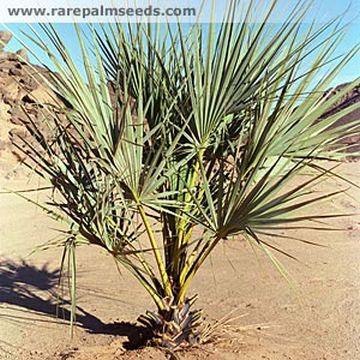
Photo: Rare Palm Seeds.com

Notations by Research Work Editor Pal Meir. Photo by Pal Meir.


Photo by somona.

Photo by somona.

Photo by somona.

Fresh Seeds, Photo by Kris Achar.

Cleaned Seeds, Photo by Kris Achar.

Cleaned Seed, Photo by Kris Achar.

Seed Germination, Photo by Kris Achar.

Germinated Seeds, Photo by Kris Achar.


External Links
- Glossary of Palm Terms
- MODERN BOTANICAL LATIN
- "Just To Be Clear"
- Medemia argun, Martin Gibbons and Tobias W. Spanner
- Medemia argun – Past, Present and Future
- http://www.palmtalk.org/forum/index.php?/topic/46642-medemia-argun-in-florida/
References
Phonetic spelling of Latin names by edric.
Special thanks to Geoff Stein, (Palmbob) for his hundreds of photos.
Special thanks to Palmweb.org, Dr. John Dransfield, Dr. Bill Baker & team, for their volumes of information and photos.
Glossary of Palm Terms; Based on the glossary in Dransfield, J., N.W. Uhl, C.B. Asmussen-Lange, W.J. Baker, M.M. Harley & C.E. Lewis. 2008. Genera Palmarum - Evolution and Classification of the Palms. Royal Botanic Gardens, Kew. All images copyright of the artists and photographers (see images for credits).
Many Special Thanks to Ed Vaile for his long hours of tireless editing and numerous contributions.