Difference between revisions of "Acrocomia aculeata"
| (8 intermediate revisions by one user not shown) | |||
| Line 142: | Line 142: | ||
image:B13344.jpg | image:B13344.jpg | ||
image:F48e72.jpg | image:F48e72.jpg | ||
| − | image:-gallery-members-acrocomia_aculeata_craft.jpg|Dominican Republic, photo by Paul Craft | + | image:-gallery-members-acrocomia_aculeata_craft.jpg|Dominican Republic. photo by Paul Craft |
| + | |||
| + | File:Acrocomia_aculeata_specimen.jpg|Guavaberry Country Club, Dominican Republic. photo by Paul Craft | ||
| + | File:Acrocomia_aculeata_specimen4.jpg|Rio de Janeiro, Brazil. photo by Paul Craft | ||
| + | File:Acrocomia_aculeata_trunk.jpg|Cuba. photo by Paul Craft | ||
| + | File:Acrocomia_aculeata_leaf.jpg|Cuba. photo by Paul Craft | ||
| + | File:Acrocomia_aculeata_infructescence.jpg|Cuba. photo by Paul Craft | ||
| + | File:Acrocomia_aculeata_habitat.jpg|Cuba. photo by Paul Craft | ||
| + | File:Acrocomia_aculeata_fruit.jpg|Cuba. photo by Paul Craft | ||
| + | |||
image:-gallery-members-Acrocomia_Fitzpatrick16.jpg|Horqueta, Paraguay, photo by George Fitzpatrick | image:-gallery-members-Acrocomia_Fitzpatrick16.jpg|Horqueta, Paraguay, photo by George Fitzpatrick | ||
image:Eeee0031.jpg|La Habana Botanical Garden, Cuba. Photo by Jason Schoneman | image:Eeee0031.jpg|La Habana Botanical Garden, Cuba. Photo by Jason Schoneman | ||
| Line 199: | Line 208: | ||
File:100370.jpg|Brazil. Photo by Gerson Luiz Lopes. | File:100370.jpg|Brazil. Photo by Gerson Luiz Lopes. | ||
File:100371.jpg|Brazil. Photo by Gerson Luiz Lopes. | File:100371.jpg|Brazil. Photo by Gerson Luiz Lopes. | ||
| − | File: | + | File:36167925642_87801e140a_k.jpg|Edison Estate, Ft. Meyers, Florida. Photo by Dr. Scott Zona. |
| + | File:C0127.JPG|Photo: naturezabela.com.br | ||
| + | File:aa3560854.JPG|Photo: palmerasyjardines.com | ||
File:mcw215f1.jpg|Seeds and seedlings of A. aculeata, indicating (on the left) the development phases of the saxophone stem: (I) growth and curvature of the cotyledonary petiole, (II) expansion and curvature of the ligule and (III) formation of the tuberous region. Longitudinal sections of the seed (A–F) and saxophone stem (K). (A) Embryo inserted within the endosperm of a non-germinated seed; (B) 1 d after germination, showing protrusion of the cotyledonary petiole (arrowhead); (C) 5 d after germination, highlighting the curvature region of the cotyledonary petiole (arrowhead); (D) 10 d after germination; (E) 15 d after germination, showing expansion of the ligule region (arrowhead); (F) 20 d after germination, showing the bending region of the ligule (white arrowhead); (G) 45 d after germination, showing curvature of the base of the saxophone stem (white arrowheads) and the rupture region of the ligule (black arrowhead); (H) 60 d after germination, highlighting the beginning of the formation of the tuberous region (arrow), with upwards growth toward the soil surface – the soil level is indicated by a dashed line; (I) 180 d after germination, showing the base of saxophone stem (white arrow) and the position of the terminal portion of the tuberous region where the senescent primary root is inserted (white arrowhead) – ground level is indicated by a dashed line; (J) 240 d after germination, highlighting the scars of the embryonic leaves (white arrowheads), the remains of the degenerated primary root (white arrow) and the cortical coating (black arrowhead); (K) 240 d after germination, showing the insertion position of the primary root (white arrowhead), and the location of the apical meristem (white arrow). Abbreviations: ar, adventitious root; cp, cotyledonary petiole; ed, endosperm; eo, eophyll; ha, haustorium; le, leaves; li, ligule; me, metaphyll; pr, primary root; s1, first sheath; s2, second sheath; se, seed; sr, secondary root; te, seed coat; tr, tuberous region. Photo: botany.one | File:mcw215f1.jpg|Seeds and seedlings of A. aculeata, indicating (on the left) the development phases of the saxophone stem: (I) growth and curvature of the cotyledonary petiole, (II) expansion and curvature of the ligule and (III) formation of the tuberous region. Longitudinal sections of the seed (A–F) and saxophone stem (K). (A) Embryo inserted within the endosperm of a non-germinated seed; (B) 1 d after germination, showing protrusion of the cotyledonary petiole (arrowhead); (C) 5 d after germination, highlighting the curvature region of the cotyledonary petiole (arrowhead); (D) 10 d after germination; (E) 15 d after germination, showing expansion of the ligule region (arrowhead); (F) 20 d after germination, showing the bending region of the ligule (white arrowhead); (G) 45 d after germination, showing curvature of the base of the saxophone stem (white arrowheads) and the rupture region of the ligule (black arrowhead); (H) 60 d after germination, highlighting the beginning of the formation of the tuberous region (arrow), with upwards growth toward the soil surface – the soil level is indicated by a dashed line; (I) 180 d after germination, showing the base of saxophone stem (white arrow) and the position of the terminal portion of the tuberous region where the senescent primary root is inserted (white arrowhead) – ground level is indicated by a dashed line; (J) 240 d after germination, highlighting the scars of the embryonic leaves (white arrowheads), the remains of the degenerated primary root (white arrow) and the cortical coating (black arrowhead); (K) 240 d after germination, showing the insertion position of the primary root (white arrowhead), and the location of the apical meristem (white arrow). Abbreviations: ar, adventitious root; cp, cotyledonary petiole; ed, endosperm; eo, eophyll; ha, haustorium; le, leaves; li, ligule; me, metaphyll; pr, primary root; s1, first sheath; s2, second sheath; se, seed; sr, secondary root; te, seed coat; tr, tuberous region. Photo: botany.one | ||
| − | </gallery> | + | </gallery></center> |
| + | <br clear="all"> | ||
| + | |||
==External Links== | ==External Links== | ||
*[http://eunops.org/content/glossary-palm-terms Glossary of Palm Terms] | *[http://eunops.org/content/glossary-palm-terms Glossary of Palm Terms] | ||
| Line 209: | Line 222: | ||
*[http://www.jlhudsonseeds.net/Pronunciation.htm "Just To Be Clear"] | *[http://www.jlhudsonseeds.net/Pronunciation.htm "Just To Be Clear"] | ||
*http://itp.lucidcentral.org/id/palms/palm-id/Acrocomia_aculeata.htm | *http://itp.lucidcentral.org/id/palms/palm-id/Acrocomia_aculeata.htm | ||
| + | *http://idtools.org/id/dried_botanical/factsheet.php?name=Acrocomia%20aculeata | ||
*http://www.palmbeachpalmcycadsociety.com/palms/documents/AcrocomiaAculeata.pdf | *http://www.palmbeachpalmcycadsociety.com/palms/documents/AcrocomiaAculeata.pdf | ||
| + | *http://www.b4fn.org/resources/species-database/detail/acrocomia-aculeata/ | ||
| + | *https://www.youtube.com/watch?v=0IYcx9oLjlE | ||
*[http://palmasenresistencia.blogspot.com.ar/2009/08/acrocomia-aculeata-english.html Palms of Argentina by Jose A. Grassia.] | *[http://palmasenresistencia.blogspot.com.ar/2009/08/acrocomia-aculeata-english.html Palms of Argentina by Jose A. Grassia.] | ||
*[http://w3.biosci.utexas.edu/prc/Sabal/saxophone.html THE SAXOPHONE STYLE ROOT GROWTH (HEEL)] | *[http://w3.biosci.utexas.edu/prc/Sabal/saxophone.html THE SAXOPHONE STYLE ROOT GROWTH (HEEL)] | ||
Latest revision as of 13:36, 23 April 2019
Macaw Palm
| Acrocomia (ak-roh-koh-MEE-ah) aculeata (ah-koo-leh-AH-tah) | |||||||
|---|---|---|---|---|---|---|---|
 Palm growing in Condovac La Costa Hotel in Guanacaste, Costa Rica. | |||||||
| Scientific Classification | |||||||
| |||||||
| Synonyms | |||||||
|
| |||||||
| Native Continent | |||||||
 | |||||||
| Morphology | |||||||
| |||||||
| Culture | |||||||
| |||||||
| Survivability index | |||||||
| |||||||
| Common names | |||||||
|
| |||||||
Contents
Habitat and Distribution
Acrocomia aculeata is an extremely widespread palm from tropical America.
Argentina Northeast, Belize, Bolivia, Brazil North, Brazil Northeast, Brazil South, Brazil Southeast, Brazil West-Central, Colombia, Costa Rica, Cuba, Dominican Republic, El Salvador, French Guiana, Guatemala, Guyana, Haiti, Honduras, Jamaica, Leeward Is., Mexico Gulf, Mexico Southeast, Mexico Southwest, Nicaragua, Panamá, Paraguay, Suriname, Trinidad-Tobago, Venezuela, and the Windward Is.
Description
These impressive palms bear a superficial resemblance to the majestic Royal palm from a distance, due to its size and attractive form. However on closer inspection, the copious spines on most forms, along with the plumose character of the leaves, give its true identity away even to the relatively uninformed. Editing by edric.
Culture

This palm can be very fast growing and surprisingly cold hardy. However, because this species is so variable, its growth characteristics can be variable as well. It is most common in open sunny areas, and is fairly drought tolerant. However, it makes a much more attractive specimen with adequate water. It is tolerant of many soils and conditions, but will not handle shady locations. One must be careful when planting such a vicious palm. As a juvenile, with its sharp and plentiful spines, it can present a hazard to children and pets, not to mention, the well caring gardener.
In climates like Florida (including the central part) these are very fast-growing palms. According to informants in Orlando, Acrocomia can reach 30 feet (10 m) tall in about 5 - 10 years. They are much slower-growing in Mediterranean climates like Southern California, but will thrive with plenty of water. In any climate, avoid placing where they might get bumped into by sensitive people.
Comments and Curiosities
At one time, due to the previously mentioned variabilty, there were 2 dozen described species. Today, according to who you recognize, there are as few as two. The uses of all parts of this palm would take several paragraphs to list, and would provide interesting reading.
| read more |
|---|
|
In Costa Rica, the fruits are eaten by the cattle in the plains. Also, Costa Rican people use the "Coyol Palm" for making "Coyol Wine", specially in the Guanacaste province. This wine is made from the latex that oozes from the trunk, after chopping the palm down. When cooked, in Panamá, the fruits are peeled and smashed to form a paste, which is then mixed with brown sugar and water and let to ferment. The final product is known as "chicha", a type of liqueur. Present in all semi-dry to tropical America, Acrocomia aculeata has not failed to colonize the West Indies. Victim of its sharp thorns which it is fully covered at a very young age, he was almost completely eradicated because of the danger it presents for both men and livestock. Happily, sometimes it still surprises along the gullies are difficult to access, a feathery palm of "Grougrou" dangling at the mercy of winds. It is time to replant the palm gorgeous, extremely rapid growth and capable of withstanding a "Lent" severe without watering. Grande-Terre in Guadeloupe is the home of Acrocomia (karukerana) some features distinguish them from other forms of the species. However, we will stick to botanical nomenclature in that Acrocomia karukerana is not considered a separate species, but as a simple variation of the population within Acrocomia aculeata. On populations designated under the name Acrocomia karukerana, these seem to have different characteristics from others (spines arranged without order on the stem, when they are arranged in regular rings on the stems of Acrocomia aculeata.) However, this character does not seem enough to make it a separate species, especially since we found these features on some of the Guyanese Acrocomia aculeata population. In any case, this palm is a very special variant of the species Type Acrocomia aculeata, which seems to be almost exclusively on Guadeloupe. It would almost be an endemic form. (see photos of var. below). Despite its endemism, this palm has been massively removed from areas where it once grew in abundance, these flat lands of the Great Earth have been largely cleared for the benefit of agriculture, livestock, housing and other human activity. This palm is protected by law. Nevertheless, it is unfortunately now on the verge of extinction as their numbers are reduced. The name of this palm (karukerana) means "Karukera" old Indian name of Guadeloupe. Uses: The main use is in landscaping, tolerates transplantation as a juvenile and adult. Its fruits are sold along the railway line to Puerto Suarez Roboré, Santiago de Chiquitos, Santa Cruz. Its other uses include, Medicinal and Veterinary: Respiratory system, Sensory system, the root is used for the digestive system, and both the root and stem to make beverages. Ornamental, Cosmetics, Animal Food, and also the palm heart is eaten. This is a tillering palm, it exhibits saxophone style root growth (it has a heel), keep top third of heel above soil elevation! |
- IMAGE GALLERY

Acrocomia aculeata, Camaguey, Cuba. Photo by Duanny Suárez

Acrocomia aculeata, Camaguey, Cuba. Photo by Duanny Suárez

Acrocomia aculeata, Camaguey, Cuba. Photo by Duanny Suárez

Acrocomia aculeata, Camaguey, Cuba. Photo by Duanny Suárez

A. aculeata fruits in Guanacaste, Costa Rica.

Lyon Arboretum, Hawaii.

Colombia. Photo-KEW/Palmweb.

Espiritu, El Beni, Bolivia. Photo by Dr. Stephen A. Renvoize/Palmweb.

Near Antioquia, Colombia. Photo-Royal Botanic Gardens, Kew/Palmweb.

Espiritu, El Beni, Bolivia. Photo by Dr. Stephen A. Renvoize/Palmweb.

|Near Antioquia, Colombia. Photo-Royal Botanic Gardens, Kew/Palmweb.

Kourou, French Guiana. Photo-ti-palm.fr

French Guiana. Photo-ti-palm.fr

French Guiana. Photo-ti-palm.fr

French Guiana. Photo-ti-palm.fr

French Guiana. Photo-ti-palm.fr

Thailand.

Palm growing in Condovac La Costa Hotel in Guanacaste, Costa Rica.

Martinique. Photo-ti-palm.fr

Morne Rouge, Martinique. Photo-ti-palm.fr

Martinique. Photo-ti-palm.fr

Acrocomia aculeata var. karukerana, Terrasson, Guadeloupe. Photo-ti-palm.fr

Acrocomia aculeata var. karukerana. Kananga, Guadeloupe. Photo-ti-palm.fr

Acrocomia aculeata var. karukerana. Kananga, Guadeloupe. Photo-ti-palm.fr

Acrocomia aculeata karukerana. Kananga, Guadeloupe. Photo-ti-palm.fr

crocomia aculeata var. karukerana. Kananga, Guadeloupe. Photo-ti-palm.fr

Acrocomia aculeata var. karukerana. Terrasson, Guadeloupe. Photo-ti-palm.fr

Acrocomia aculeata var. karukerana. Terrasson, Guadeloupe. Photo-ti-palm.fr

Acrocomia aculeata var. karukerana. Terrasson, Guadeloupe. Photo-ti-palm.fr

Acrocomia aculeata var. karukerana. Terrasson, Guadeloupe. Photo-ti-palm.fr

Acrocomia aculeata var. karukerana. Terrasson, Guadeloupe. Photo-ti-palm.fr

Acrocomia aculeata var. karukerana. Terrasson, Guadeloupe. Photo-ti-palm.fr

Acrocomia aculeata var. karukerana. Terrasson, Guadeloupe. Photo-ti-palm.fr

Acrocomia aculeata var. karukerana. Terrasson, Guadeloupe. Photo-ti-palm.fr

Acrocomia aculeata var. karukerana. Terrasson, Guadeloupe. Photo-ti-palm.fr

Acrocomia aculeata var. karukerana. Terrasson, Guadeloupe. Photo-ti-palm.fr

Acrocomia aculeata var. karukerana. Terrasson, Guadeloupe. Photo-ti-palm.fr

Acrocomia aculeata var. karukerana. Terrasson, Guadeloupe. Photo-ti-palm.fr

Acrocomia aculeata var. karukerana. Terrasson, Guadeloupe. Photo-ti-palm.fr

Acrocomia aculeata var. karukerana. Terrasson, Guadeloupe. Photo-ti-palm.fr

Acrocomia aculeata var. karukerana. Terrasson, Guadeloupe. Photo-ti-palm.fr

Acrocomia aculeata var. karukerana. Terrasson, Guadeloupe. Photo-ti-palm.fr

Acrocomia aculeata var. karukerana. Terrasson, Guadeloupe. Photo-ti-palm.fr

Large specimen, Trinidad, West Indies.

Machado -Minas Gerais, Brazil. Photo-FARM MURICY

Machado -Minas Gerais, Brazil. Photo-FARM MURICY

Close Up, California.

A. aculeata seeds in germination tray.


South-east Queensland. Photo by Dr. Hugh Kunze

South-east Queensland. Photo by Dr. Hugh Kunze

South-east Queensland. Photo by Dr. Hugh Kunze


Dominican Republic. photo by Paul Craft

Guavaberry Country Club, Dominican Republic. photo by Paul Craft

Rio de Janeiro, Brazil. photo by Paul Craft

Cuba. photo by Paul Craft
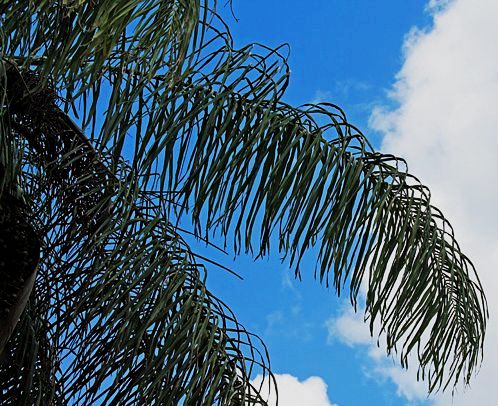
Cuba. photo by Paul Craft

Cuba. photo by Paul Craft

Cuba. photo by Paul Craft

Cuba. photo by Paul Craft

Horqueta, Paraguay, photo by George Fitzpatrick

La Habana Botanical Garden, Cuba. Photo by Jason Schoneman


Wild palms on the island of Grenada - Many of these grow along the riparian zone. Photo by Kyle Wicomb.

Wild palms on the island of Grenada - Many of these grow along the riparian zone. Photo by Kyle Wicomb.

Wild palms on the island of Grenada - Many of these grow along the riparian zone. Photo by Kyle Wicomb.

Wild palms on the island of Grenada - Many of these grow along the riparian zone. Photo by Kyle Wicomb.

Wild palms on the island of Grenada - Many of these grow along the riparian zone. Photo by Kyle Wicomb.

Parque da Cidade, Brasília, Brasil. Photo by Mauricio Mercadante

Parque da Cidade, Brasília, Brasil. Photo by Mauricio Mercadante

Parque da Cidade, Brasília, Brasil. Photo by Mauricio Mercadante

Parque da Cidade, Brasília, Brasil. Photo by Mauricio Mercadante

Parque da Cidade, Brasília, Brasil. Photo by Mauricio Mercadante

Parque da Cidade, Brasília, Brasil. Photo by Mauricio Mercadante

Parque da Cidade, Brasília, Brasil. Photo by Mauricio Mercadante

Parque da Cidade, Brasília, Brasil. Photo by Mauricio Mercadante

Parque da Cidade, Brasília, Brasil. Photo by Mauricio Mercadante

La Mancha, Veracruz, Mexico. Photo by fundacionentretejiendo

La Mancha, Veracruz, Mexico. Photo by fundacionentretejiendo

La Mancha, Veracruz, Mexico. Photo by fundacionentretejiendo

El Limón, San Marcos, Sucre, Colombia. Photo by fundacionentretejiendo

Manolos, Provincia de Alajuela, Alajuela, Costa Rica.

El Zamorano, Honduras. Photo by oliverkomar

Pitahaya, Luquillo, Puerto Rico. Photo by ricardocolonrivera


JIM CONRAD'S NATURALIST NEWSLETTER. Written in the community of 28 de Junio and issued from a ciber 8 kms to the west in Pujiltic, Chiapas, MÉXICO.

Photo: Peter Deplewski

Mococa SP., Brazil. Photo by mauro halpern

Mococa SP., Brazil. Photo by mauro halpern

Mococa SP., Brazil. Photo by mauro halpern

Mococa SP., Brazil. Photo by mauro halpern

Mococa SP., Brazil. Photo by mauro halpern

Mococa SP., Brazil. Photo by mauro halpern

Mococa SP., Brazil. Photo by mauro halpern

Mococa SP., Brazil. Photo by mauro halpern

Mococa SP., Brazil. Photo by mauro halpern

Mococa SP., Brazil. Photo by mauro halpern

Mococa SP., Brazil. Photo by mauro halpern


Brazil. Photo by Gerson Luiz Lopes.

Brazil. Photo by Gerson Luiz Lopes.

Brazil. Photo by Gerson Luiz Lopes.

Brazil. Photo by Gerson Luiz Lopes.

Brazil. Photo by Gerson Luiz Lopes.

Brazil. Photo by Gerson Luiz Lopes.

Brazil. Photo by Gerson Luiz Lopes.

Brazil. Photo by Gerson Luiz Lopes.

Edison Estate, Ft. Meyers, Florida. Photo by Dr. Scott Zona.

Photo: naturezabela.com.br

Photo: palmerasyjardines.com

Seeds and seedlings of A. aculeata, indicating (on the left) the development phases of the saxophone stem: (I) growth and curvature of the cotyledonary petiole, (II) expansion and curvature of the ligule and (III) formation of the tuberous region. Longitudinal sections of the seed (A–F) and saxophone stem (K). (A) Embryo inserted within the endosperm of a non-germinated seed; (B) 1 d after germination, showing protrusion of the cotyledonary petiole (arrowhead); (C) 5 d after germination, highlighting the curvature region of the cotyledonary petiole (arrowhead); (D) 10 d after germination; (E) 15 d after germination, showing expansion of the ligule region (arrowhead); (F) 20 d after germination, showing the bending region of the ligule (white arrowhead); (G) 45 d after germination, showing curvature of the base of the saxophone stem (white arrowheads) and the rupture region of the ligule (black arrowhead); (H) 60 d after germination, highlighting the beginning of the formation of the tuberous region (arrow), with upwards growth toward the soil surface – the soil level is indicated by a dashed line; (I) 180 d after germination, showing the base of saxophone stem (white arrow) and the position of the terminal portion of the tuberous region where the senescent primary root is inserted (white arrowhead) – ground level is indicated by a dashed line; (J) 240 d after germination, highlighting the scars of the embryonic leaves (white arrowheads), the remains of the degenerated primary root (white arrow) and the cortical coating (black arrowhead); (K) 240 d after germination, showing the insertion position of the primary root (white arrowhead), and the location of the apical meristem (white arrow). Abbreviations: ar, adventitious root; cp, cotyledonary petiole; ed, endosperm; eo, eophyll; ha, haustorium; le, leaves; li, ligule; me, metaphyll; pr, primary root; s1, first sheath; s2, second sheath; se, seed; sr, secondary root; te, seed coat; tr, tuberous region. Photo: botany.one


_Fam%C3%ADlia,_Arec%C3%A1ceas_(sinon%C3%ADmia,_Palmas),_maca%C3%BAba,_maca%C3%BAva,_bocai%C3%BAva,_macajuba,_coco-de-espinho,_coco-baboso._-_panoramio.jpg)


External Links
- Glossary of Palm Terms
- MODERN BOTANICAL LATIN
- "Just To Be Clear"
- http://itp.lucidcentral.org/id/palms/palm-id/Acrocomia_aculeata.htm
- http://idtools.org/id/dried_botanical/factsheet.php?name=Acrocomia%20aculeata
- http://www.palmbeachpalmcycadsociety.com/palms/documents/AcrocomiaAculeata.pdf
- http://www.b4fn.org/resources/species-database/detail/acrocomia-aculeata/
- https://www.youtube.com/watch?v=0IYcx9oLjlE
- Palms of Argentina by Jose A. Grassia.
- THE SAXOPHONE STYLE ROOT GROWTH (HEEL)
References
Field Guide to the Palms of the Americas by Andrew Henderson, Gloria Galeano, Rodrigo Bernal. Page 166.
All information tranlated from the French, and Spanish, edric.
Phonetic spelling of Latin names by edric.
Special thanks to Geoff Stein, (Palmbob) for his hundreds of photos.
Special thanks to Palmweb.org, Dr. John Dransfield, Dr. Bill Baker & team, for their volumes of information and photos.
Glossary of Palm Terms; Based on the glossary in Dransfield, J., N.W. Uhl, C.B. Asmussen-Lange, W.J. Baker, M.M. Harley & C.E. Lewis. 2008. Genera Palmarum - Evolution and Classification of the Palms. Royal Botanic Gardens, Kew. All images copyright of the artists and photographers (see images for credits).
Many Special Thanks to Ed Vaile for his long hours of tireless editing and numerous contributions.