Difference between revisions of "Calyptrogyne ghiesbreghtiana"
| Line 1: | Line 1: | ||
__noeditsection__ | __noeditsection__ | ||
<google>CH02</google> | <google>CH02</google> | ||
| − | [[Image:Calyptrogyneghiesbreghtiana.jpg|thumb|left| | + | [[Image:Calyptrogyneghiesbreghtiana.jpg|thumb|left|540px|Trinidad, West Indies]] |
{{Palmbox | {{Palmbox | ||
|image=Calyptrogyne ghiesbreghtiana.jpg | |image=Calyptrogyne ghiesbreghtiana.jpg | ||
Revision as of 02:18, 26 November 2012
<google>CH02</google>

| Calyptrogyne ghiesbreghtiana | |||||||
|---|---|---|---|---|---|---|---|
 Hawaii. | |||||||
| Scientific Classification | |||||||
| |||||||
| Synonyms | |||||||
|
| |||||||
| Native Continent | |||||||
 | |||||||
| Morphology | |||||||
| |||||||
| Culture | |||||||
|
| |||||||
| Survivability index | |||||||
|
| |||||||
| Common names | |||||||
|
| |||||||
Contents
Habitat and Distribution
Rainforests from sea level up to 1500m (4800') into the cloud forests, of southeast Mexico, and Central America.
Description
The Vampire palm (in reference to its being pollinated by bats), or Coligallo palm which is spanish for rooster tail. This is an understory palm. Trunk type: Solitary, with a mostly subterranean stem. Hight: To 2 meters (6.5') tall. Leaf detail: V-shaped, or bifid, with 3 to 9 other divisions in the leaf, to become partially pinnate, with a length to 1.2m (4'), and dark green. Flower detail: The flowers are produced all year round, on upright inflorescences; they are monoecious, with complete temporal separation of the male and female stages. The flowers are pollinated by bats. Simple paper thin leaves that split unevenly, (may resemble a pinnate leaf), inflorescence a single spike with a distinctive ring left by the spathe, bat pollinated flowers have a garlic odor.
Special note: There are variable species, with four accepted subspecies, Calyptrogyne ghiesbreghtiana subsp. glauca, Calyptrogyne ghiesbreghtiana subsp. ghiesbreghtiana, Calyptrogyne ghiesbreghtiana subsp. hondurensis, Calyptrogyne ghiesbreghtiana subsp. spicigera. Editing by edric.
Culture
Requirements: Full to partial shade when young, filtered light when mature, consistently moist soil, well drained position. Although found at cool altitudes, it isn't very frost tolerant. Very popular with palm collectors.
Comments and Curiosities
Because the flowers are made of a sweet chewable tissue (like the pulp of a fruit) they are much favoured by katydids (Tettigoniidae), whose feeding reduces the number of flowers available to be pollinated. The inflorescences host a species of mite (Acari) which live and reproduce on the inflorscence and travel to new inflorescences by hitching a ride on the flower-visiting bats. The behaviour of parasitising another animal for transport but not food is known as phoresy. A similar phenomenon which has been more comprehensively surveyed are the mites that live in flowers visited by hummingbirds and are phoretic on these flower-visiting birds.
External Links
References
Special thanks to Geoff Stein, (Palmbob) for his hundreds of photos, edric.
Special thanks to Dr. John Dransfield, Dr. Bill Baker & team, for their volumes of information and photos, edric.
- IMAGE GALLERY
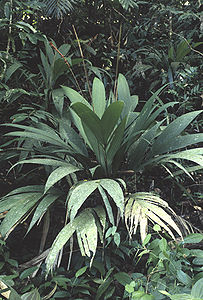
Costa Rica. Photo by Dr. Andrew J. Henderson, edric.

Calyptrogyne ghiesbreghtiana subsp. glauca. La Selva, Costa Rica. Photo by Dr. John Dransfield, edric.

Flower.

Hawaii.

Fairchild FL.

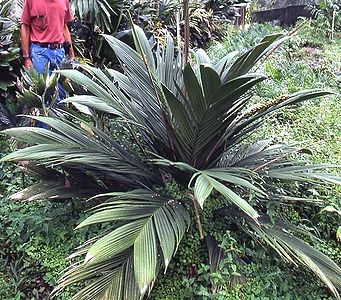


Photo by Luke Nancarrow, edric.


Costa Rica.
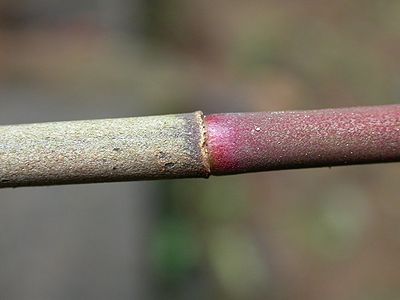
Costa Rica.

Photo by Luke Nancarrow, edric.


Many Special Thanks to Ed Vaile for his long hours of tireless editing and numerous contributions.