Difference between revisions of "Pritchardia hillebrandii"
| Line 54: | Line 54: | ||
"This is just one of about 20-plus species of Pritchardia that grow well in southern California. There are a few species from the South Pacific that do not, but just about all the Pritchardias native to Hawaii do fine here in So Cal. Some are much rarer than others; this is one of the most common species. A pretty robust grower, it has large, only slightly divided leaves that don't droop much, if at all. It loves water, but doesn't require a ton of it. This palm can do great in full sun near the coast but prefers some shade inland. Intense, dry heat (over 100°F) is tough on it. There are several varieties of this palm including a 'dwarf' form that has slightly bluish leaves." (Geoff Stein) | "This is just one of about 20-plus species of Pritchardia that grow well in southern California. There are a few species from the South Pacific that do not, but just about all the Pritchardias native to Hawaii do fine here in So Cal. Some are much rarer than others; this is one of the most common species. A pretty robust grower, it has large, only slightly divided leaves that don't droop much, if at all. It loves water, but doesn't require a ton of it. This palm can do great in full sun near the coast but prefers some shade inland. Intense, dry heat (over 100°F) is tough on it. There are several varieties of this palm including a 'dwarf' form that has slightly bluish leaves." (Geoff Stein) | ||
| + | |||
| + | Many Pritchardias are fussy and difficult to grow outside the tropics, frequently suffering from a yellowing of the leaves. The moderately-sized P. hillebrandii, which grows in dry forest near sea level on the Hawaiian island of Molokai, is a very different prospect. It is fast growing, very modest in its requirements, and its beautiful, rigid and leathery leaves with a blue-gray cast retain their color. The fruits are mid-sized, and the seeds are easy and fast to germinate. It is suitable for a wide range of climates and will even tolerate cool conditions and a little frost. Excellent also as an indoor specimen. (RPS.com) | ||
{{read more bottom}} | {{read more bottom}} | ||
Revision as of 23:43, 12 July 2016
| Pritchardia (pritch-AHR-dee-ah) hillebrandii (hill-eh-BRAND-ee) | |||||||
|---|---|---|---|---|---|---|---|
 Lyon Arboretum, Oahu, Hawaii. Photo by Geoff Stein | |||||||
| Scientific Classification | |||||||
| |||||||
| Synonyms | |||||||
|
| |||||||
| Native Continent | |||||||
 | |||||||
| Morphology | |||||||
| |||||||
| Culture | |||||||
|
| |||||||
| Survivability index | |||||||
|
| |||||||
| Common names | |||||||
|
| |||||||
Contents
Habitat and Distribution
Endemic, Hawaii. Now restricted to the tops of the stack-like, rocky islets of
"Pritchardia hillebrandii or Loulu lelo (yellowish loulu), is endemic to the Island of Molokai where it grows along the northeastern coastline at elevations of 100 to 1900 feet. Today, the habitat is limited mainly to the tops of islets Huelo and Mokapa located off the north coast of Molokai." (Bill Chang)
Description
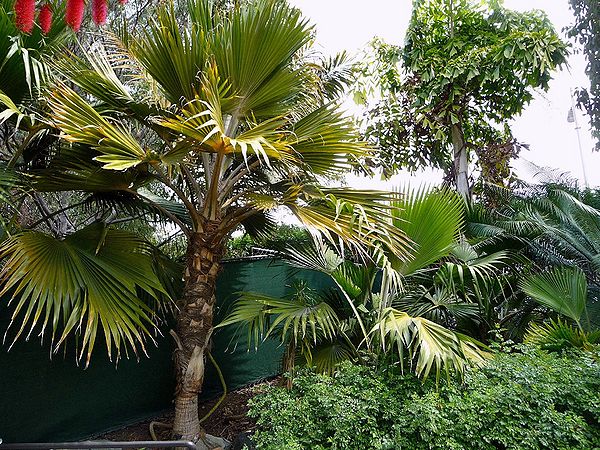
To 8 m tall; proximal margins of petiole with only a few fibers; ieaf biade strongly undulate and often of a rather coarse appearance, divided 2/5-1/2, conspicuously waxy-glaucous, grayish green, rarely to nearly white or plain green, abaxial surface more or less devoid of lepidia, segment tips stiff to drooping; inflorescences composed of 1-5 panicles, shorter than or equaling petioles in flower and fruit, panicles branched to 3 orders, rachillae glabrous; fruits 15-22 x 14-19 mm, globose, often keeled or ridged. (Hodel, D. 2007)/Palmweb.
Pritchardia hillebrandii is distinctive in its conspicuously waxy glaucous leaf blades more or less devoid of lepidia, inflorescences shorter than or equaling the petioles, and small fruits. Leaf blades can be so heavily glaucous that they appear nearly white (Fig. 18). It is similar to P. maideniana but the latter differs in its diamond-shaped (in outline) leaf blades (the result of strong and conspicuous folding) that mostly lack the giaucous covering. It is unclear whether Hillebrand's type material originated from cultivated plants in Honolulu or from wild or cuitivated plants on Molokai. Beccari (1890) noted that much confusion surrounded the provenance and labels on Hillebrand's specimens at B, although there is a loose note in the photograph at FI of the type at B with the name Molokai handwritten on it. It is also unclear whether the numbers identifying the syntypes of P. insignis (7970 and 8800) were applied by the Botanic Garden in Guyana or its herbarium or by the Berlin Herbarium. (Hodel, D. 2007)/Palmweb.
"P. hillebrandii is a medium sized palm with trunks that grow to 25 feet. The fan shaped leaves’ lower surfaces are ashy-silvery along the petioles and ridges of segment folds. They are waxy glaucous, sometimes to the point of appearing silvery as in the case of a specimen growing in the Ho’omaluhia Botanical Garden on Oahu. The fruit are small yellowish or reddish brown globose shaped becoming intensely bluish or nearly black when ripe. They are 3/4 inch in diameter, sometimes a little larger but less than 1 inch.
Culture
| read more |
|---|
|
An attractive and easy to grow loulu in the landscape. Looks nice in small groves of three or more palms or can be show cased with a single loulu. They are slow growing attaining a mature height to about 20 feet or so and with a trunk diameter of 10 inches. Due to the natural coastal habitat of loulu lelo, it does very well in low elevation landscapes and tolerates some salt spray. This is a smaller fan palm that grows well in full sun with good drainage. Does best in full sun. At higher elevations requires partial shade. (Garrett Webb, Kalaoa Gardens) Apply a complete palm fertilizer with minor elements as directed on label. Be certain that sufficient magnesium and potassium is present in the fertilizer component. This is especially critical for loulus in pots. Magnesium and potassium deficiencies are two of the most serious nutritional disorders in palms. The deficiencies are characterized by bright yellowing (chlorotic) on leaf edges or streaking or the entire fronds yellowing. This can be difficult to reverse. Applications of Epsom salt, or magnesium sulfate (MgSO4), is good but does not last and is usually washed out of the soil in rainy periods. There are some very good slow release fertilizer spikes made for especially for palms on the market which contain a good balance of minor elements with magnesium and potassium. [4,5] Potted or younger loulu planted in the ground appreciate a foliar feeding of kelp or fish emulsion and Epsom salt monthly or bi-monthly. (Encyclopedia of Life curator Dr. David Eickhoff) Needs to dry out in between watering's. Loulu lelo is prone to leaf rollers, red spider mites and sugar cane borers. Rats will eat the fruit. |
Comments and Curiosities
| read more |
|---|
|
Etymology: Pritchardia name is dedicated to William Thomas Pritchard (1829-1907), British official stationed in Fiji in the 19th Century, British counsul in Fiji, adventurer, and author of Polynesian Reminiscences in 1866. Hillebrandii name honors the botanist W.F. Hillebrand (1853-1925). The epithet was named for William Hillebrand (1821-1886), a young Prussian physician and plant collector. He planted many of the plants he collected at Queen's Hospital and on his own property in Nuʻuanu. After moving back to Germany the property was sold to his neighbors Thomas & Mary Foster. Today, it is known as the Foster Botanical Gardens. There are several Pritchardia hillebrandii growing in the gardens, once Hillebrand's property. (Naomi Hoffman, Foster Botanical Garden.) Uses: An amazing use by early Hawaiians was a sport somewhat like today's hang gliding. Reportedly, daring souls would climb Huelo Islet seastack, cut suitable fronds, attach fronds like wings, and then jump to glide to the ocean over a hundred feet below! ( "Paddling My Own Canoe" by Audrey Sutherland, page 131.) Conservation: Pehaps once common along the northern coast of Molokaʻi. As recently as 1976, fifteen loulu lelo were found in the valleys and the base of the sea cliifs of north coast of Molokaʻi. They are extinct there today, likely because of goats and rats. Loulu lelo is now restricted to mostly Huelo Islet, a 200-foot seastack, rising from the ocean off the windward coast of Molokaʻi. About 200 loulu lelo live in the 2 to 3 acre a top this islet due to the absence of rats and goats. There are also ten trees on the nearby islets of Mōkapu as well. They are being reintroduced by Bill Garnett, a naturalist on Molokaʻi, in fenced areas on Kūkaʻiwaʻa Point on Molokaʻi. ("Loulu: The Hawaiian Palm" by Donald R. Hodel, pages 1, 92-93, 95.) The palm is variable in overall appearance with green leaves, ranging to the "blue dwarf" which has, according to specimen, more or less waxy glaucous leaves on both sides. The "blue dwarf" is regarded as especially attractive. Rock (1921) described a 'robust' variety with very large leaves, being cultivated near Kamalo on Molokai, but commented that the size of the palm may be due to soil conditions. {Wagner, W.L., Herbst, D.R. & Sohmer, S.H. 1990) "Its faintly bluish-green costapalmate leaves are a beautiful characteristic of this palm, as well as the almost wooly petioles. There is one form of this palm with a small growth habits and blue coloration called Dwarf Blue. This is a smaller fan palm that grows well in full sun with good drainage." (Garrett Webb, Kalaoa Nursery) "This is just one of about 20-plus species of Pritchardia that grow well in southern California. There are a few species from the South Pacific that do not, but just about all the Pritchardias native to Hawaii do fine here in So Cal. Some are much rarer than others; this is one of the most common species. A pretty robust grower, it has large, only slightly divided leaves that don't droop much, if at all. It loves water, but doesn't require a ton of it. This palm can do great in full sun near the coast but prefers some shade inland. Intense, dry heat (over 100°F) is tough on it. There are several varieties of this palm including a 'dwarf' form that has slightly bluish leaves." (Geoff Stein) Many Pritchardias are fussy and difficult to grow outside the tropics, frequently suffering from a yellowing of the leaves. The moderately-sized P. hillebrandii, which grows in dry forest near sea level on the Hawaiian island of Molokai, is a very different prospect. It is fast growing, very modest in its requirements, and its beautiful, rigid and leathery leaves with a blue-gray cast retain their color. The fruits are mid-sized, and the seeds are easy and fast to germinate. It is suitable for a wide range of climates and will even tolerate cool conditions and a little frost. Excellent also as an indoor specimen. (RPS.com) |
- IMAGE GALLERY
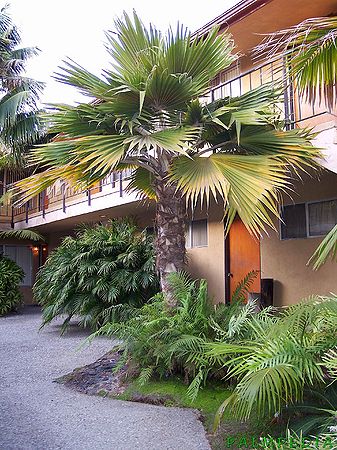
Ventura, California.

Hawaii. Photo by Geoff Stein
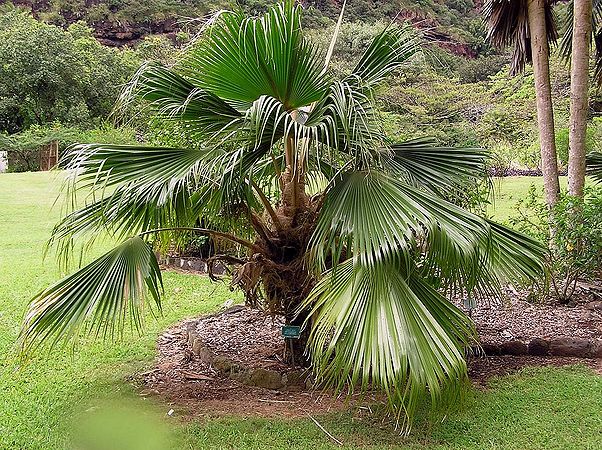
Hawaii. Photo by Geoff Stein
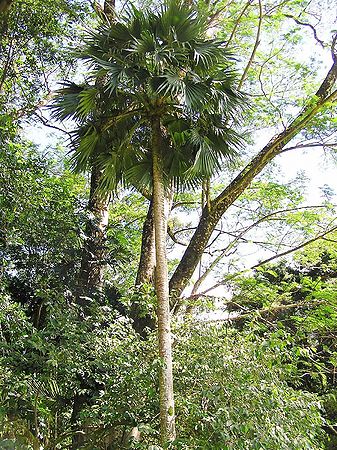
Lyon Arboretum, Oahu, Hawaii. Photo by Geoff Stein

Hawaii. Photo by Geoff Stein

Lyon Arboretum, Oahu, Hawaii. Photo by Geoff Stein
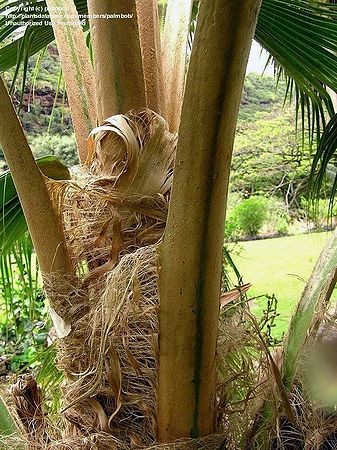
"close up of petioles showing the thick orange scurf on them (easily rubs off)" Photo by Geoff Stein
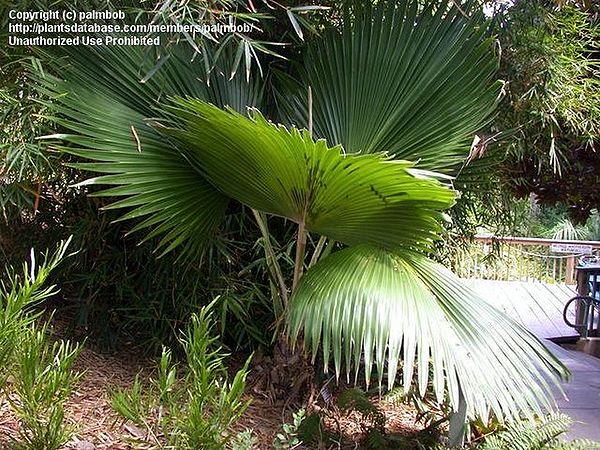
Encinitas California. Photo by Geoff Stein
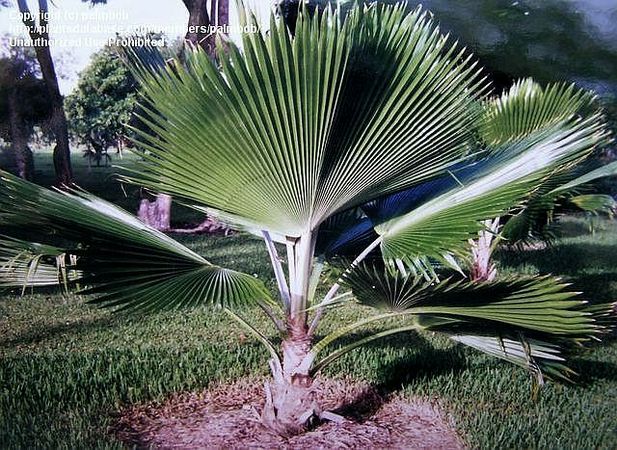
Miami Florida. Photo by Geoff Stein
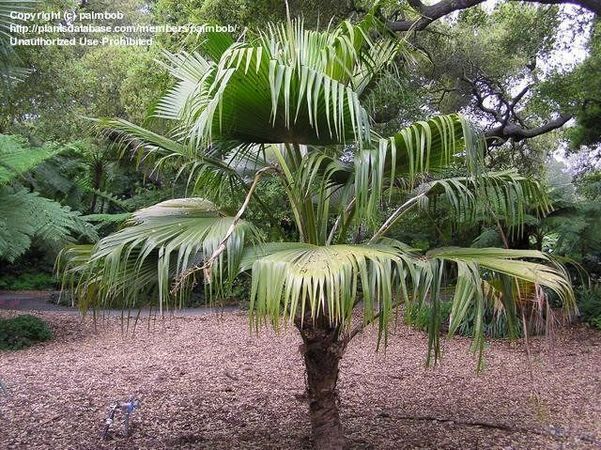
Santa Barbara, California's Lotus Land. Photo by Geoff Stein
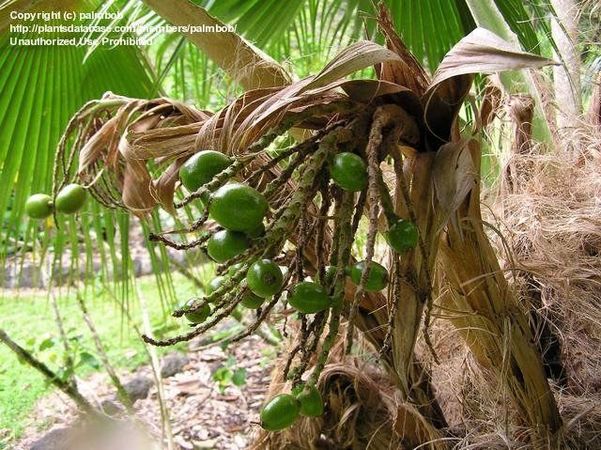
Photo by Geoff Stein
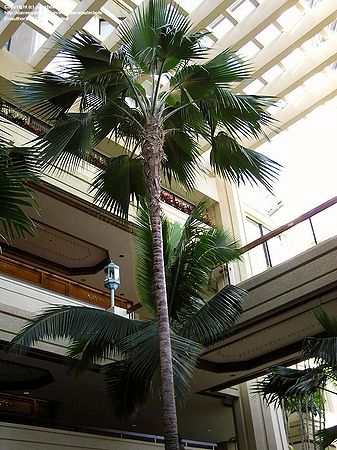
"Exceptional tree in Hawaii protected by some overhead glass (still outdoors)- nearly perfect" Photo by Geoff Stein
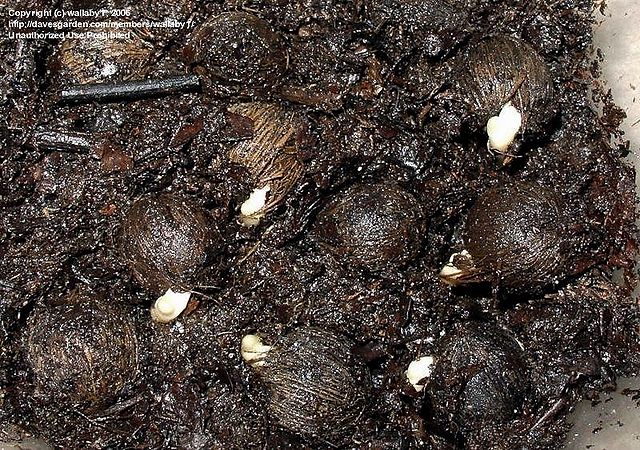
Seeds germinating, 23 days. Photo by Wallaby
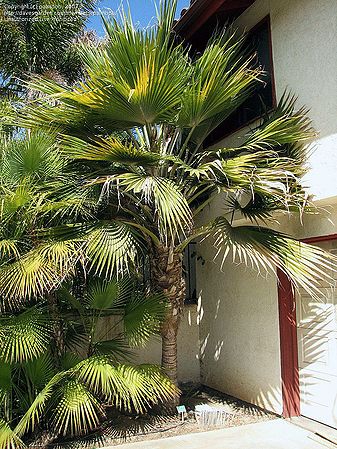
Half day sun, inland, southern California. Photo by Geoff Stein
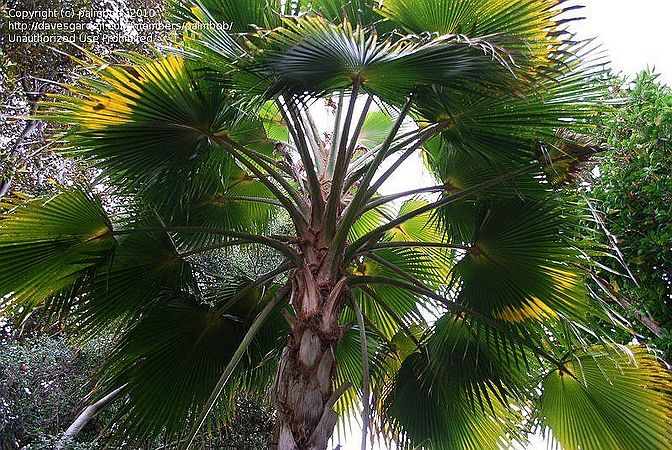
Photo by Geoff Stein
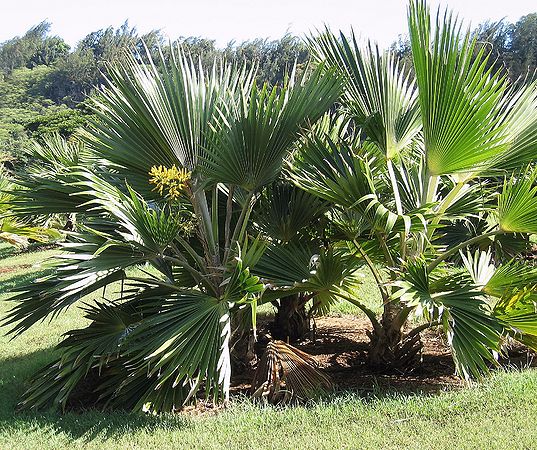
Hawaii. Photo by Dr. P. Gotra
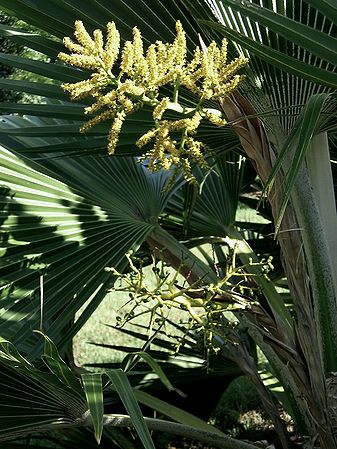
Hawaii. Photo by Dr. P. Gotra

Hawaii. Photo by Dr. P. Gotra

Hawaii. Photo by Dr. P. Gotra
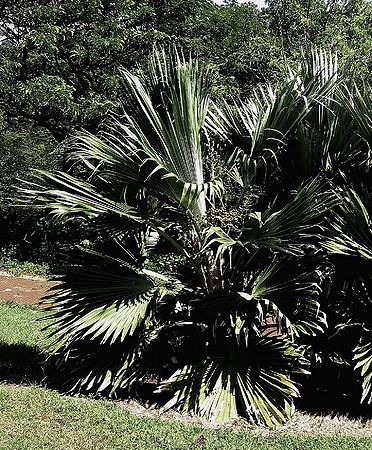
Hawaii. Photo by Dr. P. Gotra

Hawaii. Photo by Dr. P. Gotra
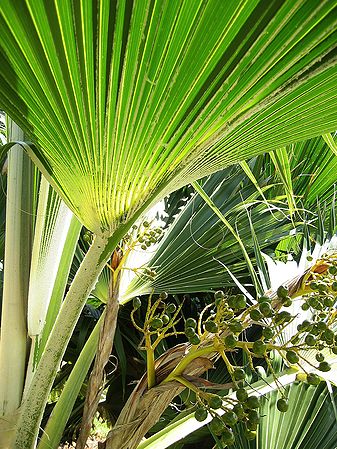
Hawaii. Photo by Dr. P. Gotra

Waimea Valley Audubon Center, Oahu, Hawaii. Photo by Dr. David Eickhoff
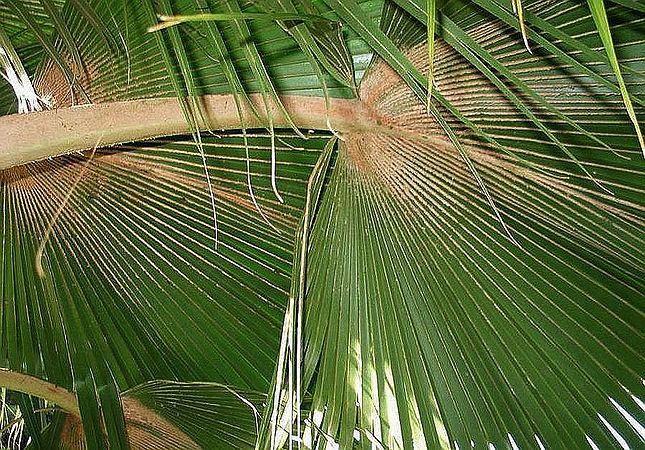
Waimea Valley Audubon Center, Oahu, Hawaii. Photo by Dr. David Eickhoff

Waimea Valley Audubon Center, Oahu, Hawaii. Photo by Dr. David Eickhoff

Photo by Dr. Melany Chapin

Photo by Greg Roulinavage

Hanamu Rd Makawao, Maui, Hawaii. Photo by Forest & Kim Starr
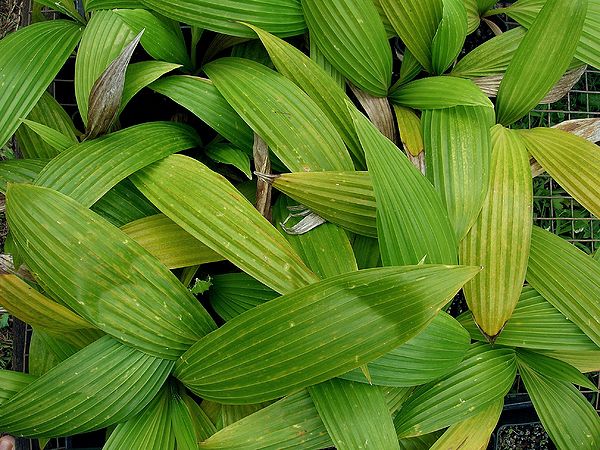
Makawao, Maui, Hawaii. Photo by Forest & Kim Starr
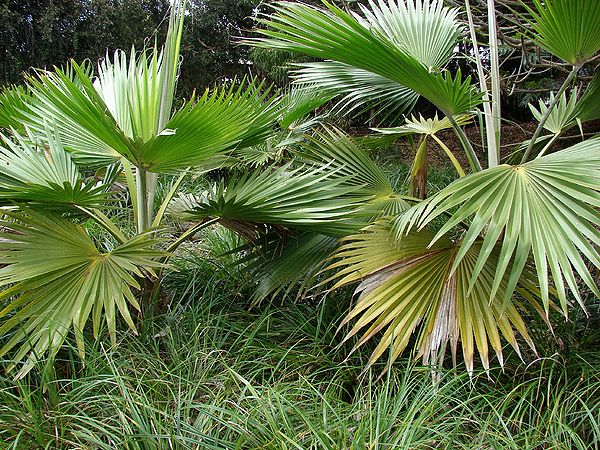
Hanamu Rd Makawao, Maui, Hawaii. Photo by Forest & Kim Starr

Makawao, Maui, Hawaii. Photo by Forest & Kim Starr
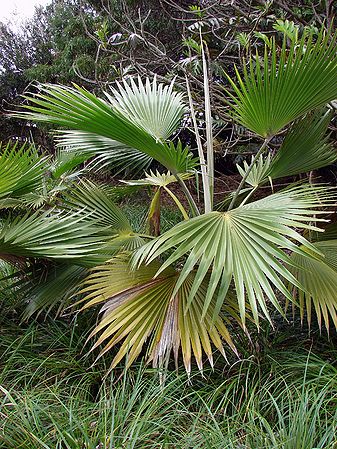
Hanamu Rd Makawao, Maui, Hawaii. Photo by Forest & Kim Starr
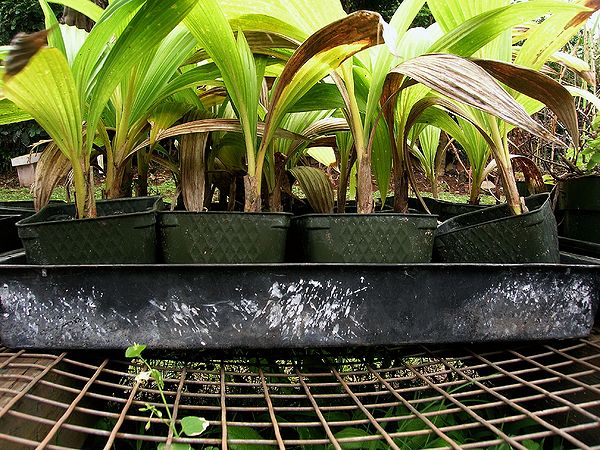
Makawao, Maui, Hawaii. Photo by Forest & Kim Starr

Makawao, Maui, Hawaii. Photo by Forest & Kim Starr

Habitat. Huelo, Molokai, Hawaii. Photo by Forest & Kim Starr
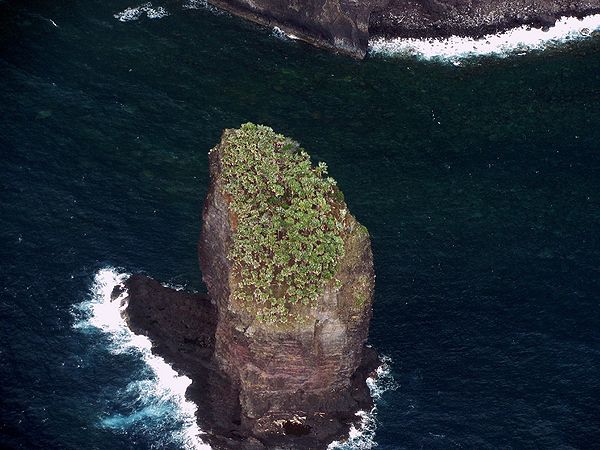
Habitat aerial at Huelo Islet North Shore, Molokai, Hawaii. Photo by Forest & Kim Starr

Habitat aerial at Huelo Okala and Mokapu Islets Waikolu Valley North Shore, Molokai, Hawaii. Photo by Forest & Kim Starr

Habitat aerial at Huelo and Okala Islets Waikolu Valley North Shore, Molokai, Hawaii. Photo by Forest & Kim Starr
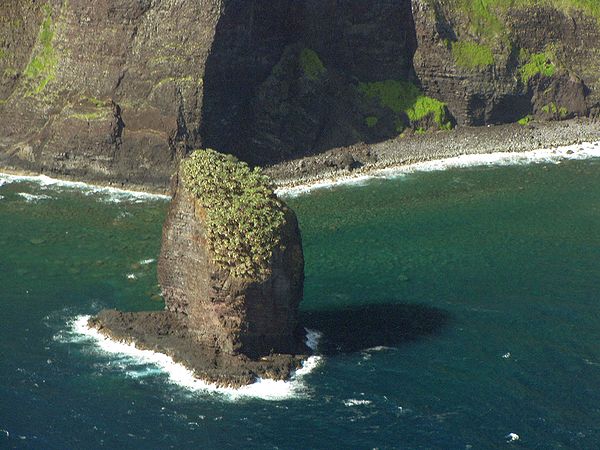
Habitat aerial at Huelo Islet North Shore, Molokai, Hawaii. Photo by Forest & Kim Starr
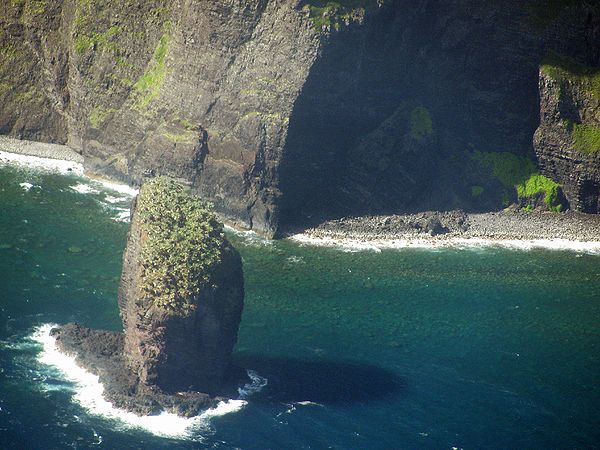
Habitat aerial at Huelo Islet North Shore, Molokai, Hawaii. Photo by Forest & Kim Starr

Habitat aerial at Huelo and Okala Islets Waikolu Valley North Shore, Molokai, Hawaii. Photo by Forest & Kim Starr
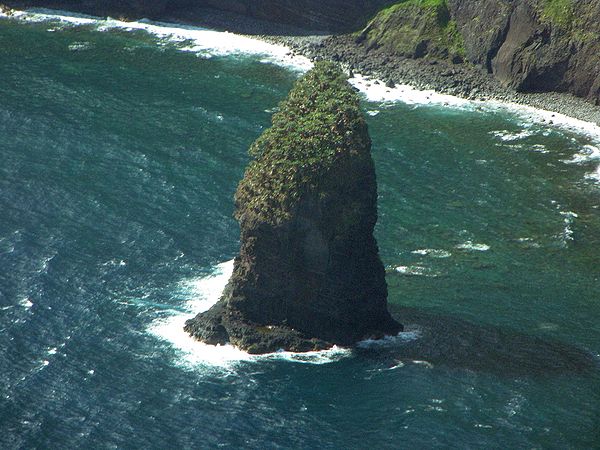
Habitat aerial at Huelo Islet North Shore, Molokai, Hawaii. Photo by Forest & Kim Starr
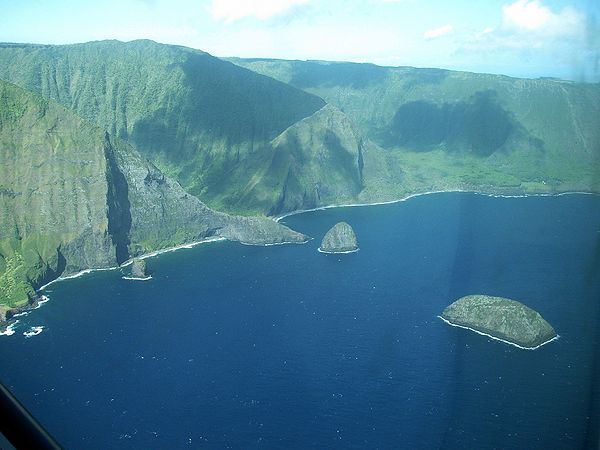
Habitat aerial at Huelo Okala and Mokapu Islets North Shore, Molokai, Hawaii. Photo by Forest & Kim Starr

Habitat aerial at Huelo Islet and Papaiki Flats North Shore, Molokai, Hawaii. Photo by Forest & Kim Starr
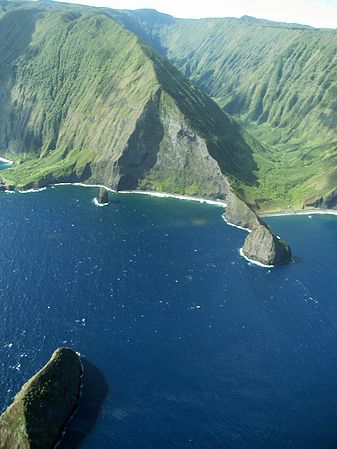
Habitat aerial at Huelo Okala and Mokapu Islets North Shore, Molokai, Hawaii. Photo by Forest & Kim Starr
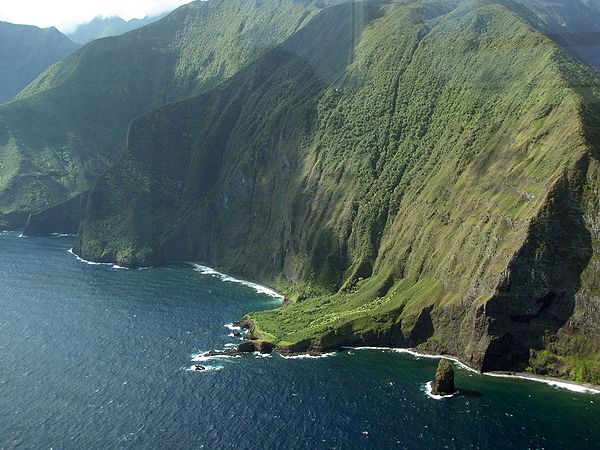
Habitat aerial at Huelo Islet and Papaiki Flats North Shore, Molokai, Hawaii. Photo by Forest & Kim Starr

Wakiu, Hana, Maui, Hawaii. Photo by Bill Chang

Wakiu, Hana, Maui, Hawaii. "The petiole and hastula details seen on this young specimen may not reflect the character seen on mature trees. However, a noticeable trait that catches the attention here is the clean symmetry of the converging segment ridges as they come together at the hastula. The hastula itself shows no prominent lip." Photo by Bill Chang

McBryde Gardens at the NTBG in Kauai, Hawaii. "Collected from Molokai." Photo by Kyle wicomb

McBryde Gardens at the NTBG in Kauai, Hawaii. Photo by Kyle wicomb

McBryde Gardens at the NTBG in Kauai, Hawaii. Photo by Kyle wicomb
McBryde Gardens at the NTBG in Kauai, Hawaii. Photo by Kyle wicomb
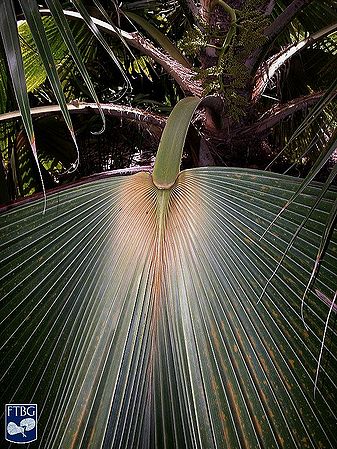
Photo-FTBG
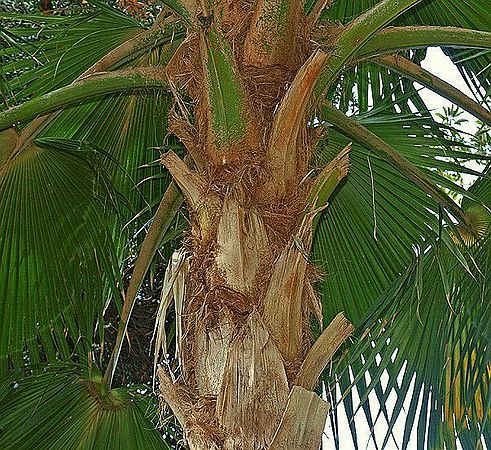
Photo: idtools.org/

Photo: idtools.org/
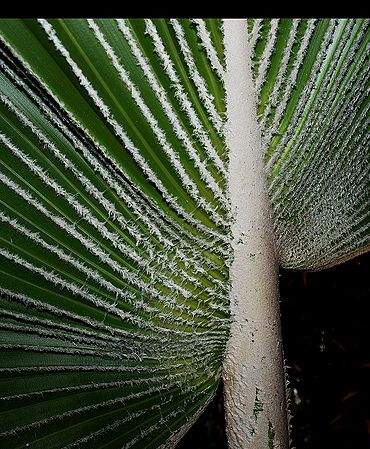
Photo: idtools.org/

Photo: idtools.org/

Photo: idtools.org/

Photo: idtools.org/
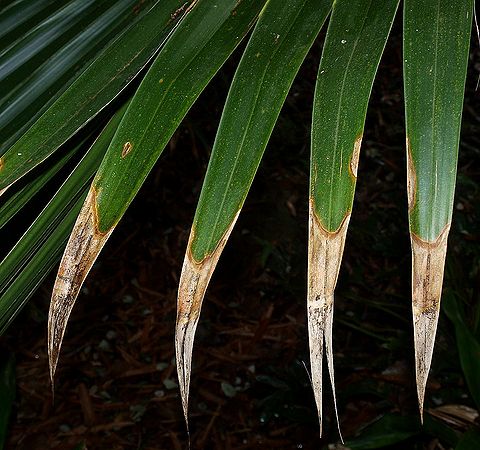
Photo: idtools.org/
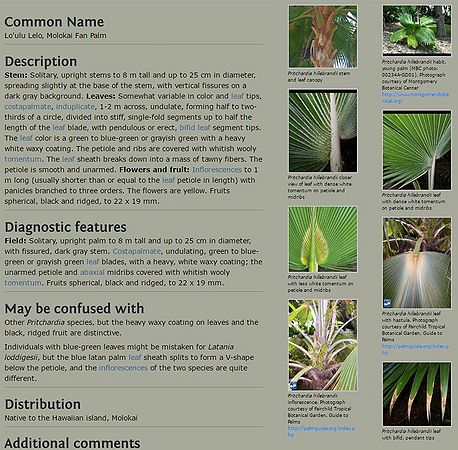
Image Text: idtools.org/

Photo-alohaarborist.com
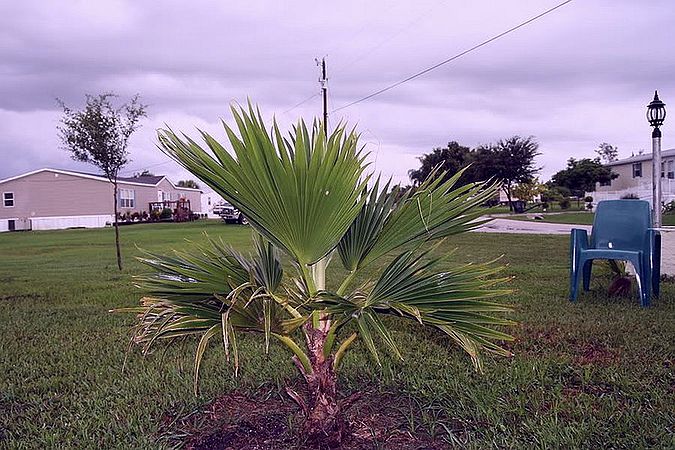
South FL, near lake Okeechobee. Photo by David

Fresh seed, some fruit still extant. Photo by Wallaby

Photo by Melany Chapin


External Links
- Glossary of Palm Terms
- MODERN BOTANICAL LATIN
- "Just To Be Clear"
- http://itp.lucidcentral.org/id/palms/palm-id/Pritchardia_hillebrandii.htm
- http://myloulu.wordpress.com/2010/09/13/the-island-of-oahu/
- http://myloulu.wordpress.com/2010/09/08/the-island-of-maui/
- http://myloulu.wordpress.com/2010/09/27/the-islands-of-niihau-and-nihoa/
- http://myloulu.wordpress.com/2010/09/06/the-island-of-hawaii/
- http://myloulu.wordpress.com/2010/09/21/the-island-of-kauai/
- http://myloulu.wordpress.com/2010/09/08/the-island-of-lanai/
- http://myloulu.wordpress.com/2010/09/08/island-of-molokai/
- http://hanapalms.wordpress.com/2010/07/
- http://www.biomedcentral.com/1471-2148/12/23
- http://idtools.org/id/palms/palmid/factsheet.php?name=Pritchardia+hillebrandii
References
Phonetic spelling of Latin names by edric.
Special thanks to Geoff Stein, (Palmbob) for his hundreds of photos.
Special thanks to Palmweb.org, Dr. John Dransfield, Dr. Bill Baker & team, for their volumes of information and photos.
Glossary of Palm Terms; Based on the glossary in Dransfield, J., N.W. Uhl, C.B. Asmussen-Lange, W.J. Baker, M.M. Harley & C.E. Lewis. 2008. Genera Palmarum - Evolution and Classification of the Palms. Royal Botanic Gardens, Kew. All images copyright of the artists and photographers (see images for credits).
Hodel, D. 2007.
Many Special Thanks to Ed Vaile for his long hours of tireless editing and numerous contributions.