Difference between revisions of "Allagoptera caudescens"
| Line 1: | Line 1: | ||
__noeditsection__ | __noeditsection__ | ||
'''Buri Palm''' | '''Buri Palm''' | ||
| − | |||
{{Palmbox | {{Palmbox | ||
|image=412728835_895e7935cc_o.jpg | |image=412728835_895e7935cc_o.jpg | ||
|image_caption=Entre Rios, Bahia, Brazil. Photo by Alex Popovkin, edric. | |image_caption=Entre Rios, Bahia, Brazil. Photo by Alex Popovkin, edric. | ||
|genus=Allagoptera (ahl-lah-GOHP-tehr-ah) | |genus=Allagoptera (ahl-lah-GOHP-tehr-ah) | ||
| − | |species= | + | |species=<br>caudescens (kah-DEHS-sens) |
|subspecies= | |subspecies= | ||
|cultivar= | |cultivar= | ||
| Line 21: | Line 20: | ||
|common_names=Buri Palm | |common_names=Buri Palm | ||
}} | }} | ||
| − | |||
==Habitat and Distribution== | ==Habitat and Distribution== | ||
| − | + | ''Allagoptera caudescens'' is endemic to Brazil Northeast, Brazil Southeast. Esp. Buri. They grow in sandy soil in gallery forest and open plains up to the Atlantic coastal forests. | |
| + | [[Image:Post-279-076726500_1313606873.jpg|thumb|left|450px|Rio de Janeiro, Brazil. Harri Lorenzi's garden. Photo by Michael Merritt, edric.]] | ||
==Description== | ==Description== | ||
A tall, solitary, attractive palm, to about 15m. It has evenly wide, dark green leaflets, with silvery undersides. Editing by edric. | A tall, solitary, attractive palm, to about 15m. It has evenly wide, dark green leaflets, with silvery undersides. Editing by edric. | ||
| Line 29: | Line 28: | ||
Prefers a sunny, well drained position. Drought tolerant but cold sensitive. Slow growing. | Prefers a sunny, well drained position. Drought tolerant but cold sensitive. Slow growing. | ||
==Comments and Curiosities== | ==Comments and Curiosities== | ||
| − | + | This is a tillering palm, it exhibits saxophone style root growth (it has a heel), keep top third of heel above soil elevation! | |
| − | "In my neck of the woods, they are very drought tolerant and do not like full sun. I have two planted out in the garden and many many more in pots. Both planted palms are in bright light. the one that gets more watering looks much better, but the one that gets ZERO water is still alive and should make it to the rainy season no problem. These palms are fairly drought tolerant--I have neard they will burn in full sun( if they survive), which is why I planted them in bright light. Has anyone I've noticed two different forms; one type has regularly arranged leaflets, the other one, which I am growing(and find to be much more visually appealing) has interupted leaflets. The spacing of the second form is a very attractive trait." (Cutler Bay, South Florida. Andrew Street) | + | "In my neck of the woods, they are very drought tolerant and do not like full sun. I have two planted out in the garden and many many more in pots. Both planted palms are in bright light. the one that gets more watering looks much better, but the one that gets ZERO water is still alive and should make it to the rainy season no problem. These palms are fairly drought tolerant--I have neard they will burn in full sun( if they survive), which is why I planted them in bright light. Has anyone I've noticed two different forms; one type has regularly arranged leaflets, the other one, which I am growing(and find to be much more visually appealing) has interupted leaflets. The spacing of the second form is a very attractive trait." (Cutler Bay, South Florida. Andrew Street) |
| − | Allagoptera caudescens var. Bahia; A form of Buri Palm from Bahia, Brazil with unusually and very neatly and beautifully clustered leaflets, quite different than the form from southeastern Brazil that is commonly found in cultivation. (RPS.com) | + | Allagoptera caudescens var. Bahia; A form of Buri Palm from Bahia, Brazil with unusually and very neatly and beautifully clustered leaflets, quite different than the form from southeastern Brazil that is commonly found in cultivation. (RPS.com) |
==External Links== | ==External Links== | ||
*[http://eunops.org/content/glossary-palm-terms Glossary of Palm Terms] | *[http://eunops.org/content/glossary-palm-terms Glossary of Palm Terms] | ||
| Line 46: | Line 45: | ||
Phonetic spelling of Latin names by edric. | Phonetic spelling of Latin names by edric. | ||
| − | Special thanks to Geoff Stein, (Palmbob) for his hundreds of photos | + | Special thanks to Geoff Stein, (Palmbob) for his hundreds of photos. |
| − | Special thanks to [http://palmweb.org/?q=node/2 Palmweb.org], Dr. John Dransfield, Dr. Bill Baker & team, for their volumes of information and photos | + | Special thanks to [http://palmweb.org/?q=node/2 Palmweb.org], Dr. John Dransfield, Dr. Bill Baker & team, for their volumes of information and photos. |
Glossary of Palm Terms; Based on the glossary in Dransfield, J., N.W. Uhl, C.B. Asmussen-Lange, W.J. Baker, M.M. Harley & C.E. Lewis. 2008. Genera Palmarum - Evolution and Classification of the Palms. Royal Botanic Gardens, Kew. All images copyright of the artists and photographers (see images for credits). | Glossary of Palm Terms; Based on the glossary in Dransfield, J., N.W. Uhl, C.B. Asmussen-Lange, W.J. Baker, M.M. Harley & C.E. Lewis. 2008. Genera Palmarum - Evolution and Classification of the Palms. Royal Botanic Gardens, Kew. All images copyright of the artists and photographers (see images for credits). | ||
| − | <center><gallery caption="IMAGE GALLERY" perrow=" | + | <center><gallery caption="IMAGE GALLERY" perrow="" widths="" heights=""> |
Image:Polyandrococcos caudescens 261.jpg|Vero Beach, Florida. | Image:Polyandrococcos caudescens 261.jpg|Vero Beach, Florida. | ||
image:Allagoptera_caudescens88z.jpg | image:Allagoptera_caudescens88z.jpg | ||
Revision as of 01:22, 10 June 2014
Buri Palm
| Allagoptera (ahl-lah-GOHP-tehr-ah) caudescens (kah-DEHS-sens) | |||||||
|---|---|---|---|---|---|---|---|
 Entre Rios, Bahia, Brazil. Photo by Alex Popovkin, edric. | |||||||
| Scientific Classification | |||||||
| |||||||
| Synonyms | |||||||
|
| |||||||
| Native Continent | |||||||
 | |||||||
| Morphology | |||||||
| |||||||
| Culture | |||||||
|
| |||||||
| Survivability index | |||||||
|
| |||||||
| Common names | |||||||
|
| |||||||
Contents
Habitat and Distribution
Allagoptera caudescens is endemic to Brazil Northeast, Brazil Southeast. Esp. Buri. They grow in sandy soil in gallery forest and open plains up to the Atlantic coastal forests.

Description
A tall, solitary, attractive palm, to about 15m. It has evenly wide, dark green leaflets, with silvery undersides. Editing by edric.
Culture
Prefers a sunny, well drained position. Drought tolerant but cold sensitive. Slow growing.
Comments and Curiosities
This is a tillering palm, it exhibits saxophone style root growth (it has a heel), keep top third of heel above soil elevation!
"In my neck of the woods, they are very drought tolerant and do not like full sun. I have two planted out in the garden and many many more in pots. Both planted palms are in bright light. the one that gets more watering looks much better, but the one that gets ZERO water is still alive and should make it to the rainy season no problem. These palms are fairly drought tolerant--I have neard they will burn in full sun( if they survive), which is why I planted them in bright light. Has anyone I've noticed two different forms; one type has regularly arranged leaflets, the other one, which I am growing(and find to be much more visually appealing) has interupted leaflets. The spacing of the second form is a very attractive trait." (Cutler Bay, South Florida. Andrew Street)
Allagoptera caudescens var. Bahia; A form of Buri Palm from Bahia, Brazil with unusually and very neatly and beautifully clustered leaflets, quite different than the form from southeastern Brazil that is commonly found in cultivation. (RPS.com)
External Links
- Glossary of Palm Terms
- MODERN BOTANICAL LATIN
- "Just To Be Clear"
- http://www.palmbeachpalmcycadsociety.com/palms/documents/AllagopteraCaudescens.pdf
- http://www.youtube.com/watch?v=bYlWOSVb8dA
- http://www.fao.org/docrep/X0451E/X0451e08.htm
- http://www.palmsociety.org/members/english/chamaerops/046/046-05.shtml
- THE SAXOPHONE STYLE ROOT GROWTH (HEEL)
References
Phonetic spelling of Latin names by edric.
Special thanks to Geoff Stein, (Palmbob) for his hundreds of photos.
Special thanks to Palmweb.org, Dr. John Dransfield, Dr. Bill Baker & team, for their volumes of information and photos.
Glossary of Palm Terms; Based on the glossary in Dransfield, J., N.W. Uhl, C.B. Asmussen-Lange, W.J. Baker, M.M. Harley & C.E. Lewis. 2008. Genera Palmarum - Evolution and Classification of the Palms. Royal Botanic Gardens, Kew. All images copyright of the artists and photographers (see images for credits).
- IMAGE GALLERY

Vero Beach, Florida.


brazil.

Brazil, photo by Jason Dewees, edric.

Royal Botanic Gardens, Sydney, Australia, photo by Mike Gray, edric.

Mt. Cootha Botanic Gardens, Brisbane, Australia, photo by Mike Gray, edric.

Photo by Gileno Machado, edric.

Rio de Janeiro, Brazil. Harri Lorenzi's garden. Photo by Michael Merritt, edric.

Rio de Janeiro, Brazil. In a waterfront park in Rio. Photo by Michael Merritt, edric.

NSW, Australia, photo by Luke Nancarrow, edric.

NSW, Australia, photo by Luke Nancarrow, edric.

Brazil.

Northern New South Wales, Photo by Daryl O'Connor, edric.

Northern New South Wales, Photo by Daryl O'Connor, edric.

Northern New South Wales, Photo by Daryl O'Connor, edric.

Northern New South Wales, Photo by Daryl O'Connor, edric.

Hawaii. Photo by Dr. George Peavy, edric.

Hawaii. Photo by Dr. George Peavy, edric.

Hilo, Hawaii, Photo by Dr. George Peavy, edric.

Hilo, Hawaii, Photo by Dr. George Peavy, edric.

At Len's place. Vista, CA. Photo by Troy Donovan, edric.

Los Altos, California. Photo by Jim Denz, edric.

Las Marias, PR. Photo by Cindy Adair, edric.

Cutler Bay, South Florida. Photo by Andrew Street, edric.

Cutler Bay, South Florida. Photo by Andrew Street, edric.

Hilo, Hawaii. Garden of Bill Austin. Dypsis carlsmithii in background. Photo by Colin Peters, edric.

Just south of Hilo, Hawaii. Tim giving scale. Photo by Timothy Brian, edric.

Just south of Hilo, Hawaii. Photo by Timothy Brian, edric.

Just south of Hilo, Hawaii. Photo by Timothy Brian, edric.

Southern Pacific coast of Guatemala. Photo by Peter Beatty, edric.

Southern Pacific coast of Guatemala. Photo by Peter Beatty, edric.

Cape Coral, FL. Photo by PG, edric.

Cape Coral, FL. Photo by PG, edric.

Papa Bay Estates, South Kona, Hawaii. Photo by Al in Kona, edric.

Papa Bay Estates, South Kona, Hawaii. Photo by Al in Kona, edric.

On the way to Serra das Orgaos National Park, 118 sq km of mountainous terrain, between Teresópolis and Petrópolis (Rio de Janeiro), Brazil, Photo by Paul Craft, edric.

Along the road near Prainha Beach, On the way to Serra das Orgaos National Park, 118 sq km of mountainous terrain, between Teresópolis and Petrópolis (Rio de Janeiro), Brazil, Photo by Paul Craft, edric.

Fazenda Boa Esperanca Ranch. Along the road near Prainha Beach, On the way to Serra das Orgaos National Park, 118 sq km of mountainous terrain, between Teresópolis and Petrópolis (Rio de Janeiro), Brazil, Photo by Paul Craft, edric.

Fazenda Boa Esperanca Ranch. Along the road near Prainha Beach, On the way to Serra das Orgaos National Park, 118 sq km of mountainous terrain, between Teresópolis and Petrópolis (Rio de Janeiro), Brazil, Photo by Paul Craft, edric.

Photo by Paul Craft, edric.

Photo by Paul Craft, edric.

Photo by Paul Craft, edric.

Photo by Paul Craft, edric.
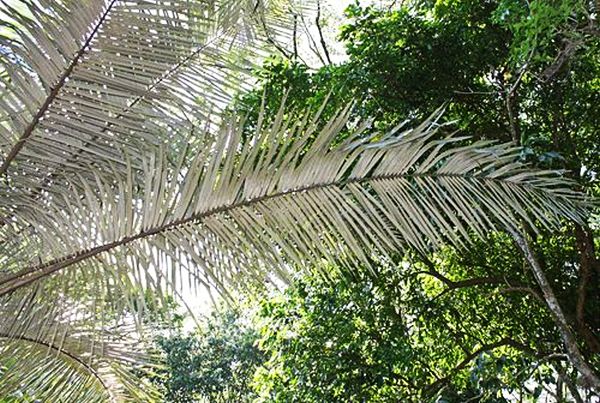
Photo by Paul Craft, edric.

Photo by Paul Craft, edric.

Photo by Paul Craft, edric.

Photo-MB Palms, Orlando FL., edric.

Photo-plantant.com, edric.

A. caudescens left standing in a pasture after forest has been cleared. var. Bahia. Photo-European Palm Society, edric.

Photo-palmbeachpalmcycadsociety.com, edric.

Fairchild Tropical Botanic Garden, Coral Gables, FL. Photo by Kyle Wicomb, edric.

Fairchild Tropical Botanic Garden, Coral Gables, FL. Photo by Kyle Wicomb, edric.

Fairchild Tropical Botanic Garden, Coral Gables, FL. Photo by Kyle Wicomb, edric.

Thailand. Photo by Banchong, edric.

Thailand. Photo by Banchong, edric.

Entre Rios, Bahia, Brazil. Photo by Alex Popovkin, edric.

Entre Rios, Bahia, Brazil. Photo by Alex Popovkin, edric.

Entre Rios, Bahia, Brazil. Photo by Alex Popovkin, edric.

Entre Rios, Bahia, Brazil. Photo by Alex Popovkin, edric.

Entre Rios, Bahia, Brazil. Photo by Alex Popovkin, edric.

Entre Rios, Bahia, Brazil. Photo by Alex Popovkin, edric.

Entre Rios, Bahia, Brazil. Photo by Alex Popovkin, edric.

Perth Western Australia. Photo by Tyrone, edric.

Perth Western Australia. Photo by Tyrone, edric.

Perth Western Australia. Photo by Tyrone, edric.

Allagoptera caudescens var. Bahia. There are two variations: one from Bahia, Brazil, height up to 8 m, and another in southern Brazil. The species name comes from the Latin = caudescens that has a tail, referring to long leaves that spread across the floor, most obvious fact in the second group. Corupá-SC. photo by Gilio Giacomozzi, edric.

Allagoptera caudescens var. Bahia. There are two variations: one from Bahia, Brazil, height up to 8 m, and another in southern Brazil. The species name comes from the Latin = caudescens that has a tail, referring to long leaves that spread across the floor, most obvious fact in the second group. Corupá-SC. photo by Gilio Giacomozzi, edric.


Brazil. Allagoptera caudescens var. Bahia. Photo-Rare Palm Seeds.com

Entre Rios, Bahia, Brazil. Photo by Alex Popovkin, edric.

Entre Rios, Bahia, Brazil. Photo by Alex Popovkin, edric.

Entre Rios, Bahia, Brazil. Photo by Alex Popovkin, edric.

Seeds from Palmetum of Tenerife, Canarias (Canary Islands). Photo by Miguel Angel Cruz Acebo, edric.

Seeds from Palmetum of Tenerife, Canarias (Canary Islands). Photo by Miguel Angel Cruz Acebo, edric.


Many Special Thanks to Ed Vaile for his long hours of tireless editing and numerous contributions.