Medemia argun
| Medemia (meh-deh-MEE-ah) argun (AHR-guhn) | |||||||
|---|---|---|---|---|---|---|---|
 Nong Nooch Botanical Gardens, Thailand. | |||||||
| Scientific Classification | |||||||
| |||||||
| Synonyms | |||||||
|
| |||||||
| Native Continent | |||||||
 | |||||||
| Morphology | |||||||
| |||||||
| Culture | |||||||
|
| |||||||
| Survivability index | |||||||
|
| |||||||
| Common names | |||||||
|
| |||||||
Contents
Habitat and Distribution
Egypt, and Sudan. Medemia argun occurs as scattered individuals and populations in the Nubian desert of southern Egypt and northern Sudan. It was first described as Areca passalacquae from fruits collected by archaeologists from Egyptian tombs dating back to 2500 BC (Kunth 1826). Not until 1881 was the palm described from living material collected in Sudan. Since that time, Medemia argun has been collected on very few occasions. It was not discovered as a living member of the Egyptian flora until 1963 (Boulos 1968). The palm was subsequently considered extinct in the wild until its rediscovery in Sudan in 1995 (Langlois 1976, Gibbons & Spanner 1996). The main Egyptian population consists of just four males and three females of reproductive age, plus some juveniles, with the few other sites consisting of lone individuals. The Sudanese populations are larger, consisting of some hundreds of individuals, but these localities are geographically restricted. (virtualherbarium.org)

Description
Medemia closely resembles its sister genus Hyphaene. It is an arborescent palm of tribe Borasseae (subtribe Hyphaeninae) with tough, blue-green fan leaves and a skirt of dry leaves persisting below the crown. Unlike Hyphaene, its stem is unbranched, it lacks a hastula at the top of the petiole, its petioles are yellow and are not as heavily armed as those of Hyphaene, and the fruit is purple-brown, plum-shaped and contains a seed with ruminate endosperm. (virtualherbarium.org)
Culture
Medemia argun is a palm adapted to one of the harshest environments on the planet. Rain may not fall for years, and summer temperatures can exceed 40°C. Nevertheless, Medemia can survive only in places where it can reach ground water. On germination, the seed produces a very long root up to 3 m in length in search of water. Numerous seeds pile up under the crowns of mature females, baking in the sun and yet apparently remaining viable. It has been suggested that the palm is dispersed by flood waters following rains. (virtualherbarium.org)

Comments and Curiosities
This is a monotypic genus.
"Attractive solitary palmate/costapalmate thick trunked, very slow growing rare species from the northern deserts of Africa. This palm was thought to be extinct until just 10 years ago (1995) when it was rediscovered. Now seed has become available and many are trying to grow it all over the world. Here in southern California many have had good luck getting this palm to germinate and grow to a small seedling, but most lose it after that... very finicky palm in terms of water and heat.. needs less water than just about any other palm (too much in winter here kills them off), and needs constant heat. Not sure if we will ever get an adult here except for out in our desert areas. But in south Florida and the tropics where it never cools off, it is doing much better. Closely related to and looks a bit like Hyphaene and Bismarckia. Has blue-green markedly costapalmate/recurved leaves and very colorful black to orange petioles." (Geoff Stein)
- IMAGE GALLERY

2 years from seed. Cojedes, Venezuela 9°N, approx 600 feet above sea level. Photo by David Clulow

5 years from seed. Cojedes, Venezuela 9°N, approx 600 feet above sea level. Photo by David Clulow

Cojedes, Venezuela 9°N, approx 600 feet above sea level. Photo by David Clulow

Cojedes, Venezuela 9°N, approx 600 feet above sea level. Photo by David Clulow

Nong Nooch Botanical Gardens, Thailand.

India. Photo by Kris Achar, edric.

India. Photo by Kris Achar.

Photo by Kris Achar.

Photo by Kris Achar.

Photo by Kris Achar.

Nong Nooch Botanical Gardens, Thailand. Photo by Paul Craft

Dungul Oasis, Egypt. Photo by Haitham Ibrahim

Dungul Oasis, Egypt. Photo by Haitham Ibrahim

Dungul Oasis, Egypt. Photo by Haitham Ibrahim

Dungul Oasis, Egypt. Photo by Haitham Ibrahim

Nakhila Oasis, Egypt. Photo by Haitham Ibrahim

Nakhila Oasis, Egypt. Photo by Haitham Ibrahim

Wadi Neigit, Egypt. Photo by Haitham Ibrahim

Wadi Neigit, Egypt. Photo by Haitham Ibrahim

Wadi Umm Gir, Egypt. Photo by Haitham Ibrahim

Dungul Oasis, Egypt. Photo by Dr. William J. Baker, Royal Botanic Gardens, Kew/Palmweb.

Dungul Oasis, Egypt. Photo by Dr. William J. Baker, Royal Botanic Gardens, Kew/Palmweb.
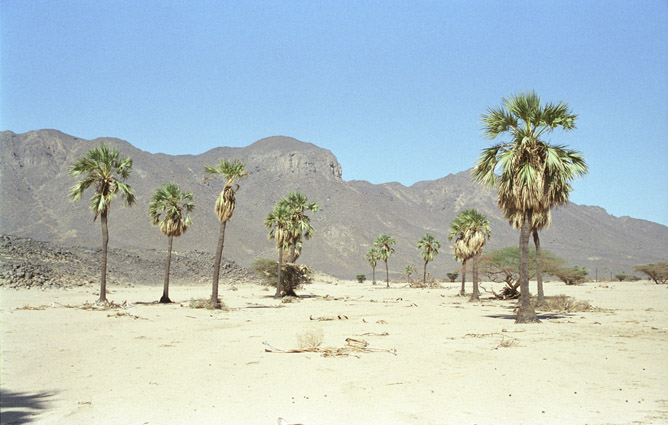
Sudan. Photo by Martin Gibbons and Tobias W. Spanner.

South Valley University, Egypt. Photo by Dr. William J. Baker, Royal Botanic Gardens, Kew/Palmweb.

Dungul Oasis, Egypt. Photo by Dr. William J. Baker, Royal Botanic Gardens, Kew/Palmweb.

Dungul Oasis, Egypt. Photo by Dr. William J. Baker, Royal Botanic Gardens, Kew/Palmweb.

Dungul Oasis, Egypt. Photo by Dr. William J. Baker, Royal Botanic Gardens, Kew/Palmweb.

Dungul Oasis, Egypt. Photo by Dr. William J. Baker, Royal Botanic Gardens, Kew/Palmweb.

Wadi Dungul, Egypt. Photo by Dr. William J. Baker, Royal Botanic Gardens, Kew/Palmweb.

Dungul Oasis, Egypt. Photo by Dr. William J. Baker, Royal Botanic Gardens, Kew/Palmweb.

Dungul Oasis, Egypt. Photo by Dr. William J. Baker, Royal Botanic Gardens, Kew/Palmweb.

Dungul Oasis, Egypt. Photo by Dr. William J. Baker, Royal Botanic Gardens, Kew/Palmweb.

Dungul Oasis, Egypt. Photo by Dr. William J. Baker, Royal Botanic Gardens, Kew/Palmweb.

Dungul Oasis, Egypt. Photo by Dr. William J. Baker, Royal Botanic Gardens, Kew/Palmweb.

Dungul Oasis, Egypt. Photo by Dr. William J. Baker, Royal Botanic Gardens, Kew/Palmweb.

Dungul Oasis, Egypt. Photo by Dr. William J. Baker, Royal Botanic Gardens, Kew/Palmweb.

Dungul Oasis, Egypt. Photo by Dr. William J. Baker, Royal Botanic Gardens, Kew/Palmweb.

Dungul Oasis, Egypt. Photo by Dr. William J. Baker, Royal Botanic Gardens, Kew/Palmweb.

Dungul Oasis, Egypt. Photo by Dr. William J. Baker, Royal Botanic Gardens, Kew/Palmweb.


Fresh Seeds, Photo by Kris Achar.

Cleaned Seeds, Photo by Kris Achar.

Cleaned Seed, Photo by Kris Achar.

Seed Germination, Photo by Kris Achar.

Germinated Seeds, Photo by Kris Achar.


External Links
- Glossary of Palm Terms
- MODERN BOTANICAL LATIN
- "Just To Be Clear"
- http://www.palms.org/principes/1996/medemia.htm
- http://www.virtualherbarium.org/psg/flagship/Medemia_argun.html
References
Phonetic spelling of Latin names by edric.
Special thanks to Geoff Stein, (Palmbob) for his hundreds of photos.
Special thanks to Palmweb.org, Dr. John Dransfield, Dr. Bill Baker & team, for their volumes of information and photos.
Glossary of Palm Terms; Based on the glossary in Dransfield, J., N.W. Uhl, C.B. Asmussen-Lange, W.J. Baker, M.M. Harley & C.E. Lewis. 2008. Genera Palmarum - Evolution and Classification of the Palms. Royal Botanic Gardens, Kew. All images copyright of the artists and photographers (see images for credits).
Many Special Thanks to Ed Vaile for his long hours of tireless editing and numerous contributions.