Coccothrinax proctorii
<google>CH02</google>

| Coccothrinax (koh-koh-TRIH-naks) proctorii (proc-TOHR-ee-eye) | |||||||
|---|---|---|---|---|---|---|---|
 Palmetum of Santa Cruz, Tenerife. | |||||||
| Scientific Classification | |||||||
| |||||||
| Synonyms | |||||||
|
| |||||||
| Native Continent | |||||||
 | |||||||
| Morphology | |||||||
| |||||||
| Culture | |||||||
|
| |||||||
| Survivability index | |||||||
|
| |||||||
| Common names | |||||||
|
| |||||||
Contents
Habitat and Distribution
Gorws in coral based soils, in open forest, on the Cayman Islands.
Description
Trunk type: Solitary. A medium sized palm, with a slender trunk, and an open crown, of deeply divided leaves, with nearly perfectly symmetrical divisions, dark green above, and silvery white below. Editing by edric.
Culture
Sunny, moist, but well drained position. Salt tolerant, and prefers an alkaline soil. Slow growing. Can be grown on just coral limerock. It likes a position in full sun, or light shade, in a tropical, or subtropical climate, and once established, can endure quite a bit of coastal exposure. Indoors it also makes a neat bonsai, that can even be cultivated just on a piece of coral limerock, practically without soil.
Comments and Curiosities
External Links
References
Phonetic spelling of Latin names by edric.
Special thanks to Geoff Stein, (Palmbob) for his hundreds of photos, edric.
Special thanks to palmweb.org, Dr. John Dransfield, Dr. Bill Baker & team, for their volumes of information and photos, edric.
- IMAGE GALLERY

In Habitat - After Hurricane Ivan, Grand Cayman.

Coccothrinax proctorii at Huntington Gardens Conservatory, CA.

Palmetum of Santa Cruz, Tenerife.


Cayman Islands. Photo by Ray Hernandez, edric.
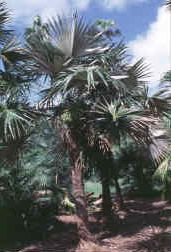

Photo by Scott Zona, edric.

Photo by Scott Zona, edric.


Many Special Thanks to Ed Vaile for his long hours of tireless editing and numerous contributions.